

A historian, the old joke goes, is someone who chases after you calling out “that’s not how it happened!” Good history sees the devil in the details. It looks past the obvious events to understand the human relationships that lie underneath. But beyond good history, there is great history. Great history links these human experiences to the systems of power and domination that shaped the past and continue to shape the present. In exploring the experience of black men serving in the American army during WWI, ‘The Harlem Hellfighters’ achieves both.

Title: The Harlem Hellfighters
Author: Max Brooks
Illustrator: Caanan White
Published: Broadway Books (2014)
Pages: 272 pages
Other Specs: Colour cover with B&W interior
Purchase: In the Ad Astra Online Store
The Harlem Hellfighters is not about WWII, a fashionable war regardless of your politics. It is about the Great War for Civilization, now often described as World War One, though the first global war was the Seven Years War. There was nothing particularly civilized about it, and ‘The Harlem Hellfighters’ does a great job of tracking this from the United States to the artillery-chewed meadows of an exhausted Europe. It follows the eponymous Hellfighters, an all-black combat regiment, at a time when there was a great deal of anxiety that if people of colour were allowed to shoot white people, they might get a taste for it. This racism ran so deep that the army was sending their rifles out to private gun clubs and issuing broomsticks to the Hellfighters. Nonetheless, they made it to the front, and the comic takes us along for a flame-throwing, bomb-dropping, trench digging slaughter of a tour through humanity’s most wretched moments. We see through mud and clouds of poison gas- the death of the romance of war.
 The obvious way to write this story was to showcase the heroic determination of black Americans who enlisted in the US army. Military service and citizenship are tied in a very tight knot in American culture. For black Americans, who were persecuted and marginalized throughout the United States, participating in this ultimate expression of citizenship is easy to hold up as a virtue. There are certainly times when the narrative takes this route. In one instance, a black recruit is walking through a southern American town during training and is attacked by a gang of white racists. Following orders to keep his cool, he endures their violence silently. On another occasion, a black soldier is rescued from a gang of his white ‘comrades’ by a military policeman. When the MP encourages him to drop it rather than press charges for assault, he ends up beaten and imprisoned, but he doesn’t leave the army. All of this is an accurate depiction of the determination that it was necessary for black soldiers to show in the openly white supremacist American army. It highlights the courage, patience and endurance necessary for these men to stay their course.
This kind of easy liberal narrative is a popular one for general histories. Liberal history has no trouble acknowledging that things were bad in the past. But it stops there, often tying up the narrative strings in a neat little package of self-congratulatory nationalism. ‘The Harlem Hellfighters’ could have stopped here. But it didn’t, thank fuck. Instead, it calls out the ugly facts of history. It opens by explaining how bloody, how pointless and how ultimately futile the First World War was. It has a character cheekily explain that the cause of the war is that having made a hell for peoples of every colour all around the world, there was nothing left for the white man to do but turn on himself. And it shows, at every opportunity, the shabby treatment of black soldiers in the Army. This goes beyond blacks being second class citizens and actively shows that the Army made policies specifically to keep black people from getting the idea they were equal to whites.


The problem with liberal history is that it stops with the personal. It situates discrimination in the past and leaves it implicit that of course our great, open-spirited democracies have long since overcome the kind of chauvinism that marred the dignity of our otherwise distinguished forebears. It is comfortable with showing the ills of the past, precisely because it needs those ills to tell a story that things are continuously getting better. While ‘The Harlem Hellfighters’ does not come out and name colonialism, white supremacy or capitalism as the root cause of the suffering endured by black Americans, that level of explicit political consciousness would seem out of place in the mouths of many of its characters. But they understand these things intuitively from experience, and they offer their own understanding to each other and to the reader. This is a more valuable thing.


There is some worrying sentimentalism towards the end of the comic, with the usual lines about America being founded as the first nation of ideals. But the founding myth of American exceptionalism was often used by black Americans resisting white supremacy, and if it is not politically appetizing, neither is it out of place. The comic tells a story, not only of individual suffering and solidarity, but of the systems of violence that run underneath. It makes it perfectly clear that it is not bad people here or there responsible for incidents of discrimination; it is a system supported by the American government and maintained by the American military for the benefit of white people.
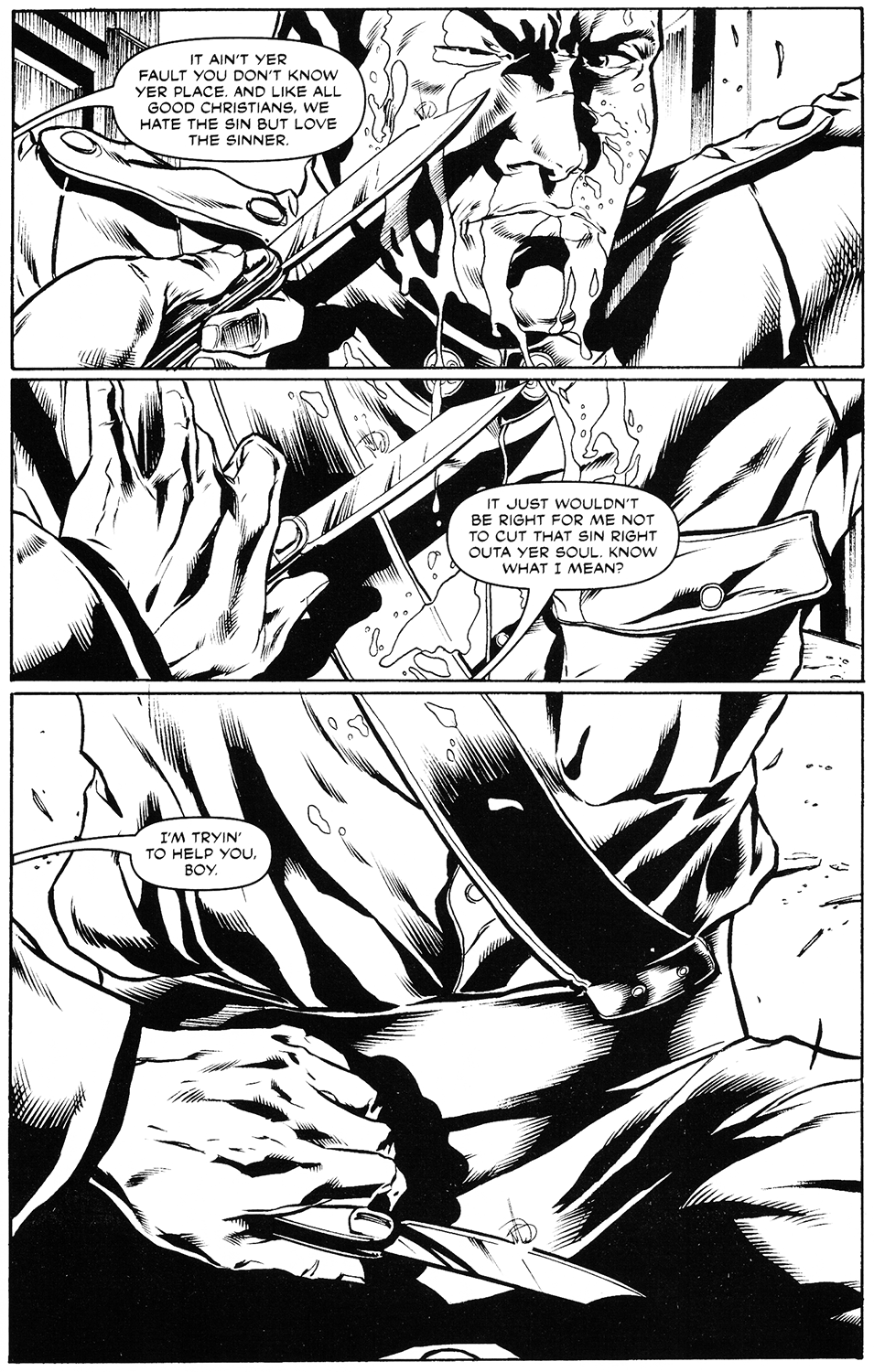
 We talk about visual styles being striking, but in Caanan White’s case it doesn’t strike so much as barrage the reader. The detailed, expressive style can be a bit busy at times and one gets the sense that this is a comic that deserves to be printed in colour. But the faces and postures of the men convey their emotions expertly, and the trenches come to death in gory detail from peeling flesh to rotting corpses. If the style were a little cleaner, it might explode more exactly on target, but I suppose war is a busy, confused business too. This is not to say that it is unworthy of the narrative; far from it. But the devil’s in the detail and I can’t help feeling there’s a bit too much of it.

There is something a little bit disturbing about the blood-lust of the soldiers in ‘The Harlem Hellfighters’. The comic does not quite express their motivations for being there, unless we are meant to believe that they share the sentiments of the man who says he couldn’t down an opportunity to be paid by white people to shoot white people. But the eagerness to fight instead of rot in the trenches waiting for a shrapnel squall to shred your flesh was a real enough part of the First World War. Trench warfare traumatized a generation of men who coped in whatever way they could. Displaying the grim brutality of that conflict underscores the moral ambiguity of the story as a whole. For all that ‘The Harlem Hellfighters’ is about racism, it is the story of a group of men determined to cross the ocean and kill strangers who have never harmed them. If it is uncomfortable at points, it should be. ★
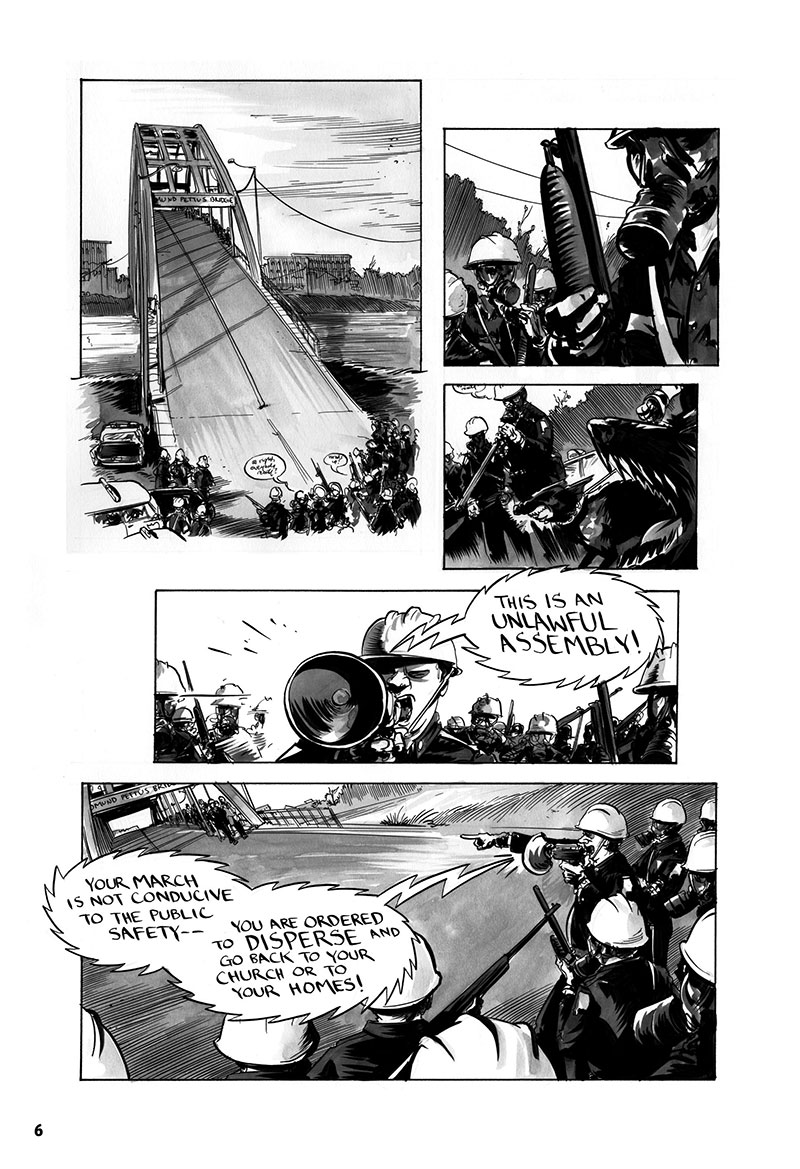


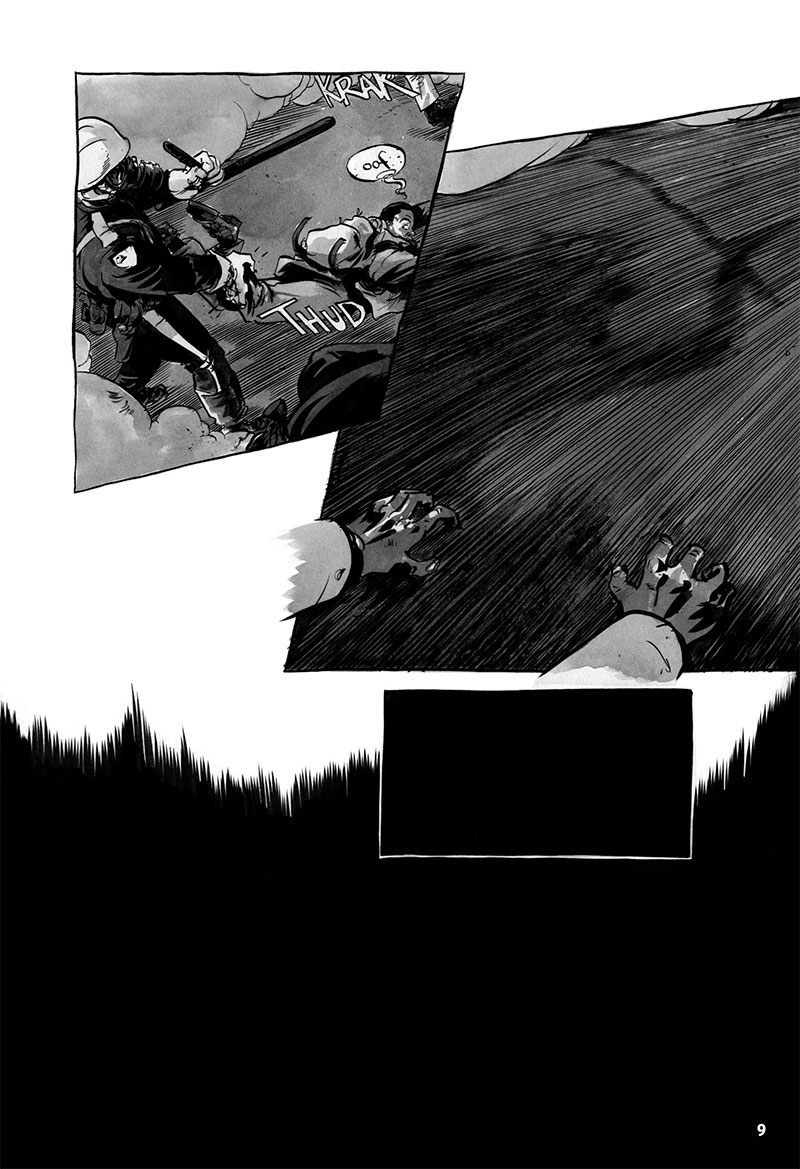
 BAYOU – 2010, by Jeremy Love.
 NAT TURNER – 2006 by Kyle Baker. Four issues bound into two volumes here tell the story of Nathaniel “Nat” Turner, leader of one of the largest slave revolts in American history. The genius of this comic is that it tells a compelling story while allowing the historical value to shine through. It uses all excepts of Nat Turner’s own words, taken from a “confession” he gave to a newspaper while in prison awaiting his execution (the word “confession” of course, is an editorialization from the newspaper of the time–however, one can hardly expect him to be remorseful for killing the men who killed and enslaved his kinfolk). We not only have a primary source, but a first-hand account of what we’re seeing depicted in pictures: the life of a 19th Century slave, the horror of life from capture, transport, sale, work, and punishment. The role of religion and prayer for slaves who survived. As a political and historical comics enthusiast, this is one of the gems. Kyle Baker looks to have taken 19th Century newspaper illustrations and breathed them full of life and human emotion. This and a nail-biting narration have practically gift-wrapped this bloody episode of American history.
 JACKIE ROBINSON, Issues 0 – 6 – Written by sports-writer Charles Dexter. Now I know nothing about this comic – save that it was published in 1950 and that it’s real. That makes it one of the earliest comic book depictions of a black historical figure (maybe the first?) and impossible to leave off this list, where I try to encourage that there is black representation, but also a note-worthy link to Black History (sorry Black Panther, Storm, Huey Freeman…)
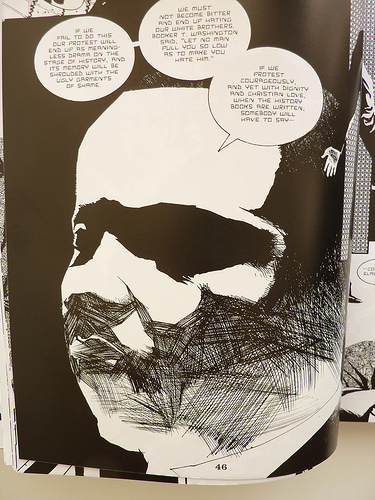
 KING: A COMICS BIOGRAPHY OF MARTIN LUTHER KING JR. – 2005, by Ho Che Anderson. Generally considered to be more comics journalism, this volume collects over 10 years of Ho Che Anderson’s work into a biography of the renowned civil rights leader. From a review on Amazing: “KING probes the life story of one of America’s greatest public figures with an unflinchingly critical eye, casting King as an ambitious, dichotomous figure deserving of his place in history but not above moral sacrifice to get there. Anderson’s expressionistic visual style is wrought with dramatic energy; panels evoke a painterly attention to detail but juxtapose with one another in such a way as to propel King’s story with cinematic momentum.”
 BIRTH OF A NATION – 2004, by Aaron McGruder and Reginald Hudlin and Kyle Baker.
 “STILL I RISE”: A GRAPHIC HISTORY OF AFRICAN AMERICANS – 2009, by Roland Laird (Author), Taneshia Nash Laird (Author), Elihu “Adofo” Bey (Illustrator), Charles Johnson (Foreword)
 adastracomix.com