All posts by adastracomix

We produce, publish and promote comics with social justice themes! Visit www.adastracomix.com for more.

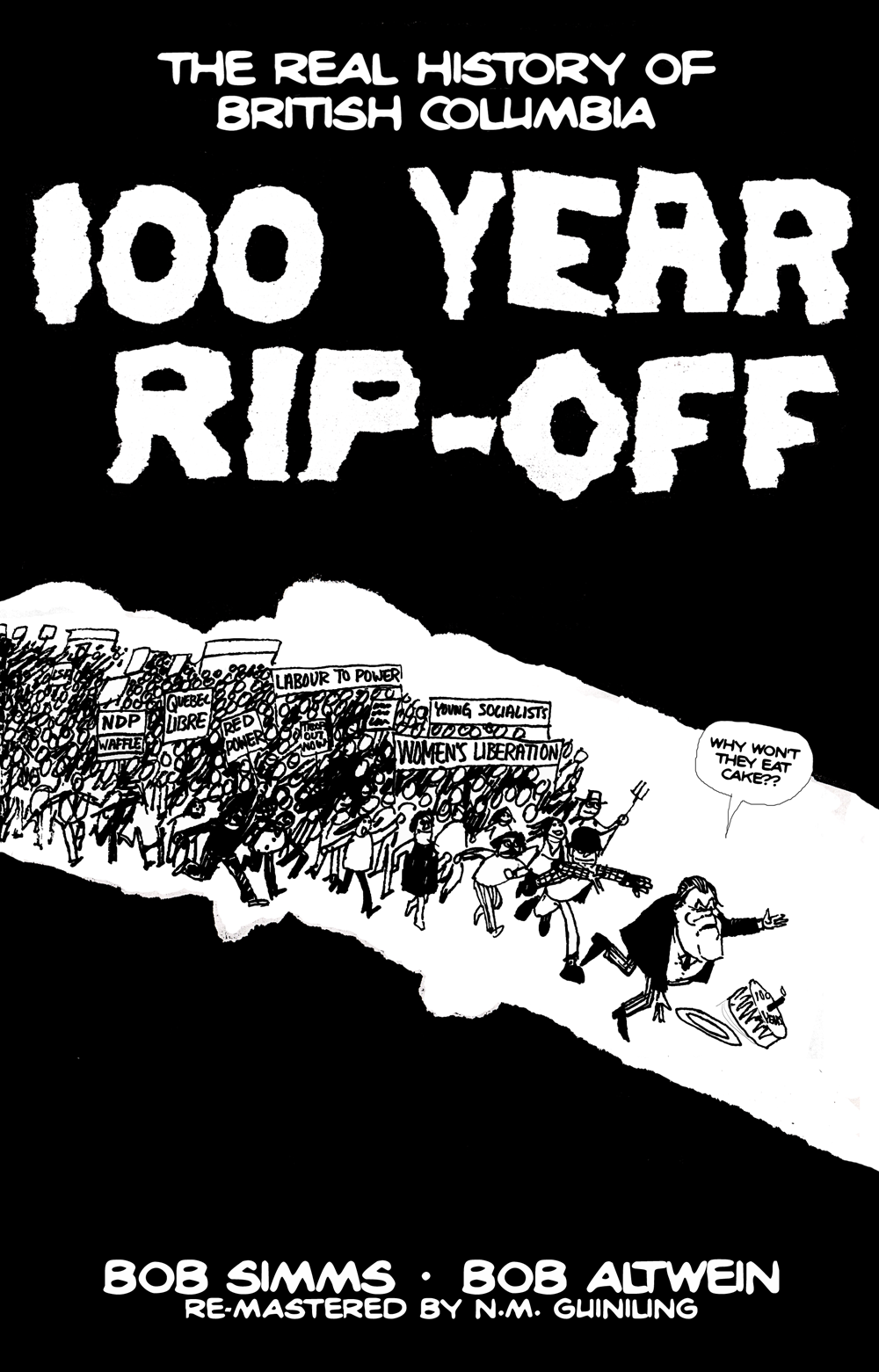
100 Year Rip-Off is Back from Printers!

Fresh out of the box - mmm, the smell of slightly burned toner.
Fresh out of the box – mmm, the smell of slightly burned toner.

Fresh Out of the Box!

On Tuesday this week, I got the call to come and pick up 5 boxes of freshly printed comics – 100 Year Rip-Off has come back to life.  For those of you who follow these posts, you’ll know that this has been Ad Astra’s main project for the past few months.

First order of business is filling pre-orders from the lovely folks who supported me during my Indiegogo campaign–they are deserving of a comic on their doorsteps immediately, along with my most heartfelt thanks. It feels wonderful to have people around you who believe in your project.

Lessons

This Summer has been such a blur of activity, I feel like I haven’t really had time to sit down and process my first publishing experience. From the get-go, I liked the idea of publishing creative work from someone other than myself for the first go at it–I feel like creating and producing are two very different processes that deserve their own special care and attention. Likewise, I wanted to give myself at least some mental time and space to look at the process as much from outside myself as possible–a hard thing to do when you’re staring your own brain child.

And so I impart to you the lessons I’ve learned from this experience from Day 1 – from initial planning, getting in touch with creators, editing, printing, fundraising, and retailing.

Make a Timeline. It’s not that we all follow calendars, but they help your brain foreshadow the journey in which you’re about to take part. Get a cheap calendar from the dollar store, or a get a big piece of paper, and lay out everything you think will be involved in the process of your project.
Enjoy the Process. A lot of the editing work with 100 Year Rip-Off was incredibly tedious–essentially going over each image with a magnifying glass. But I actually enjoy this work, and find the focus involved therapeutic. If you find yourself going into territory that is boring or frustrating–but necessary for your project’s completion, find a way to make it a more enjoyable experience. Creativity, love, and care in work all stem from savored moments. Don’t rush it.

Make Connections.  Anyone who has a project they want to share should always have this in mind. Everywhere you go, you have opportunities to talk about what you’re working on. Don’t get all shy and say “I don’t want to promote myself”. Stop it! You’re not shamelessly promoting yourself–you are promoting your work, which has a life all its own. And let me tell you, it’s way more interesting to talk about with your neighborhood barrista in the morning than the frickin’ weather or new version of the iPhone. Come off it. People love projects. They love hearing about what the people around them are working on. Share the process you’re involved in with others–and you will always find people who say, “When you’re done–save one for me.”

Seriously Calculate Finances. Seriously. I know everyone hates it,  but understanding how much your project is going to cost is pretty important–especially when you’re asking people to help you out with money. This brings me to my next point, which is Indiegogo related.

Details of Delivery. Once your project is done, how’s it getting out to people? If you did a crowd-funding campaign, did you calculate for postage? How about international orders? These all seem like “good problems” to have, that you’re willing to table until you’re far enough along that they will come up–but think about them now. I included a promotional poster in with my Indiegogo campaign–one that I wanted to send unfolded to contributors. Well, after the campaign had ended, I found out that shipping it unfolded was going to cost 2-3 times as much as what people had donated for it! FAIL. Keep shipping in mind.

… I may add to this list later, but these are my immediate reflections on this particular project. I’d like to take some more time in the near future to really lay out the anatomy of the process, and perhaps turn it into its own How-To project.

Thanks for reading.


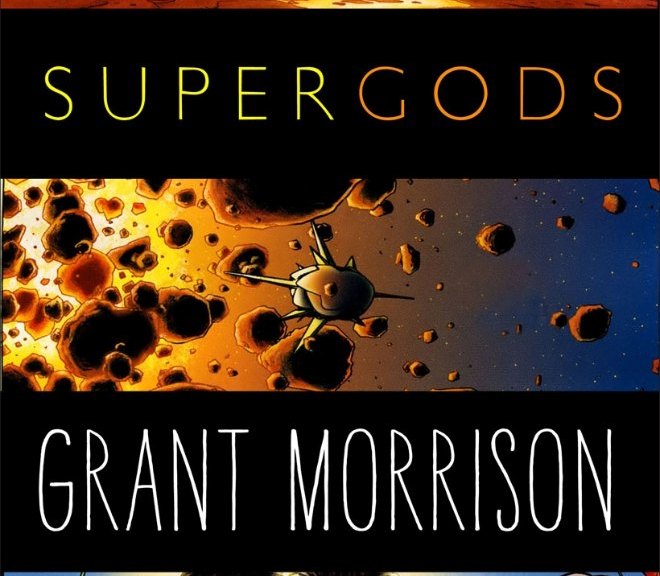
Introduction to Grant Morrison’s SUPERGODS

I’ve just begun reading Grant Morrison’s Supergods and wanted to share the introduction with any non-readers or non-believers. From what seem to be almost arbitrary and even laughable (often laughable) beginnings, the rise of superheroes in comics speaks deeply of the politics and belief systems of our times. Since it’s already available online elsewhere, I thought I’d share with you the book’s introduction–which makes for a great article in and of itself.

supergod_cover

Title: SUPERGODS: What Masked Vigilantes, Miraculous Mutants, and a Sun God from Smallville Can Teach Us About Being Human
Author: Grant Morrison
Published: 2011 by Spiegel and Grau, New York


Introduction
FOUR MILES ACROSS – a placid stretch of water from where I live in Scotland is RNAD Coulport, home of the UK’s Trident-missile-armed nuclear submarine force. Here, I’ve been told, enough firepower is stored in underground bunkers to annihilate the human population of our planet fifty times over.  One day, when Earth is ambushed in Hyperspace by fifty Evil Duplicate Earths, this mega destructive capability may, ironically, save us all—but until then, it seems extravagant, somehow emblematic of the accelerated, digital hyper-simulation we’ve all come to inhabit.

ctte of 100At night, the inverted reflection of the submarine dockyards looks like a red, mailed fist, rippling on a flag made of waves.  A couple of miles of winding road from here is where my dad was arrested during the anti-nuclear protest marches of the sixties. He was a working-class World War II veteran who’d swapped his bayonet for a Campaign for Nuclear Disarmament badge and became a pacifist “Spy for Peace” in the Committee of 100.  Already the world of my childhood was one of proliferating Cold War acronyms and code names.  And the Bomb, always the Bomb, a grim and looming, rain-coated lodger, liable to go off at any minute, killing everybody and everything.

if an a bomb falls

His bastard minstrels were gloomy existentialist folkies whining horn-rimmed dirges about the “Hard Rain” and the “All on That Day” while I trembled in the corner, awaiting bony-fingered judgment and the extinction of all terrestrial life.  Accompanying imagery was provided by the radical antiwar samizdat zines my dad brought home from political book-stores on High Street. Typically, the passionate pacifist manifestos within were illustrated with gruesome hand-drawn images of how the world might look after a spirited thermonuclear missile exchange. The creators of these enthusiastically rendered carrion landscapes never overlooked any opportunity to depict shattered, obliterated skeletons contorted against blazing horizons of nuked and blackened urban devastation. If the artist could find space in his composition for a macabre, eight-hundred-foot-tall Grim Reaper astride a flayed horror horse, sowing missiles like grain across the snaggle-toothed, half-melted skyline, all the better.

Like visions of Heaven and Hell on a medieval triptych, the post-atomic wastelands of my dad’s mags sat side by side with the exotic, triple-sunned vistas that graced the covers of my mum’s beloved science fiction paper-backs. Digest-sized windows onto shiny futurity, they offered android amazons in chrome monokinis chasing marooned spacemen beneath the pearlescent skies of impossible alien worlds. Robots burdened with souls lurched through Day-Glo jungles or strode the moving steel walkways of cities designed by Le Corbusier, Frank Lloyd Wright, and LSD. The titles evoked Surrealist poetry: The Day It Rained Forever, The Man Who Fell to Earth, The Silver Locusts, Flowers for Algernon, “A Rose for Ecclesiastes,” Barefoot in the Head.

On television, images of pioneering astronauts vied with bleak scenes from Hiroshima and Vietnam: It was an all-or-nothing choice between the A-Bomb and the Spaceship. I had already picked sides, but the Cold War tension between Apocalypse and Utopia was becoming almost unbearable.  And then the superheroes rained down across the Atlantic, in a dazzling prism-light of heraldic jumpsuits, bringing new ways to see and hear and think about everything. Te first comic shop in the UK—The Yankee Book Store—opened in Paisley, home of the pattern, just outside Glasgow in the years after the war. With a keen sense of ironic symmetry, the comics arrived as ballast alongside the US service personnel whose missiles threatened my very  existence. As early R&B and rock ’n’ roll records sailed into Liverpool to inspire the Mersey generation of musicians, so American comics hit in the west of Scotland, courtesy of the military-industrial complex, to inflame the imaginations and change the lives of kids like me. The superheroes laughed at the Atom Bomb. Superman could walk on the surface of the sun and barely register a tan. The Hulk’s adventures were only just beginning in those fragile hours after a Gamma Bomb test went wrong in the face of his alter ego, Bruce Banner. In the shadow of cosmic destroyers like Anti-Matter Man or Galactus, the all-powerful Bomb seemed provincial in scale. I’d found my way into a separate universe tucked inside our own, a place where dramas spanning decades and galaxies were played out across the second dimension of newsprint pages. Here men, women, and noble monsters dressed in flags and struck from shadows to make the world a better place. My own world felt better already. I was beginning to understand something that gave me power over my fears. Before it was a Bomb, the Bomb was an Idea. Superman, however, was a Faster, Stronger, Better Idea.

superman strip

It’s not that I needed Superman to be “real,” I just needed him to be more real than the Idea of the Bomb that ravaged my dreams. I needn’t have worried; Superman is so indefatigable a product of the human imagination, such a perfectly designed emblem of our highest, kindest, wisest, toughest selves, that my Idea of the Bomb had no defense against him. In Superman and his fellow superheroes, modern human beings had brought into being ideas that were invulnerable to all harm, immune to deconstruction, built to outsmart diabolical masterminds, made to confront pure Evil and, somehow, against the odds, to always win.

I entered the US comics field as a professional writer in the mid-eighties at a time of radical innovation and technical advance, when the acknowledged landmarks of superhero fiction like The Dark Knight Returns and Watchmen were being published and the possibilities seemed limitless,along with the opportunities for creative freedom. I joined a generation of writers and artists, mostly from a UK working-class background, who saw in the moribund hero universes the potential to create expressive, adult, challenging work that could recharge the dry husk of the superhero concept with a new relevance and vitality.  As a result, stories got smarter,artwork became more sophisticated, and the superhero began a new lease on life in books that were philosophical, post-modern, and wildly ambitious. Te last twenty years have seen startling, innovative work from dozens of distinctive and flamboyant talents in the field. The low production costs (pen and ink can conjure scenes that would cost millions of dollars of computer time to re-create onscreen) and rapid publication frequency mean that in comic books, almost anything goes. No idea is too bizarre, no twist too fanciful, no storytelling technique too experimental. I’ve been aware of comic books’ range, and of the big ideas and emotions they can communicate, for a long time now, so it’s with amazement and a little pride that I’ve watched the ongoing, bloodless surrender of mainstream culture to relentless colonization from the geek hinter-lands. Names that once were arcane outsider shibboleths now front global marketing campaigns.

Batman, Spider-Man, X-Men, Green Lantern, Iron Man. Why have superheroes become so popular? Why now? On one level, it’s simple: Someone, somewhere figured out that, like chimpanzees, superheroes make everything more entertaining. Boring tea party? Add a few chimps and it’s unforgettable comedy mayhem. Conventional murder mystery? Add superheroes and a startling and provocative new genre springs to life. Urban crime thriller? Seen it all before . . . until Batman gets involved. Superheroes can spice up any dish.

But there’s even more going on beneath the surface of our appetite for the antics of outlandishly dressed characters who will never let us down. Look away from the page or the screen and you’d be forgiven for thinking they’ve arrived into mass consciousness, as they tend to arrive everywhere else, in response to a desperate SOS from a world in crisis. We’ve come to accept that most of our politicians will be exposed, in the end, as sex-mad liars or imbeciles, just as we’ve come to expect gorgeous supermodels to be bulimic, neurotic wretches.

We’ve seen through the illusions that once sustained our fantasies and know from bitter experience that beloved comedians will stand unmasked, sooner or later, as alcoholic perverts or suicidal depressives. We tell our children they’re trapped like rats on a doomed, bankrupt, gangster-haunted planet with dwindling resources, with nothing to look forward to but rising sea levels and imminent mass extinctions, then raise a disapproving eyebrow when, in response, they dress in black, cut themselves with razors, starve themselves, gorge themselves, or kill one another.

Traumatized by war footage and disaster clips, spied upon by ubiquitous surveillance cams, threatened by exotic villains who plot from their caverns and subterranean lairs, preyed upon by dark and monumental Gods of Fear, we are being sucked inexorably into Comic Book Reality, with only moments to save the world, as usual. Towering, cadaverous Death-Angels, like the ones on the covers of Dad’s anti-nuke rags, seem to overshadow the gleaming spires of our collective imagination. Could it be that a culture starved of optimistic images of its own future has turned to the primary source in search of utopian role models? Could the superhero in his cape and skin tight suit be the best current representation of something we all might become, if we allow ourselves to feel worthy of a tomorrow where our best qualities are strong enough to overcome the destructive impulses that seek to undo the human project?

We live in the stories we tell ourselves. In a secular, scientific rational culture lacking in any convincing spiritual leadership, superhero stories speak loudly and boldly to our greatest fears, deepest longings, and highest aspirations. They’re not afraid to be hopeful, not embarrassed to be optimistic, and utterly fearless in the dark. They’re about as far from social realism as you can get, but the best superhero stories deal directly with mythic elements of human experience that we can all relate to, in ways that are imaginative, profound, funny, and provocative. They exist to solve problems of all kinds and can always be counted on to and a way to save the day.  At their best, they help us to confront and resolve even the deepest existential crises. We should listen to what they have to tell us.

Indiegogo Fundraiser Over for 100 Year Rip-Off

page1Hi Everyone!

Thank you to everyone who participated in our Indiegogo campaign to re-release “100 Year Rip-Off: The Real History of British Columbia”.

We successfully raised enough money to cover most of the printing costs! Which is fine by me–as we raised $500 more than I was expecting.

This means 100 Year Rip-Off will be getting back from the printers in September, and will be ready to distribute and sell at retail shops across Canada.

From the bottom of my heart, I thank each and every one of you for your generous support. As comic books rise in popularity and cultural relevance, it’s work like 100 Year Rip-Off that show us a long tradition of using comic books for education and social change.

I hope you all enjoy your copy/copies as they arrive at the end of September. For those of you who ordered larger numbers or are receiving a map in addition to the comic, be on the look-out for a larger shipping parcel. For orders outside of the U.S. and Canada, your shipment may be slightly delayed–but should arrive nonetheless by the end of September, as promise.

For those of you interested in keeping in touch, please follow me online!

I apologize for the lack of updating on the website–crowd-funding actually left me feeling a little exhausted. Hopefully content will be flowing at a normal pace really soon.
Facebook Page: https://www.facebook.com/AdAstraComix?ref=hl
Twitter Account: @AdAstraComics

Cheers everyone! Thank you once again, and have a terrific long weekend!

N.M. (Nicole Marie) Guiniling
nicolemarieguiniling@gmail.com

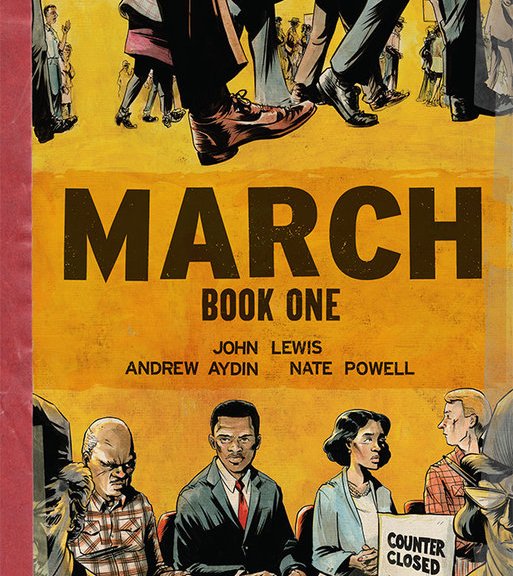
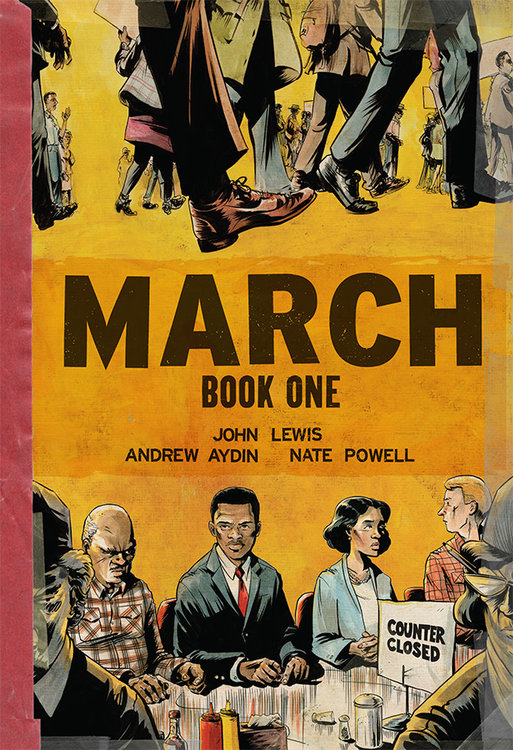
Review of “MARCH: Book One”

March_cover

Title: MARCH: Book One
Creators: John Lewis, Andrew Aykin, and Nate Powell
Published: August 2013 by Top Shelf Press

March: Book One is the first part in a trilogy graphic memoir detailing the life and times of Civil Rights activist and Congressman John Lewis.
Growing up in the United States, you’re led to believe that you learn all there is to know about the Civil Rights Movement in school. You learn about Martin Luther King and Rosa Parks and the Montgomery Bus Boycotts; you learn about the most famous American speech of the 20th Century: “I Have a Dream”.

In a recent article shared through the Zinn Education Project, historian and black activist Bill Fletcher Jr. describes the method by which certain moments and people in the Civil Rights movement have been “mythologized” and “sanitized“. And boy, has our understanding of this history been manipulated! We would be led to believe that forces of the status quo in the 1950s and 1960s–from local police departments up to the President’s office–supported non-violent forms of protest; that racism and racists were isolated to the masses of simple folk in the South.

Of course, the result of this is that students are not understanding the context of these important pieces of history. That is why I’m hopeful of a book like March making its way into classrooms… students deserve a broader view of these issues than what will be allocated to them in 2 or 3 paragraphs of a standard-issue textbook.

As John Lewis, Andrew Aydin, and Nate Powell so eloquently show us in March, this was not the case. The Civil Rights movement was a bloody, uphill battle. The struggle and its gains were not the results of a few actions by those now famous historical figures: the movement moved by way of thousands of committed activists, many of whom were students.

This is a truly beautiful comic book that paints a portrait not just of a man (John Lewis was one of the leaders of the Student Non-Violent Coordinating Committee, and is now a Congressman; he is also the last living person to have given a speech alongside Martin Luther King on Aug 28, 1963). It paints a vivid portrait of a movement that you think you know, but maybe, possibly, probably don’t. Why was non-violent civil disobedience so radical at the time? Why were there rifts between the younger activists and the older black leadership–figures like Thurgood Marshall? How was the Civil Rights movement connected to religious groups? To the labor movement?

Nate Powell has a way of making every picture personable–crisp, yet dreamy, with solid black ink brush strokes complimented by dabbles of watercolor staining. And Andrew Aydin, who works on Congressman John Lewis’ staff, has obviously been instrumental in taking the vast treasure trove of information that is John Lewis’ life experience, and organizing it into an epic memoir. I particularly like the stories that attest to his core character, like growing up on an old sharecropper farm, wanting to be a preacher and practicing his talks on his chickens. These are wonderful stories that bring out the humanity behind the political battles.

These are the stories from the Civil Rights Movement that, I believe, reclaim the history and restore its heart and soul. You can’t learn about a protest movement from a government-sanctioned textbook.. they’ll make you think the whole thing was their idea. And although Congressman Lewis is now a part of that system, well… how he got there will be explained in the next two books of the trilogy.

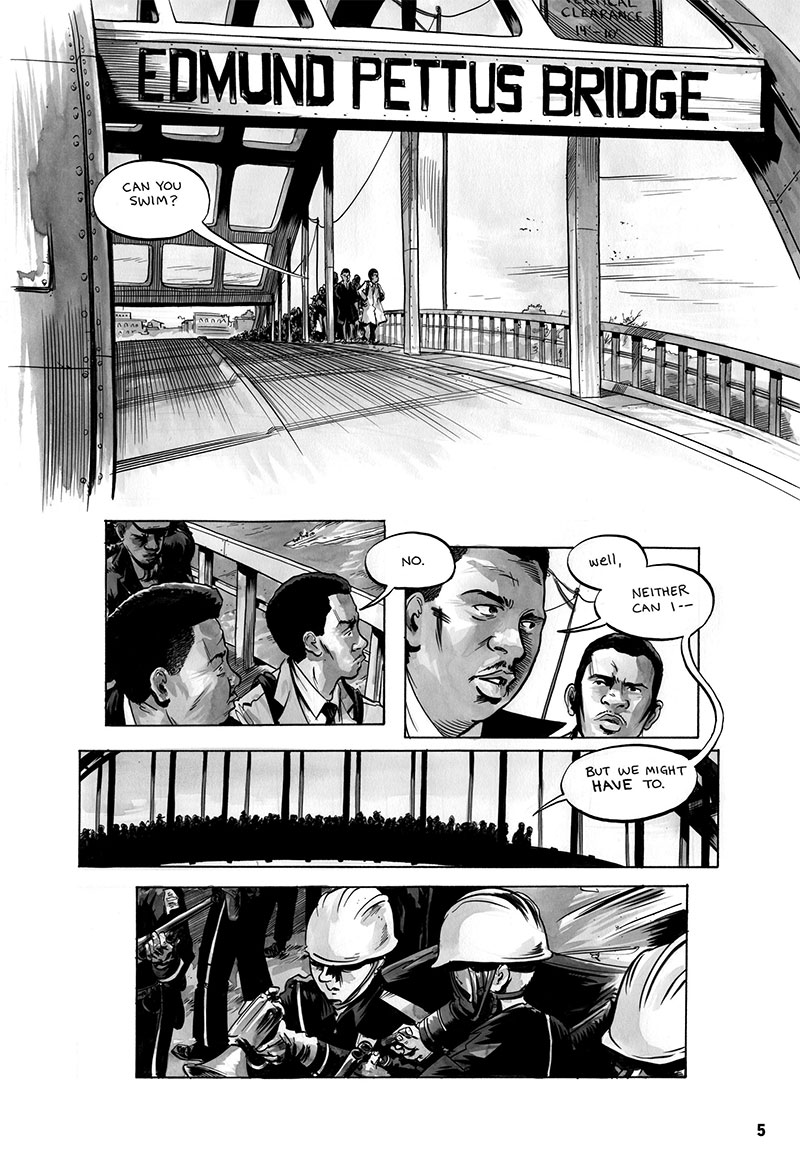
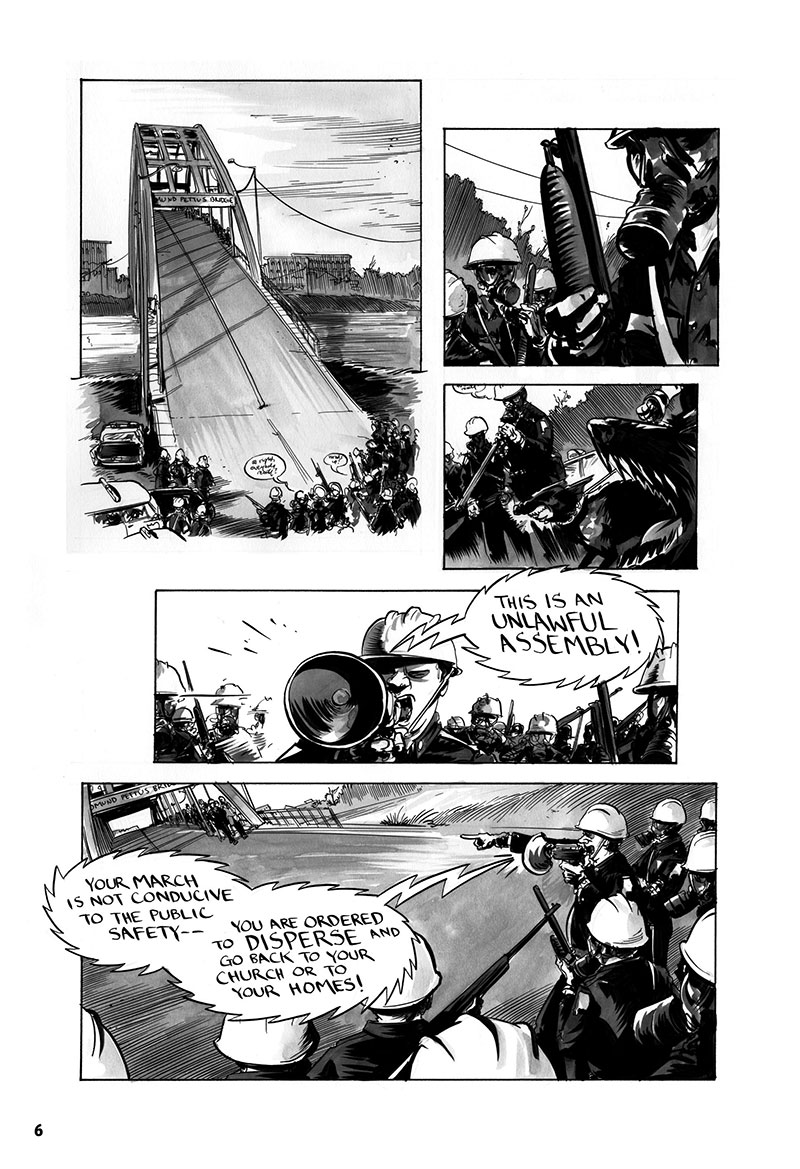
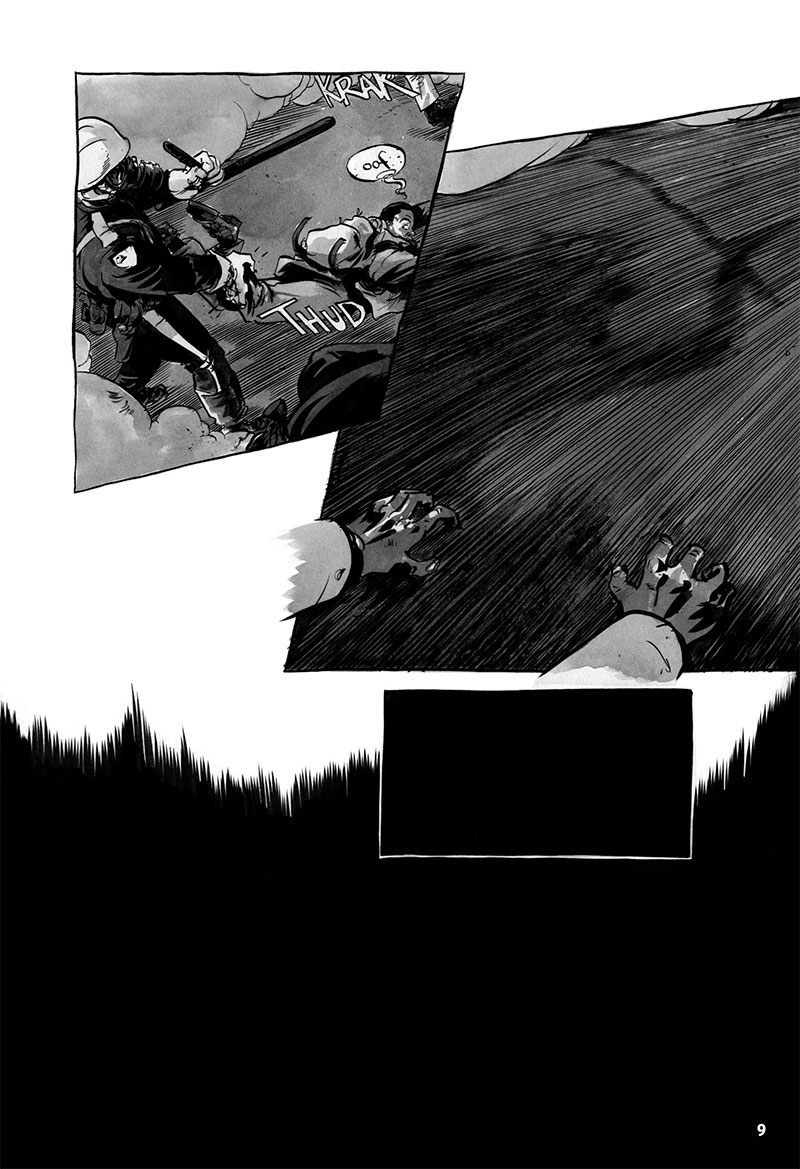
I’m excited about what I’ve seen so far–this is an often raw, ugly–yet true history of the Civil Rights Movement in the United States. To get a glimpse of this, I’ve asked the kind folks at Top Shelf to show you the first five pages of March. I hope you see what I mean–and be sure to pick up a copy when you get the chance!

March_cover

March-interior-hi-res-5 March-interior-hi-res-6 March-interior-hi-res-7 March-interior-hi-res-8 March-interior-hi-res-9

Press Release: Fundraising Begins for Canada’s Oldest Graphic History!

example2FOR IMMEDIATE RELEASE

100 Year Rip-Off, A People’s History of B.C. to be Re-released After 40 Years
Canada’s Oldest ‘Graphic History’ on Record Highlights Stories of Working Class and People of Colour

July 20, 2013

Canada’s oldest recorded comic book history is coming back from the dead after more than 40 years—if it gets a little help. On the anniversary of B.C. joining Confederation, specialty comic book publisher Ad Astra Comics is launching a 40-day fundraiser for the comic book “100 Year Rip-Off: The Real History of British Columbia”. The campaign, which aims to raise a modest $800, will help to cover the costs of re-mastering and printing the comic for the first time in over four decades.

“100 Year Rip-Off: The Real History of British Columbia” is a blue-collar comic book history of the first 100 years of B.C.’s confederated history. Written by the late Robert Simms and illustrated by artist and current B.C. resident Bob Altwein, 100 Year Rip-Off was originally produced as a one-time 8-page broadsheet, accompanied by a counter-culture newspaper.

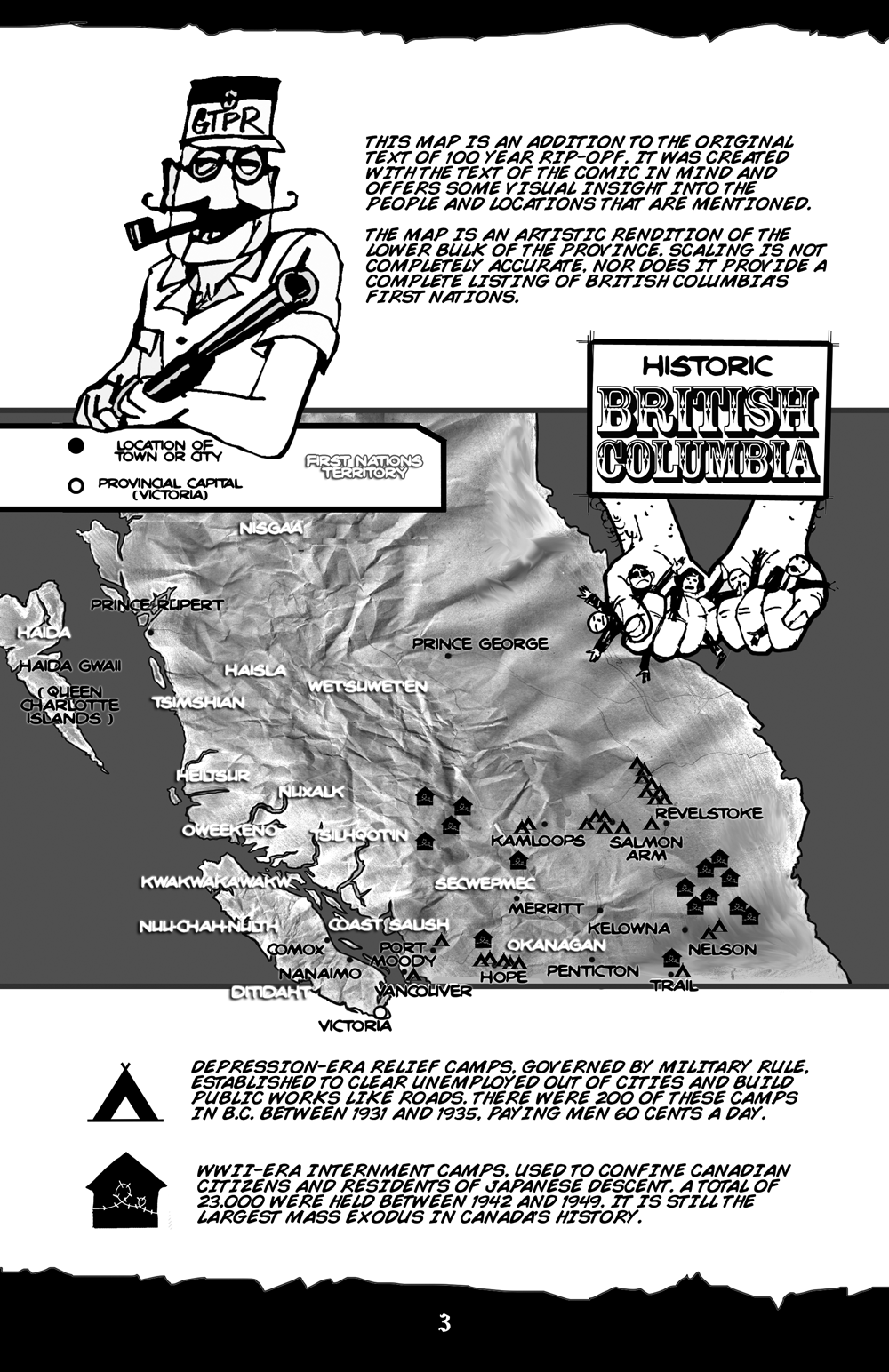
Ad Astra Comics, in consultation with Altwein, has digitized and re-mastered the work and provided complimentary additions to the content, including a map and glossary addressing the finer details of the original work. The text remains un-altered.

“100 Year Rip-Off is a graphic history that almost slipped into oblivion–right at a time when comic books and ‘graphic history’ comics in particular are reaching a peak in popularity,” says Nicole Marie Burton, campaign coordinator and founder of Ad Astra Comics, a micro-publisher that specializes in political and historical titles. The project is headquartered with the publisher in Toronto.

A quality printing of the re-mastered work means that 100 Year Rip-Off can get a new lease on life–and that means a new generation of readers will be able to benefit from these little-known stories of the province’s history.”
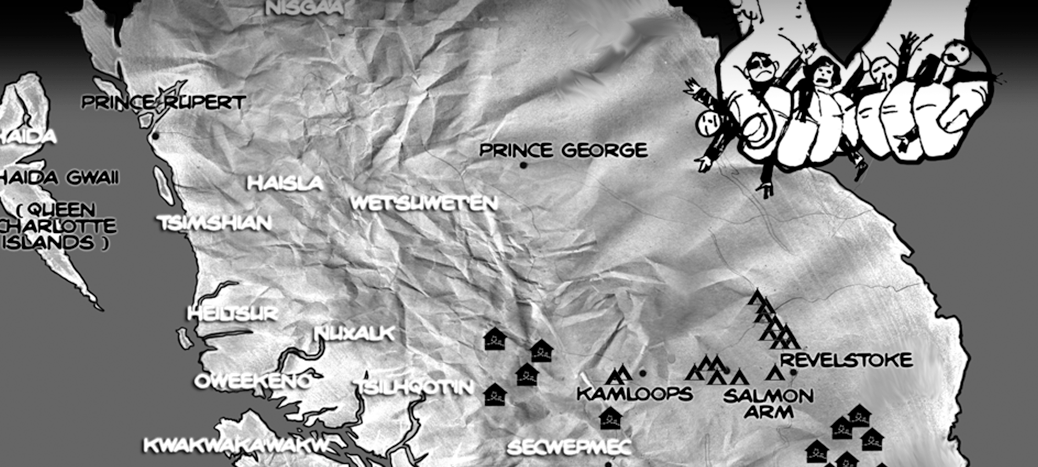
That history, according to 100 Year Rip-Off, includes a number of episodes in which B.C.’s residents were given the short end of the stick–as the name indicates. It documents, through meticulous research, the seizure of lands from B.C.’s First Nations alongside the banning of Indigenous cultural practices like the pot-latch. It progresses by chronicling the often-volatile history of labour struggles within the region, from the formation of B.C.’s first unions to the province’s recurring threat of a Winnipeg-style general strike. History enthusiasts will take interest in the detail of the text, while comic book lovers will enjoy the ‘School House Rock’ style of illustrations, so indicative of the contemporary comic and cartooning scene of the 1970s.

Burton points out that young activists may take interest in the rendition of the 1938 ‘Sit-downers Strike’ that took place at the Vancouver Art Gallery and in the Georgia Hotel–an action very reminiscent of the recent Occupy Movement.

100 Year Rip-Off is a standard-sized comic book of 30 black-and-white pages. Participants in the project’s IndieGoGo campaign can contribute for as little as $7 and get their own copy of the book mailed to them. Larger contribution packages include buying a bundle of comics at a reduced price–perfect for schools, unions, book stores, and special interest groups–along with a poster-sized version of the comic book’s reference map, which has been added to this specially re-mastered edition.

“The project is about revitalizing and popularizing the working class history of this province,” explains Burton. “But it is also celebrating the creative work of the comic itself, which in turn has become a part of our history.”
For more information, please visit the “100 Year Rip-Off” IndieGogo Campaign Page:

http://igg.me/at/100YearComic/x/1048985

Press Contact:
Nicole Marie Burton
c/o Ad Astra Comics
nicolemarieburton@gmail.com
647-863-4994
http://www.adastracomix.com

Review of “Fallout: J. Robert Oppenheimer, Leo Szilard, and the Politics of the Atomic Bomb”

Fallout_cover

At its offset, it would seem that Fallout may be a part of a bandwagon to which most of the world is unbeknownst. The history of the self-described “graphic history” is a relatively short one. A natural off-shoot of the also-overly-used term, “graphic novel,” it has become something of a gold rush in a struggling book industry. Their accessibility and palettability makes them ideal for classroom and other educational settings… they appeal to young and old alike, etc. In a saying that seems as tacky as it is unlikely to the everyday cynic, graphic histories make learning fun.

But they also, often, make learning simple. Simplistic. Too simplistic. In fact many ‘graphic histories’ that have come out recently appear to be about topics by which the authors themselves don’t even appear to be highly engaged or inspired.

But, that is not this comic book.

fallout2

Title: Fallout: J. Robert Oppenheimer, Leo Szilard, and the Politics of the Atomic Bomb
Written by: Jim Ottaviani
Artwork by: Various (including Janine Johnston, Chris Kemple, Steve Lieber, Vince Locke, Bernie Mireault, Eddy Newell, and Jeff Parker)
Cover Illustration by: Jeffrey Jones
Published: 2000 by General Tektonics (GT) Labs, as a part of a series of books about science and scientists

Originally printed in 2000, making it a bit ahead of the graphic history game, Fallout documents the Top Secret rise, gritty enactment of, and perhaps also the fall–if not materially, then politically, and above all morally–of the Atomic Age. It is a part of a larger series released by the publisher, GT Labs, of books that popularize (and perhaps humanize) science and the history of science to those not in the ‘know’.

Blending first-hand accounts and quotes with hypothetical dialogue–deemed at the preface of the book to be true “science fiction”–Fallout takes you from the inception of the atomic bomb, as it was first simply a theory in the minds of a handful of scientists–many of whom were struggling to escape the grip of fascism in Europe. An prime example is the physicist Leo Szilard, one of the Manhattan project’s founders, who barely escapes Germany as a refugee in one of the last trains out of the country (he explains that he avoided scrutiny by traveling first class).

It is in this climate that scientists begin to do what would otherwise be unthinkable: keeping their work Top Secret, not publishing their findings, enlisting not only the funding but considerable control of scientic research through the U.S. military. It was all for a greater good: to defeat the rise of Nazi Germany and to one day, possibly, hopefully, end the War–to end all wars. For in the scientific mind, if it were in fact a given that the world is ruled by reasonable men–what man would there be who would begin a war against a country with a nuclear bomb? The book is rivetting not only in its ability to explain the scientific basis of how a nuclear reaciton works (something that has never made sense to me) but also in seeing how these men, who were all more or less geniuses and culturally enlightened intellectuals, could be led to believe that this project was not only a good idea, but an absolute necessity.

fallout3

The read is intriguing, even gripping (the first test of a nuclear chain reaction being recorded on the panel with the “click” “click” “click” “click” of the counter–the sound we all now associate with radioactivity in fallout zones–kind of gives you this ‘lightbulb over your head’ moment… “Aha! So that’s what each ‘click’ represents!”). You can tell from the narrative that the book is not only painstakingly researched, but done so by someone who believes in the need to know and understand the story. Perhaps this is an obvious requirement for all books of quality, but one that I would never take for granted in the category of a “graphic history”.

fallout4

I would give this book the highest of recommendations. It is everything I hope a graphic history to be when I open it for the first time. And although I began this piece talking about the medium, an exceptional graphich history will in my opinion, pull you into talking about the content as much, if not more, than the form.

In 2013, we are all so familiar with bite-sized pieces of atomic energy–from nuclear power plants to the trademark mushroom cloud, the bombing of Hiroshima and Nagasaki, Chernobyl and the meltdowns in Fukushima. But the introduction of such power into the realm of what was humanly possible was just as explosive, in the 1930s-50s, for everything from international Geo-politics to the limits philosophical and moral dilemmas that one human being can handle. In the words of Edward Teller:

“I made the great mistake of feeling relieved of my responsibility… the chance to show the world that science can stop a terrible war without killing a single person was lost.”

Or, more succinctly, of J. Robert Oppenheimer:

fallout5

Preview The Pages of 100 Year Rip-Off: One of Canada’s Very First Graphic Histories

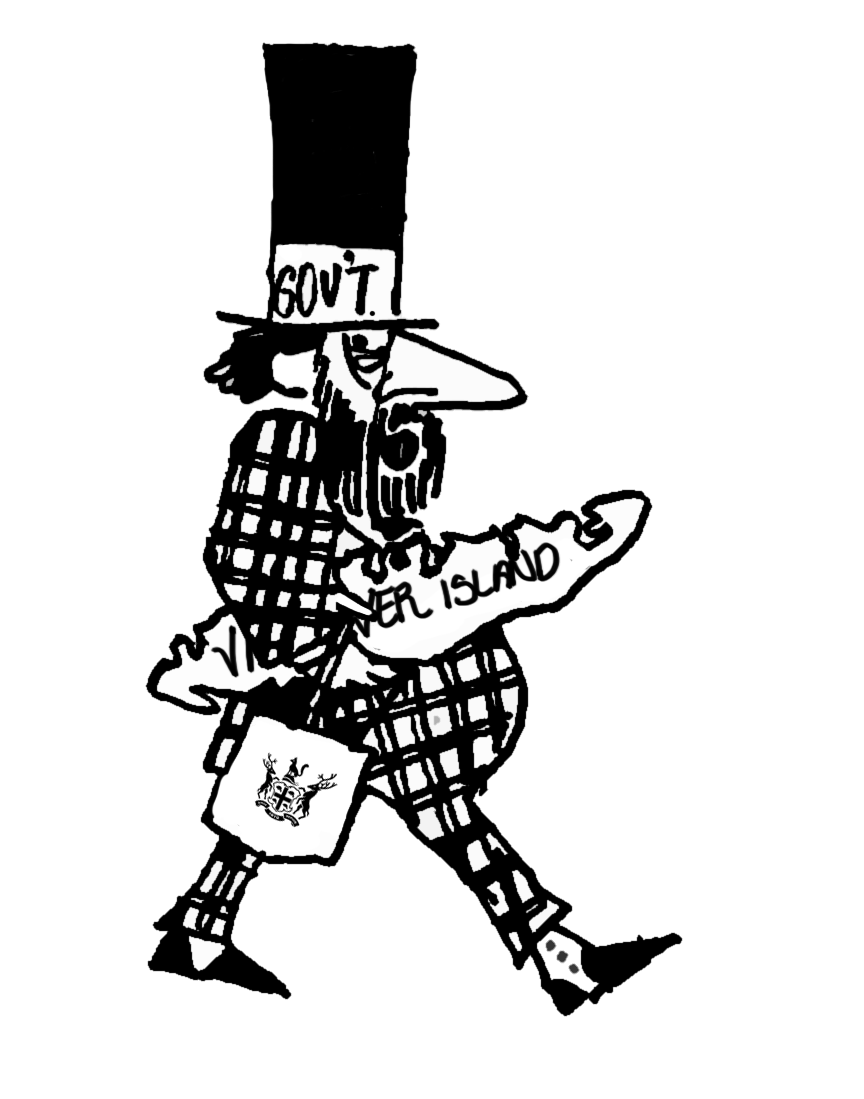
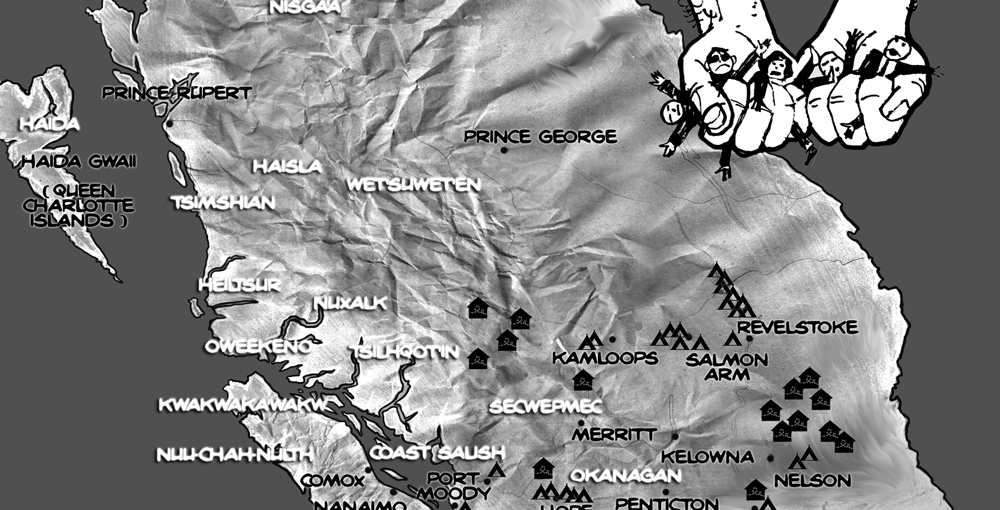
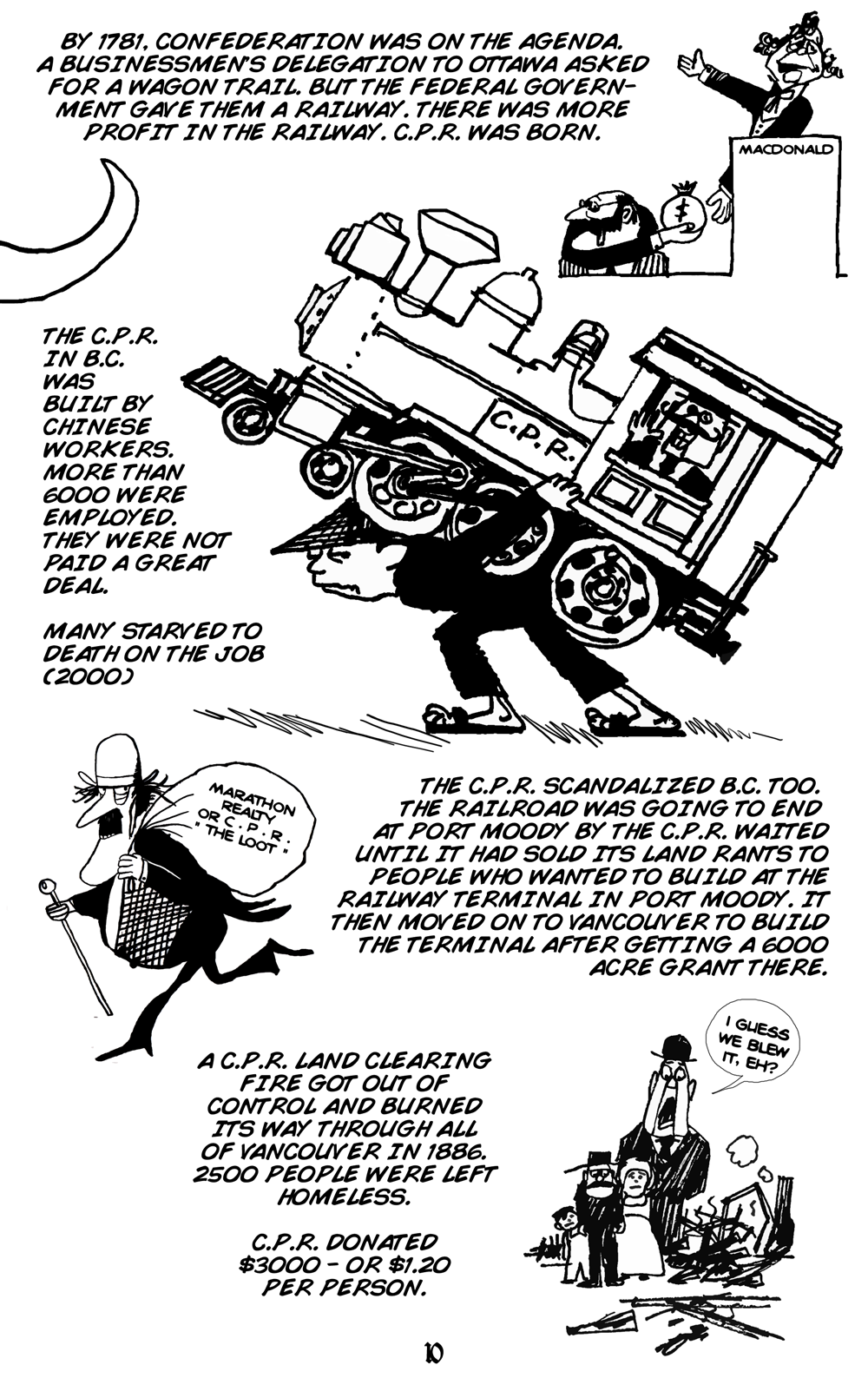
Available here for the first time is a collection of pages from Ad Astra Comix’s upcoming re-release of the 100 Year Rip-Off. Originally printed in 1971 for the B.C. Centennial, Ad Astra, in cooperation with the artist Bob Altwein, are making the work available for a new generation. Enjoy!

page1page2

page3

page4

page5

Liberator #1

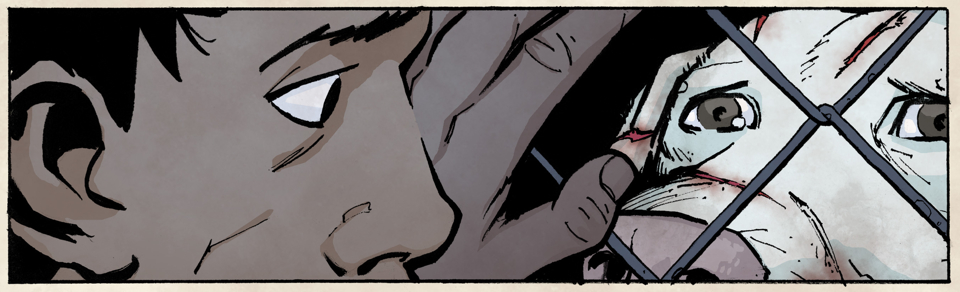
The series opens with one of the main characters taking down a dog fighting ring. It’s a feel-good moment where a few horrible people are given their just desserts, and some dogs get the justice they deserve.

Liberator-iss1-cover1a_600px

Title: Liberator
Issue: #1
Writing: Matt Miner
Art: Javier Sanchez Aranda
Published: in 2013 through Black Mask Studios and a successful Kickstarter campaign
More infohttp://mattminer.net/

Liberator is a series that tells the story of two animal liberation activists who save dogs and other animals from abuse. While one has a long history of making a public presence in activism, the other chooses to work in the shadows, taking direct vigilante-style action against abusers, most of whom are themselves breaking the law with their activities. Each issue comes in at about a dozen pages of full-colour graphics, and is coupled with literature (located in the back) on animal rights work.

I do tend to approach my comic reviews in two ways. One is aesthetic: is the story good? Does the art kick ass? The other side of my reviews tends to focus on political/social relevance and its method of delivery. Like the Bechdel test, a comic that is most politically relevant doesn’t make it a good story—nor are the two mutually exclusive. They embody separate goals, hopefully ones that work together.

page 1

Aesthetically I think Liberator is pretty impressive. It is more or less self-published under the new label of Black Mask Studios, after a Kickstarter campaign that brought comic and animal lovers together quite successfully. Key points in the comic show some really nice artwork with great colour schemes.  I don’t quite feel a connection to the narrative yet, but it is only Issue #1.. (I point this out because Matt Miner made me cry within about 6 pages of his story “Light” in the Occupy Comics Issue #2 that just came out– so my standards are high with him. Great comic, by the way. Read it. Read it now.)

In only a dozen pages, the comic nonetheless makes lots of commentary, and not just on animal rights. One is that a lot of people who literally devote their lives to helping others (humans or animals) work the crappiest of minimum wage jobs to get by. (Check). Another is that men who encounter other men’s disrespect of women should call that shit out. (Check). I think there is also more subtle commentary here, like when a black man refers to a dog he is abusing as “his property” (irony?) –or the never-ending activist debate with regards to making effective change by political protest vs. other more creative, even illegal forms of resistance.

(All of this is hypothetical in a comic book, of course. Which is what makes it so great.)

Liberator clearly has an agenda. Guess what? Everything does, including comic books. My opinion is if you’re pouring your life/money/job into creating something and you’re not using it to say something meaningful, you’re making a bad investment  There is a self-awareness in political comics that the project’s completion will be able to further assist with a topic that generally lacks creative avenues of discussion–like animal abuse, or violence against women, or mistreatment of prisoners. For a long time the comics community and activists of varying causes have waved the other away–“No one will buy that.” “Sounds campy.” “What’s the difference between a comic with a political agenda and propaganda?”…..and vice versa, “A comic dumb’s down the topics we’re trying to discuss,” “Comics take time and money,” and again, “No one will buy it.”

To fit a lot of potential discussion into such a small space is indicative of the medium’s ability. So even if I’m not totally compelled by the narrative just yet, my hat goes off to the Liberator team, and I look forward to picking up the next copy.

eyes meeting

Additional Notes:

I have funny, petty criticisms of Liberator (like, No one wearing a Conflict shirt would wear blue cargo pants) that boil down to me thinking/writing out loud. But I also felt it was honing in (maybe too much?) on a small minority of psychotic animal killers and abusers. I mean, how many of those can there be out there?

The day after I read Liberator, my husband wouldn’t stop talking about Mike Vick’s dogfighting bust, and I just couldn’t get it out of my mind that this was a man who obviously didn’t live in the shadows, and he has a thing for training dogs to kill other dogs, and motivating them through methods like pressing a hot iron against their faces. He was a superstar football player with thousands of people following him on social media, laughing at his jokes, and ready to buy whatever he endorsed. And he killed animals for fun.

Is the animal-abusing psychopath …common? Or perhaps regardless of its frequency of occurrence, does that make it any less real or disturbing where and when it happens? Maybe there are issues that effect a larger swath of our population, like the number of homeless pets out there, but comic books focusing on extreme crimes and abuses is nothing new.

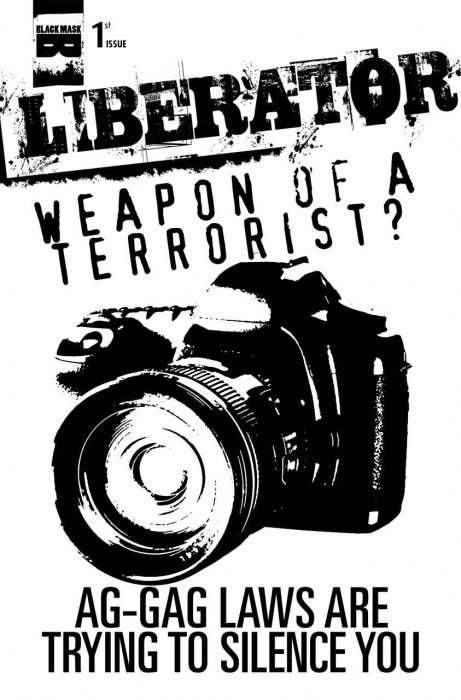
…as a side note, the special edition cover of Issue #1 absolutely wins my heart over. I will be following this comic closely, and I encourage others to do the same.

black-mask-studios-liberator-issue-1d

Huxley vs. Orwell: The Webcomic

Biblioklept's avatarBiblioklept

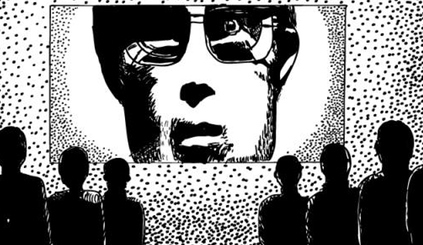
Stuart McMillen’s webcomic adapts (and updates) Postman’s famous book-length essay, Amusing Ourselves to Death, which argues that Aldous Huxley’s vision of the future in Brave New World was ultimately more accurate than the one proposed by George Orwell in 1984. (Via).

View original post