Hasta la Victoria… ! Spain Rodriguez Wins the Battle with “CHE: a graphic biography”

che spain rodriguezTitle: CHE: a graphic biography
Author and Artist: Spain Rodriguez
Published: 2008 (Verso Books)
Editor: Paul Buhle (also contributed an afterword on Che, co-written with Sarah Seidman)

As something of a legend in his own right, comics maker Spain Rodriguez had this Graphic Biography of Che Guevera out before the three others I have reviewed here. I wish he were still alive today, because I’d love to ask him what compelled him personally to do this piece—and furthermore, why a bunch of other people got interested in similar projects right around the same time.

Of all of the books, his has a decidedly indie style (that’s Spain for you). It was also the only work that was by a single person, not a team of writer-and-illustrator. What his visuals lack for in polish, they make up for in detail. On page 39 it shows Che getting grazed in the neck during the early days of the July 26 Movement. Nothing more is said of his wound, but there’s still a bandage on his neck by page 40, several panels later. Call me a freak but I appreciate that.

The content of the text is also excellent. Spain’s points of interest are focused, relevant, and well-argued where arguable. He goes beyond just rhetoric in quoting Che, choosing instead soundbites that let you hear the gears turning in this remarkable man’s head. This is the first book to touch on the factional disputes and internal dynamics of the July 26th Movement and the Cuban Revolution as a whole, which means that Spain believed what I believe: you can’t understand Ernesto Guevara without understanding the Cuban Revolution. If this seems too ideological, too political, well,… Try reading a biography of Thomas Jefferson without coming across the line, “We the People…” .

His narrative of the Bay of Pigs / Playa Giron is amazing—a really great piece of comic art. Great flow; not too text-heavy; educational; beautiful. There’s even a rare moment that Rodriguez is able to place himself in the story, to explain where he was and how he was feeling during the Cuban Missile Crisis. It was his generation’s take on my “Where were you on September 11th?” and I find it intriguing.

spain_drawing2In my opinion, Spain’s Graphic Biography is the victor of this 3 week Battle of the Graphic Biographies. In all fairness, he had quite a head-start on the others. Aside from literally being the first published (which is irrelevant) he was a rebel and a leftist, a history buff, and among comic artists one of the best in illustrating the technical, from machines to military campaigns. And not to put too fine a point on it, but of all the creators involved, I don’t see evidence of anyone else having a longer relationship of admiration for Guevara. He probably had much longer to think his book through—it wasn’t just something that popped into his head after he watched The Motorcycle Dairies.

Star Rating: 4 ½ stars. Great work of political comic art.

P.S. - I will also point out that Spain tells the story of the surrender in Santa Clara much more accurately than what I'd previously read. So much for that revision of Cuban history.
P.S. – I will also point out that Spain tells the story of the surrender in Santa Clara much more accurately than what I’d previously read. So much for that revision of Cuban history.


Saturday, February 16

I haven’t read a book in Spanish in a long time… and I’ve never read a comic book, which has its own kinds of boundaries and flavours of language. Even when Spanish felt more or less as my proficient second language, jokes, double entendres and other palabra-play were never easy for me. I can count on one hand the number of punchlines I ever understood.

And so I kept stalling on this book, ¡Libertad! Because I can plainly see more and more, as I slowly crawl through these pages, that there is creativity here, and dedicated research–and passion for the story.libertad

Title¡Libertad!
Author: Marise and Jean-François Charles
Artist: Olivier Wozniak, Benoît Bekaert
Published by: Ediciones Kraken, 2009 (Spanish version only – first published in French)

This book begins where most stories of Che end– his assassination at the hands of the CIA and Bolivian military and government officials.

“They say a man’s life flashes before his eyes before he goes,” the introduction reads, explaining that this is what this short comic is aspiring to do–what else could a comic book offer of a man whose impact on history was greater than many statesmen twice his age?  It is for this reason that I like the format of this comic most, of all those that I have read. It is creative, yet reasonable.
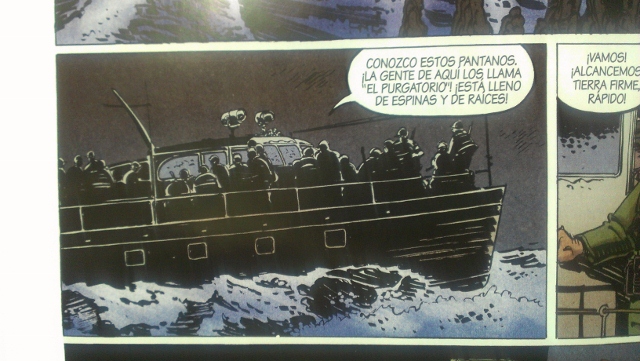
The Granma was a ship built for maybe two dozen passengers. From Mexico to Cuba, it transported 82 combatants of the July 26 Movement. Scenes jump from miltestone to milestone, as one would expect in an abridged biographical story. It begins in 1953, when Che is in Bolivia, slowly en route to Guatamala to work as a doctor, hopefully to participate in the modest reforms of President Jacobo Arbenz. He finds the woman who will become his first wife, but struggles to find meaningful work (the medical graduate complains about selling religious trinkets in the street before a car bomb explodes outside their apartment–to which his girlfriend, Hilda notes that they “may need a doctor now.”Guatemala is also where he meets members of the July 26th Movement, so it is his stage entrance into the Cuban Revolution. Scenes are taken from what we know, what is written of, the many meaningful points in Che’s life–points that tell us something of his character and capacity for leadership. This includes scenes like that of Che grilling the Cuban guerrillas who began firing on a peasant who had taken them by surprise (“What the fuck are you doing?” he says, “The land he tills isn’t even his–it’s for these people that we’re fighting!”). The book is showing, very efficiently, how “El Commandante” the man was built. Because Spanish is my second language, it’s impossible for me to tell the exact quality of the dialogue, here, but my literal translations  remind me of a decent historical fiction film.

Because the comic isn’t a documentary/biography style, with an outside narrator, I for one feel more submerged in the characters being presented: Che, Hilda, Fidel, and the minor characters that are there for pivotal moments: the Cuban who speaks with him on his way to Guatemala (in the book, he is presented as the first man to call Ernesto by the nickname “Che”), and on to the soldier who tends his wounds as he’s waiting to be killed.

The artwork is a very Tintin style, in my opinion, more common with European comics. I like the wash coloring–so much better than the digital colour randomness in the first book I reviewed. The illustrations aren’t stunning, but they’re certainly not bad, either. And there are a few compositions in the mix that give me the impression that the artist and author understood what was important to emphasize. For example, there is the rally in Havana Square at the dawn of the Cuban Revolution– you can literally count the frames of thousands of tiny Cuban people. If you see pictures, you’ll see that the magic of the moment in history was as much the masses as it was the words being spoken from the stage.

Despite the many positives of this book (especially when I compare it to other Che biographies), this work will reach few in North America. Because of its non-availability in English, and furthermore its large format, which makes it seem like a kids book) most of the comics readers I know would pronounce  ¡Libertad! a lost cause before they even opened it. Where Sid Jacobson’s Che biography gets a 10 for accessibility, this book gets a 2. Very unfortunate, since the verdict on the books’ contents is, for me, the opposite.

Rating: 4 stars. Some great biographical storytelling!
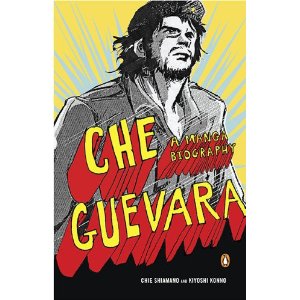


book cover_mangaCheThis week I’m reviewing CHE: A Manga Biography by Chie Shimano and Kiyoshi Konno, published in 2008 by Penguin Books

The last Che Bio I reviewed, I referred a few times to “historical inaccuracies”. In light of this Che comic, I’d like to re-characterize that distinction as “historical bias”. After all, history is open to interpretation, and there can be several “truths” welcome in a story where conflicting interests are concerned. Perhaps my beef with the book was that it was so totally American in its bias. For example, the section on the Bay of Pigs was through the eyes of a Cold-War-stricken Kennedy, not through the millions of Cubans having their country invaded (and taken advantage of by the USSR).

In my opinion, this Che biography shows an impression of Che through other eyes in the world. Like most Manga, this book comes from Japan, and approaches Che more as a folk hero than a strictly historical figure. Like most folklore, it is a light introduction to a subject–a simplified, more-or-less linear narrative.

…But before I jump into that, it has occurred to me that I never explained my rating system. When I’m reading a political comic, I’m looking for political and historical relevance,  excellent research, storytelling capacity, and overall aesthetics (layout, the relationship between words and graphics). Each star, for me, represents one of these things in a five-star points system, and most works begin with one star just for bringing a political comic book into the world.

It always kills me when I see a book released by a major publisher (Penguin, in this case) where there is a typo on the first bloody page. Where the book is originally published is irrelevant; typos in an English translation are inexcusable on a 200 page book with a list price of $20.

I also find myself wondering how much of this book would make sense if I hadn’t already experienced other Che-related movies and books. There seems to be a lot of recycling here from Motorcycle Diaries. If it’s not original, at least the book is still passionate. Sid Jacobson’s CHE: A Graphic Biography (which I reviewed last week- listed below) seemed so sterile and uninspired, I wondered why or how the man got involved in writing the book.

Chie Shimano’s personal admiration for Che Guevera becomes clear about half-way through the book, as Che (now a Cuban diplomat) is traveling around the world seeking purchasers for Cuban sugar. In a last-minute itinerary change that threw his entourage into a panic, Che decided to visit the city of Hiroshima, site of the notorious U.S. bomb drop in WWII. Of everything in the book, I found this to be a high-point in the storytelling: it reveals something about both author and subject–and a connection, a passion for humanity against injustice, that they both share.

Despite this, and much stronger wording of the U.S. relationship towards Latin America (other Che biographies take note: we know you’re trying to be “unbiased”, but you can only use the words “meddling” and “intervention” so many times. Call a spade a spade: the word is “imperialism”), there remains some unfortunate truths about this book. Mangas are now prized around the world for their accessibility and entertainment value; maybe I’m expecting too much, but the dialogue here is so terrible. So scripted and campy. Again… I am reminded that this book is made with a nod to folklore–not just academic history.

There is a bibliography, but several passages that I believe required annotation, like a poem written to the passage of the Granma ship through the Caribbean, are not clearly noted.

CHE: A Manga Biography offers some original nuggets of innovation to what has become a collective storytelling of Che’s life. As well, it rightly contrasts with other more Amero-centric biographies, like Sid Jacobson’s take on the Bay of Pigs/Cuban Missile Crisis and U.S. intervention in Latin America. But ultimately, it still is not quite a “good” comic. Too many typos, campy scenes of heroism, and poorly-scripted dialogue.

Star Rating: 2 1/2 stars – a nice try.


(Part 1/4)

Some people are entirely against everything that he embodied. Some defend everything he ever did, whole-sale. Some swear to his beliefs, and yet decry the methods by which he carried them out. And still there are others who, 40 years after his death, wear his face on a t-shirt but don’t know his name.

Che Guevera. The middle-class Argentinian med student who went on to help launch the Cuban Revolution. He re-defined the rules of modern warfare, modernized the practical application of socialism, fought battles on three continents, and died at the hands of the CIA and their Bolivian counterparts.

No matter where you stake your claim in the spectrum, there is no doubt that Che was the socialist Dos Equis “World’s Most Interesting Man” for his time. But he was no pop star… the polarization of opinions of Che Guevera and his lasting image remain a testament to how much impact his ideas and his actions really had.

As someone who has read Che’s speeches, writings, seen the movies, been to various forums and seminars about the man’s life (including several in Cuba), I say this: the offerings of a 100-pg comic book covering the epic that was his life stand to face a tall order. Fidel Castro could probably write 100 pages about Che’s fingernails. It’s a challenge, regardless of the quality of writers or the artists; a challenge that I took an interest in a few months ago when I began to notice the high number of Che comic book biographies out there.

Most of them (and all the ones I’m reviewing here) were released at the same time –2008 to 2009. It may have been in response to the popularity of Diarios de Motorcicleta (The Motorcycle Diaries) released to critical acclaim in 2004. Nonetheless, not all are equal. Of the four I’ve chosen to review (there are six in total that I have come across, but the other two are out of print / not available in Canada) they come from three different countries and use vastly different angles and resources by which to tell their story. This is part 1/4 of my findings.


che sj ec

 “CHE: A Graphic Biography” written by Sid Jacobson with artwork by Ernie Colon, was published in 2009 by Hill & Wang (under a section called “Novel Graphics”).

What immediately strikes me about this book is its accessibility. This copy was actually a Christmas present from my parents—if they found it, they obviously didn’t need to look too hard. The cover points out that both Jacobson and Colon are New York Times best-selling authors. This is graphic novel marketing and packaging at its most efficient.

To me, the inside reminds me about that old saying of books and their covers. It’s page 6 and I’m already confused. Chronology of the events really jumps around, as the author tries to write about two different bike trips that Ernesto went on at different times in his life. Coincidentally, I quickly take note that the artwork seems a little confused as well, if only in regards to the time period: Latino motorcycle thugs from the 1930s probably didn’t sport skull decals, black leather jackets and, well, modern-looking chopper motorbikes.
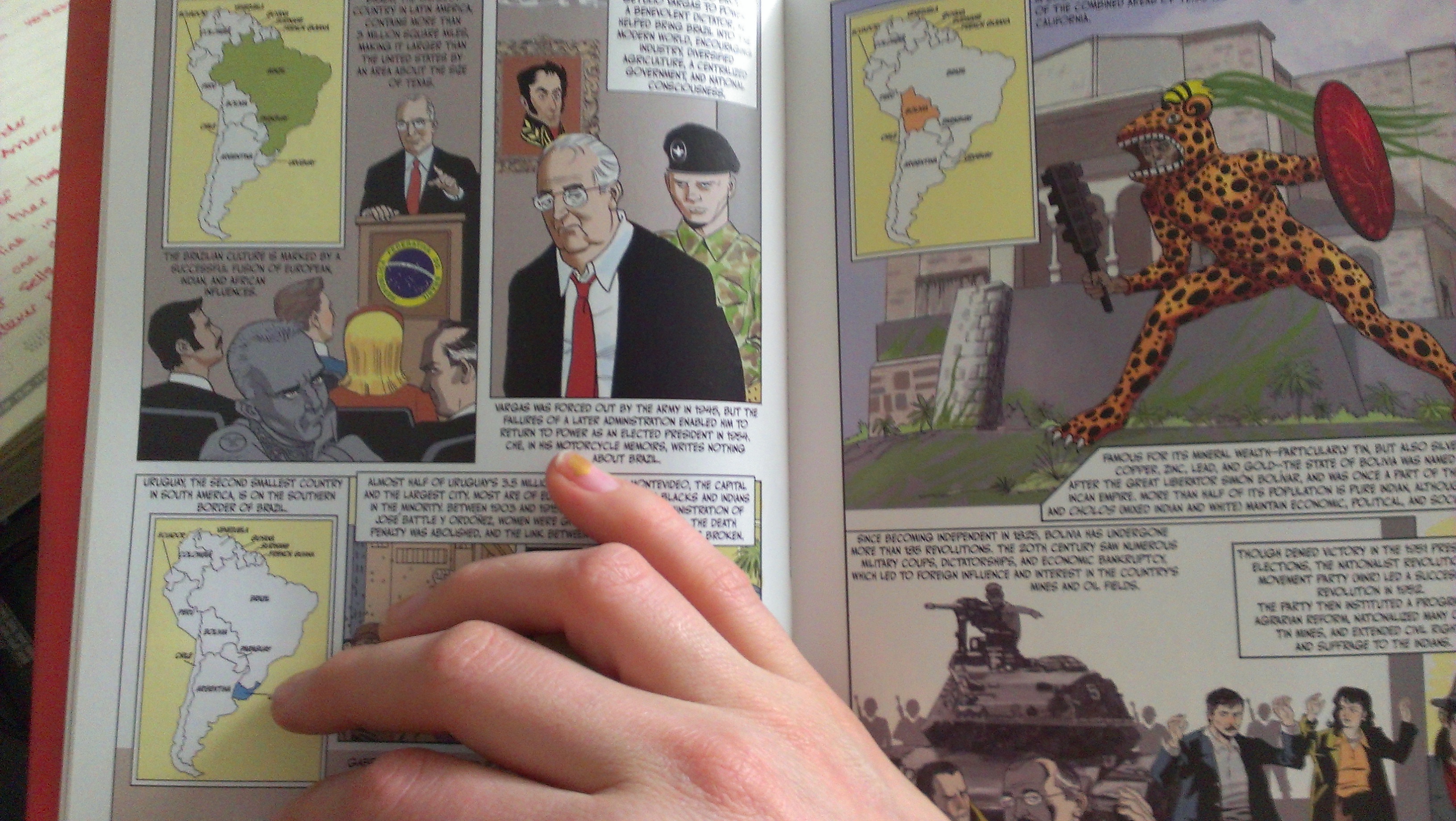
IMAG0381A plus is that the book takes the time to illustrate the political climate, more or less, of the major Latin American states at the time of Che’s trip, which I find useful and original—yet even this unique portion of the book tends to lack in terms of overall vision and context. For example,  if the recurring themes in Che’s life revolve around wealth disparity (poverty, employment, suffrage) and U.S. meddling in the continent, then why are the descriptions of countries so scattered beyond this? Who cares that in 1951, Brazil ‘s executive branch consisted of a 9-man council? Proper context would have illustrated, perhaps, that over the last hundred years of Latin America there have been a thousand men who have come to power, elected or otherwise, on promises that were always broken…a continental legacy of despotism that is of down-right mythological proportions.

I find myself riding the fence with this book, looking for merit but noting mostly detractions, until the depiction of the last major battle of the Cuban Revolution, in Santa Clara, where guerrillas attacked a train car full of Batista’s soldiers. It is misleading at best, entirely historically inaccurate at worst.

IMAG0372

IMAG0375

The train was not attempting to escape; it was full of hundreds of reinforcements along with a ton of ammunition. Think about it; an army doesn’t “escape” in the middle of a battle—especially when their numbers are higher. Most of the 400-odd soldiers and officers survived, and were taken prisoner after a truce.

IMAG0378

This scene and other historical inaccuracies,  combined with scattered story-telling, poor research, and some eye-sore colour and design choices make this my least favourite of the biographies, despite its flashy cover.

My Rating: 1 star, and a pitying head-shake.
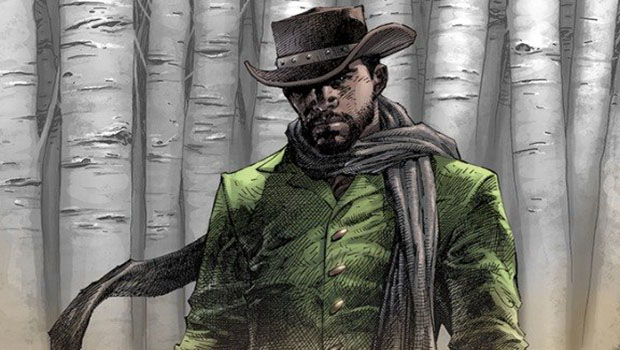
Django Unchained Issue #1

Tarantino is known by fans and foes alike for essentially making good bad movies. Personally, I find some of them great, and some of them horrible. Django as a film, for me, ranks probably in the top two. But how is a comic book adaptation standing up to that?

django comic art

First, a side note: I am fascinated by the fact that Tarantino made this movie from a place that is very different from where most people, post-viewing, are coming at it. Tribute to Spaghetti Westerns and Blaxploitation aside, Tarantino also wanted to open discussion about America’s horrible history with slavery, and racism in general–to which he makes several very thoughtful commentaries in the film. Thom Hartman of Common Dreams went so far as to describe the movie as Tarantino telling today’s American South to go fuck itself.

…But a month in to the world of online reviews, and I’m knee-deep in (very) modern-day commentary about the paradigms of white/male privelege, which all ultimately boil down to whether or not Tarantino, as a white man, should have made a movie about slavery at all.

I’m going to do the only reasonable thing I can with regard to these comments, and just ignore them.

Let’s talk comics.

Shortly after the movie’s release, Vertigo released Issue #1 of “Django Unchained,” a 24-page comic book. Categorically, comic books released in conjunction with a film counterpart are exploitative, in that they’re exploiting peaked interest in a particular plot, character, or genre (whether it’s Kung-Fu, Westerns, etc.) It seems ironic to me that this is an exploitation comic about a film that is essentially a tribute to exploitation film. That would explain why I was the third person in line at the comic shop to be buying it. Generally, I’m not down with this kind of comic-book making: they are all designed to be viewed in a different medium (film), and are, more or less, hastily-assembled products solely introduced for the making of money and fan-swag. The artwork is amazing, yes, but stylistically I see nothing special so far, aside from some exceptional cover art and promotion posters.

django portrait

I am, however, hopeful. The issue opens with a short forward by Tarantino touching on his favorite childhood Western comics, and pointing out that the comic, unlike the movie, is the complete script, unedited and uncut. Things that were cut out of the movie due to lack of time or actors pulling out due to scheduling conflicts remain as scenes in the comic. (Who pulls out of a Tarantino film due to a “scheduling conflict?” apparently half a dozen well-known Hollywood stars…)

More than the film, the comic is a straight-forward look at the barbarity of slavery in the sunset days of the pre-Civil War South (before it transformed itself into the share-cropping/Jim Crow system). Much like any Issue 1, we see a layout of the plot and characters here, and little deviation from the movie.

Some general observations…
I will note that the comic and film DO NOT sing a song of revolution — one in which, say, Django would team up with other slaves, and with their strength in numbers, lead an insurrection. So let’s stop talking about how there isn’t enough of this or that in the film: it’s obviously not meant to be seen that way. The story sings the undeniably individualistic tune of revenge, in which our singular hero and [sometimes] his de-facto side-kick, Dr. King Schultz, go it alone in a hostile environment without anyone’s help.

If you’re looking for a film with strong female roles, you’re barking up the wrong genre tree. The last time someone in Hollywood thought a bunch of strong women belonged in a Western, disaster struck. Someone, someday, will change this–but not here, and not today.

I’m looking forward to the possibilities of this comic series. I’m looking forward to seeing scenes that were cut, and seeing stylistically what it might bring to the table. But so far, nothing remarkable. Stay tuned.

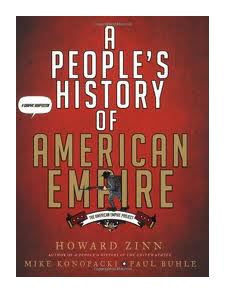
A People’s History of American Empire: Zinn’s Graphic Adaptation

PHAE coverIt was two years ago this month – on January 27, 2010, that Howard Zinn passed on. He was 87 years old. While he was arguably the most important American historian of the 20th Century and wrote a library of work–including his milestone, A People’s History of the United States–a fun fact is that the last publication he released during his lifetime… was actually a comic book.


Title: A People’s History of American Empire (A Graphic Adaptation) Author: Howard Zinn Artwork: Mike Konopacki Editor: Paul Buhle Published: 2008 through Metropolitan Books


The gravity of Zinn’s legacy tends to make singular reviews of his work impossible. A review of one work necessitates a contextual understanding of his life as a radical historian who in turn, participated in making history during his own time. That being said, I will assume that readers will go elsewhere to get their crash course on Zinn, so my review stays under 10,000 words.

This book is beautifully presented. It is now available in soft- or hard-cover, and at about 12″ x 20″, is a little too big to comfortably sit in my lap as I’m reading it. My assumption is that the creators chose a larger format because the work is so text-heavy.

That text is important, because Zinn is arguing a still-contested notion, and needs as much evidence to back up his arguments as possible. It begins with the annexation of Indigenous lands across what is now North America in the later 1800’s, and takes us to the present post-9/11 era of relative global military hegemony.  Zinn’s thesis is relatively clear: all of modern U.S. history is a history of empire; however, there is a parallel history of life and resistance by many. This includes poor and working people, who have played major rolls through unions, churches, and other community groups; women, students, and minorities of many stripes have all had interesting parts to play in a history that is largely told, in Zinn’s words, from the perspective of only “certain white men” (implying the rich and powerful).

Compared to A People’s History of the United States, which first appeared as a piece of academic achievement, American Empire reminds me more of a documentary film. Zinn is shown giving a lecture at an anti-war event, introducing and concluding the book’s chapters, which jump to varying times and places. Major historical figures like Black Elk, Mark Twain, and Eugene Debs are in these chapters, speaking as if to the reader, in scripts pulled largely from their real-life quotations and writings. The creators have chosen to accent this large-scale historical narrative with Zinn’s own personal history, as a young unionist, a WWII Air Force bombardier, and finally, as a young radical professor during the Civil Rights and Vietnam War eras.


PHAE mark twain


What you get here is an interwoven account of his research and his own personal account of the 20th Century.  It’s a moving way to look at a history that was told to most of us very differently in school.

Visually, it’s all a lot to take in, especially if you want to appreciate the illustrations as well as the text. I see this book being most appreciated when you can read it in segments. This makes it perfect for classrooms or study group. Each chapter is about 6 pages.

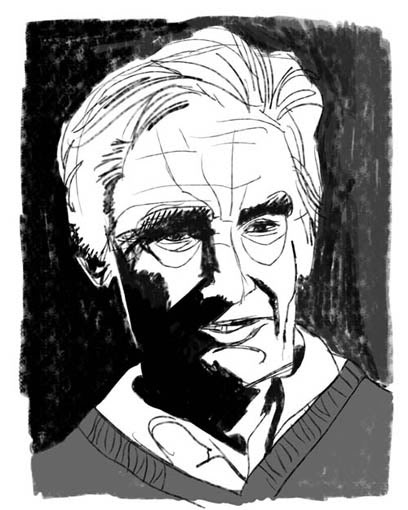
We are looking at a graphic adaptation of Zinn’s work. But we’re also looking at a graphic adaptation of the man as a modern-day intellectual icon. (Ex: These great little “Zinnformation” boxes pop up from time to time in the chapters, depicting a little light bulb with Howard’s tell-tale white hair-‘do.)
zinnformation
But just because I support the work in principle doesn’t mean the review is all roses, right? I have a few critiques of the book, rooted in my perspective as a comics lover + writer, and as a history enthusiast who cannot overestimate the impact Howard Zinn has had on my education.

I’ll get right to the point:

I’m not a fan of comic book adaptations–of books, movies: anything. My experience with them has been largely that they are a lose-lose product: the comic book becomes a simplified medium for what was in its first stage a more complete and highly-developed creative product. (Insert any comic book adaptation of anything here: Game of Thrones, The Last Unicorn, Ender’s Game, etc. etc. etc.) On the other hand, the comic medium is dis-serviced by simply being a highly-saleable vessel by which to re-release something that’s already out on the market. In short, if you’re doing a graphic adaptation, you’d better be bringing something incredibly special to the table.

In this regard, I think this graphic adaptation of Zinn’s past work has both some hits and misses.

First, let’s talk about the hits.

(+) Of course, a comic book makes available a lot of the information that Zinn has, largely, buried in pages upon pages of academic text, filled with all the usual footnotes and supplementary reading. So it’s accessible, and that’s especially important to young adults or classroom settings, as I mentioned before.

(+) The book does in fact compile some new information, largely the primary sources used to assemble its “interview”-styled segments with historical figures like that of Mark Twain shown above. That and the additions of Zinn’s personal experiences make it a more colourful work than any *one* of his texty-texts.


(+) Some of the graphics that have been added to this volume, including the contemporary photographs, political cartoons and other artwork of the time does much to enrich the narrative. It’s always illuminating to have this kind of media–text is, after all, highly prone to editorialization–but a photograph or political cartoon can reveal something of an un-altered reality for the time period. Now, some of the downers.


(-) Personally, I find the cartoon-ish fashioning of the illustrations to be a little out of the mood of the book. This is a serious, often grim, telling of American history–there are many chapters that would have rightly moved me to tears, if not for drawings that look like they came out of a storyboard for Quick-Draw McGraw. I would have gone with a different overall style. Still, even if the manner isn’t to my liking, at least it’s consistent, and professionally rendered.


(-) Many graphics are modified photographs–that’s fine–but what irks me is that whoever photo-shopped them didn’t clean them up. It’s like writing a milestone book and then not bothering to format it properly.  I don’t know why political comic books continue to disappoint me in this arena. It’s as if they see the quality of form and content as mutually exclusive. Or they think that readers just won’t care. peopleshistory1


Some won’t: that’s true.
But for comic book connoisseurs as well as artistically-minded comic readers, this is what ultimately determines the quality of the work… i.e. the amount of love that went into it.

In my opinion, we’re in the beginning stages of a second golden era for comic books–with political and historical comics, for the first time, being seriously included in the festivities. The last thing you want is to be invited to that party and then let people down. Think I’m making a mountain out of mole hill? Maybe. I’ll come back to this in a moment…


…first I gotta to drill into your heads, again, why Howard Zinn was (and IS) so important. Don’t worry, it won’t take 10,000 words.


As I touched on before, when A People’s History of the United States was published in 1980, the words “People’s History” were neither a mainstream term nor a methodology. Academically speaking, it was a new argument: History didn’t have to be that of kings and “great men”, or, as Henry Kissinger put it, “the memory of states”. It was revolutionary. He introduced the historical equivalent of ‘the 99%”–an overwhelming proportion of human history sits in the stories and memories of common folk–and it was right under everyone’s noses, being largely ignored.

By 2008 when this book came out, Zinn was already an icon. This book has led to countless additional volumes written or based on that first People’s History.  Like supplementary reading satellites, they revolve around the foundation of that first work. Here are a few:

  • Howard Zinn’s (A People’s History of) The Twentieth Century
  • Voices of a People’s History of the United States
  • A Young People’s History of the United States, adapted from the original text by Rebecca Stefoff; 
  • A People’s History of the United States: Teaching Edition

Audio renditions of his work are narrated by Matt Damon, Viggo Mortenson, and others moved by his work.

Here are a few books written by other historians, composing a “series” founded on Zinn’s original work:

  • Chris Harman’s A People’s History of the World
  • A People’s History of the Supreme Court by Peter Irons with Foreword by Zinn
  • A People’s History of Sports in the United States by Dave Zirin with an introduction by Howard Zinn
  • The Darker Nations: A People’s History of the Third World by Vijay Prashad
  • A People’s History of the American Revolution by Ray Raphael
  • A People’s History of the Civil War by David Williams
  • A People’s History of the Vietnam War by Jonathan Neale
  • The Mexican Revolution: A People’s History by Adolfo Gilly

What we are reviewing here is one of those publications. There is no other historian, mainstream of no, who can claim such a franchise, nor such a significant intellectual imprint.


What I’m trying to say is this: when I see imperfections in comic books, I think of two things:


– Creators/editors who lack experience in comic books (lots of indie/underground comics, as well as quite a few political comics, whose creators are firstly activists or academics; not comic book-makers). This often points to a lack of necessary funds and time.


– A rushed attempt to make money (most often the case in the department of “Comic Book Adaptations’… yet another reason for my distaste of the category…)


howzin

With People’s History of American Empire,  with all due respect, a little may be true of both.

But it kind of doesn’t matter what I think. At the end of the day, what’s important to me is figuring out what the end user (the reader) is thinking; and that’s what I’ve tried to do here.

Why does it concern me? Because I would never want someone to read this book and find out that their lasting impression of a work was “rushed attempt to make money”–when its origins are so profoundly the opposite in motivation.

Political comics will catch on. As the importance of non-fiction comics grows, more and more investment will be put into making a product with a cause that is indistinguishable from the mainstream players. But for now, the fact that this is one of the most well-circulated political comics of the past few years shows that we’ve got a little ways to go.

NMG

The First Political Comic in American History

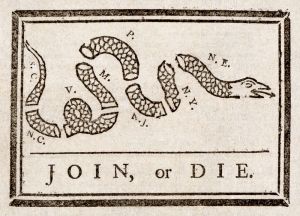
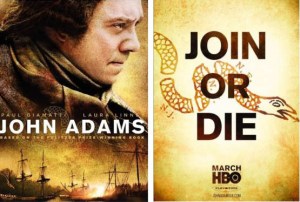
Some of you may recognize the logo that I use. Originally, it was depicted over the words, “Join or Die”, with sections of the snake labelled for the early British colonies. It is a woodcut attributed to Benjamin Franklin, circa 1754, and is widely considered to be the first political cartoon in American history.

Benjamin_Franklin_-_Join_or_DieIt was altogether a cry, at least at first, for unity amongst the colonies against their enemies, the French and native nations.
But, as memes do, it was copied and re-used widely in the colonial era. Eventually, it was re-introduced in the context of uniting these ‘states’ against Britain–and became a de-facto logo for the Revolutionary War.

It is important to note that this wasn’t Franklin’s original intent. After all, one isn’t born a revolutionary–and in the days before Pop culture could depict what a revolutionary could look/act like without necessarily providing any political or philosophical substance to their identity, one wasn’t compelled toward that conclusion quickly. No, revolution was for those who had exhausted other avenues–for Ben Franklin, one of those was the Albany Plan.

“Join or Die” was printed and published first in Franklin’s newspaper, the Pennsylvania Gazette, as a push for this Plan. Largely driven by him, it proposed (among other things) a unifying Grand Council and President over the British territories of North America to address new matters of concern–namely, security and defense (including a standing army) in the wake of France’s growing alliances with many North American indigenous groups.

The Crown, sensing that this idea smelled some too much of a push for independence, did not approve. Colony representatives, from New York to Virginia, were too embroiled in their own local squabbles to really care.

With regard to the Albany Plan and its rejection, Benjamin said:

“The Colonies so united would have been sufficiently strong to have defended themselves; there would have been no need of Troops from England; of course the subsequent Pretence for Taxing America, and the bloody Contest it occasioned, would have been avoided. But such Mistakes are not new; History is full of the Errors of States & Princes.”

Despite it coming about as the banner of an essentially failed campaign, it is interesting to see how this image has lived on. One can’t help but note that ‘JOIN OR DIE’, which has survived centuries, was crafted by a man who had a knack for effecting lasting imprints .

The premise of the cartoon, by the way, is somewhat obvious but has some interesting aspects. At the time, it was apparently common superstition that a severed snake could be re-connected (and brought back to life) if the severed pieces were reattached before sunset (… the more you know!). It was a fascinating way to convey that there was precious little time to act on an urgent matter.

The pieces, of course, are the colonies, who were all separate entities. Franklin was among the first to argue that they are recognizable as something of a larger whole, distinct from England and its other world colonies. The era of colonization in America was an era of massive change, and ‘JOIN OR DIE’ was part of a budding outlook… the earliest and most rudimentary depictions of a sense of national identity.

A page from the Penn Gazette- May 9, 1754.

I’ve since seen it used for a lot of references to the Revolutionary War– Paul Giamatti’s “John Adams” series on HBO immediately comes to mind. I’ve even seen [modern day] Tea Partiers use it, somewhat to my confusion and amusement. Fundamentally, its significance isn’t so much about patriotic fervour as harnessing the sentiments of many into an idea–an idea that proposed tremendous action, which was represented with a simple symbol and but a few words.

history_john adams

My interest as a writer and as an activist is in connecting dots. With art as the form and history as the content, I think there are many sentiments in our world today that need harnessing–from depression to hatred, narcissism to nihilism–and media like comics can begin to make sense of it all in a way that is accessible.

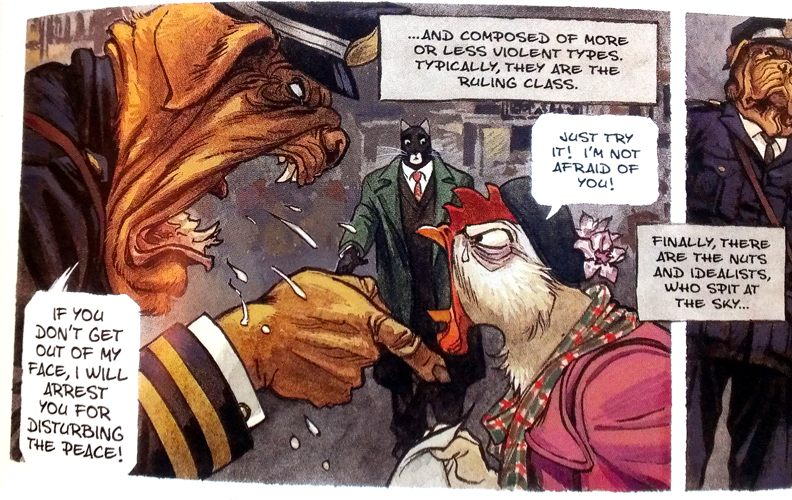
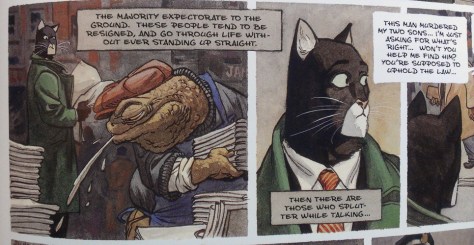
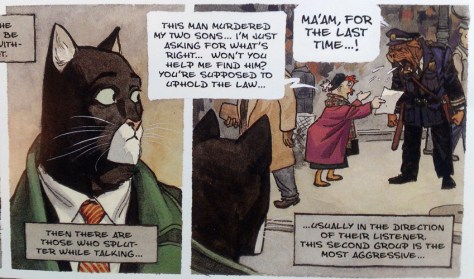
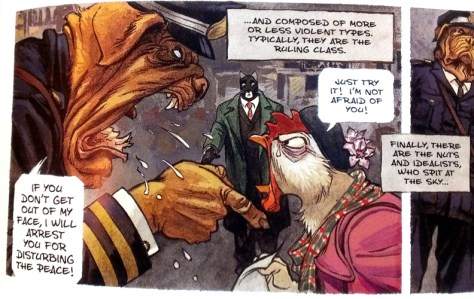
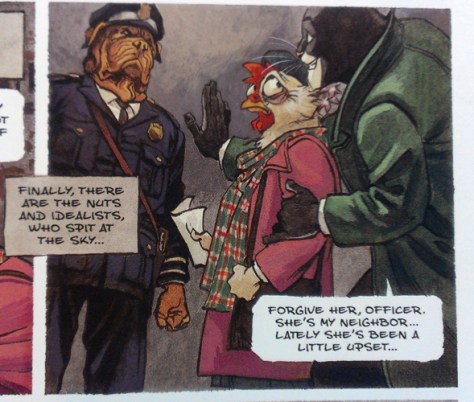
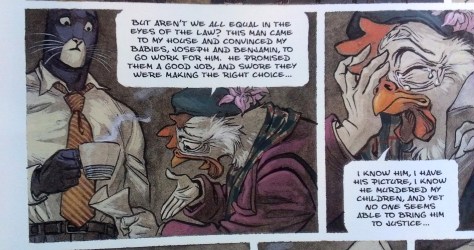
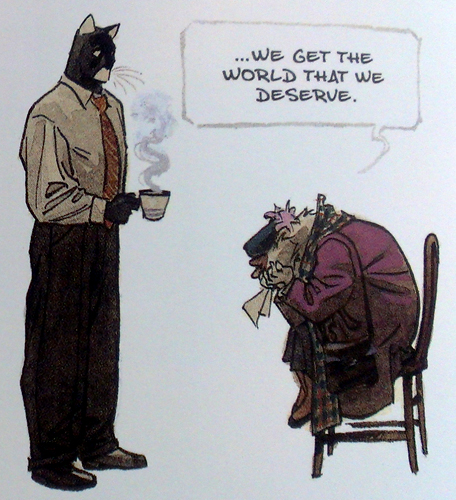
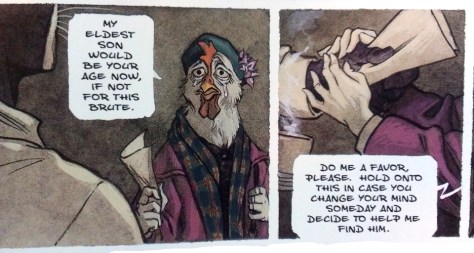
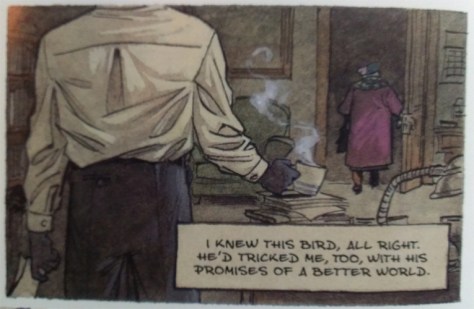
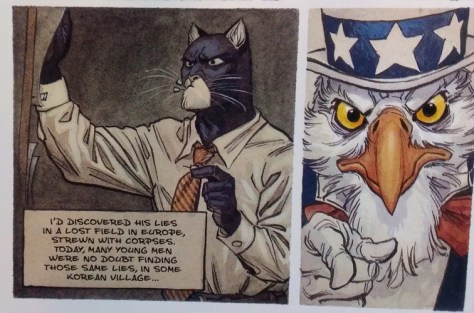
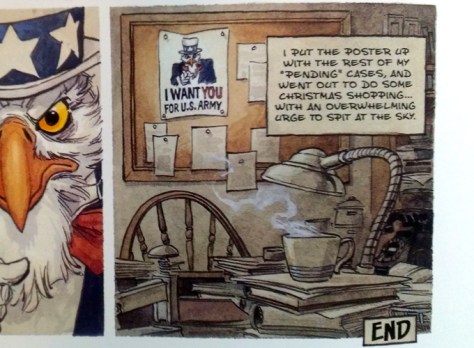
BLACKSAD clip – “Spit at the Sky”

Just came across this last night… it’s from one of my favorite–generally non-political–comic books, BlackSad, by Juan Dias Canales and Juanjo Guarnido from Spain. Amazing artwork, great film-noir style plots with all the twists and turns… and all with cats, dogs, foxes, toads, birds, and all other manner of anthropomorphic folk.

This one hit home, and given its angle, I thought I’d share with the folks who follow my Political Comics Review. All work (c) Canales and Guarnido. Enjoy, (and get a copy of the full book here).


blacksad_panel0

blacksad_panel1blacksad_panel2blacksad_panel3blacksad_panel4blacksad_panel5blacksad_panel6blacksad_panel7blacksad_panel8blacksad_panel9blacksad_panel10blacksad_panel11blacksad_panel12blacksad_panel13

Rock, Roll, Rumbles, Rebels, Revolution: The Life of SPAIN!

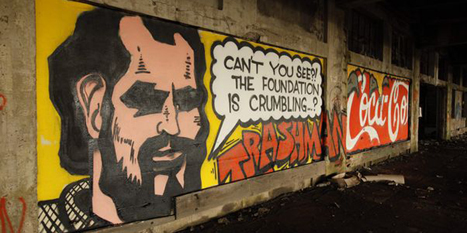
spain mural

A couple of weeks ago, some good friends of mine in Toronto, also Americans, invited me to join them in a trip over the border to New York to check out the exhibit of Buffalo native, Spain Rodriguez: “Rock, Roll, Rumbles, Rebels, Revolution”.

On Sept 2012 - January 2013 at the Burchfield Penney Gallery in Buffalo, NY.
The Exhibit contains some 50 hanging pieces, in addition to original comic book copies of Spain’s work, and runs from Sept 2012 – January 2013 at the Burchfield Penney Gallery in Buffalo, NY.

Both my friends Nick and Tanya are themselves bikers, rebels, and surviving witnesses to that mythological time, the 60’s and 70’s (not to mention their occasional run-ins with Spain and folks he knew back in the days he rode with the Road Vultures and drew for now-legendary underground comic publications like Zap!). Going to the exhibit with them was as close as I would get to having Spain there to explain some of the nuances and timely political/cultural references.

Sadly, only a few days before we visited the exhibit, Spain passed away. He was 72, and had been battling prostate cancer for about six years. It became especially poignant to understand the legacy of this artist, who was a pioneer of indie comics, a pioneer of comics journalism before the term was even coined, and a pioneer for political comics and historical comics. What’s more, his career wasn’t 3 or 4 ‘golden years’ nestled in a lifetime of mediocrity. His cutting edge work ranges from the early days in underground comics, unbridled by still-McCarthy-Era censorship rules, to just before he died.

Comic book eccentric, Art school nerd, Tough-ass biker, leftist shit-disturber | Spain was an in-betweener, and these are always the folks who make incredible art. Their creativity isn’t confined to one genre, one subculture, one ideological viewpoint of the world. As a biker, Spain scared his comics compatriots and offended some of his lefty comrades: after all, these were three typically segregated subcultures within a man’s world of the 1960’s (none would even begin to include women as anything more than decoration for a few more years…a sidenote). For this overlap, we have some incredibly enlightening artwork depicting the era’s biker culture, general drug and counter-culture, and, more crucial for me and this blog, political happenings of the day.

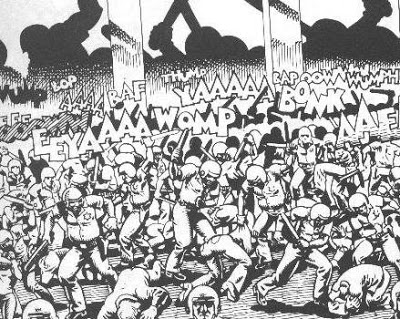
DNC Chicago 1968Before drawing for Zap! with Crumb in San Francisco, Spain covered the Democratic National Convention in Chicago for the East Village Other (a publication described by the New York Times as being so left-wing it made the Village Voice look like a church circular). This was the home of his other early work, Zodiac Mindwarp.

Above, we see some of the spirit of what went down.


There’s no argument that Spain was an expert brawl-drawer. From his days with the Road Vultures to his activist scuffles, the man had a talent for laying out scenes that generally pass most of us by in blurs if and when we experience them.

These illustrations, when compared to photographs or even video of the protests and police repression, give you more of the feel of the surroundings, and vividly so.  I’ve postulated that he had a tendency to compile several visual records in one large frame. Taking these many single instances he saw–he not only depicts what was in front of him, but he describes the scene and tells a story with it.

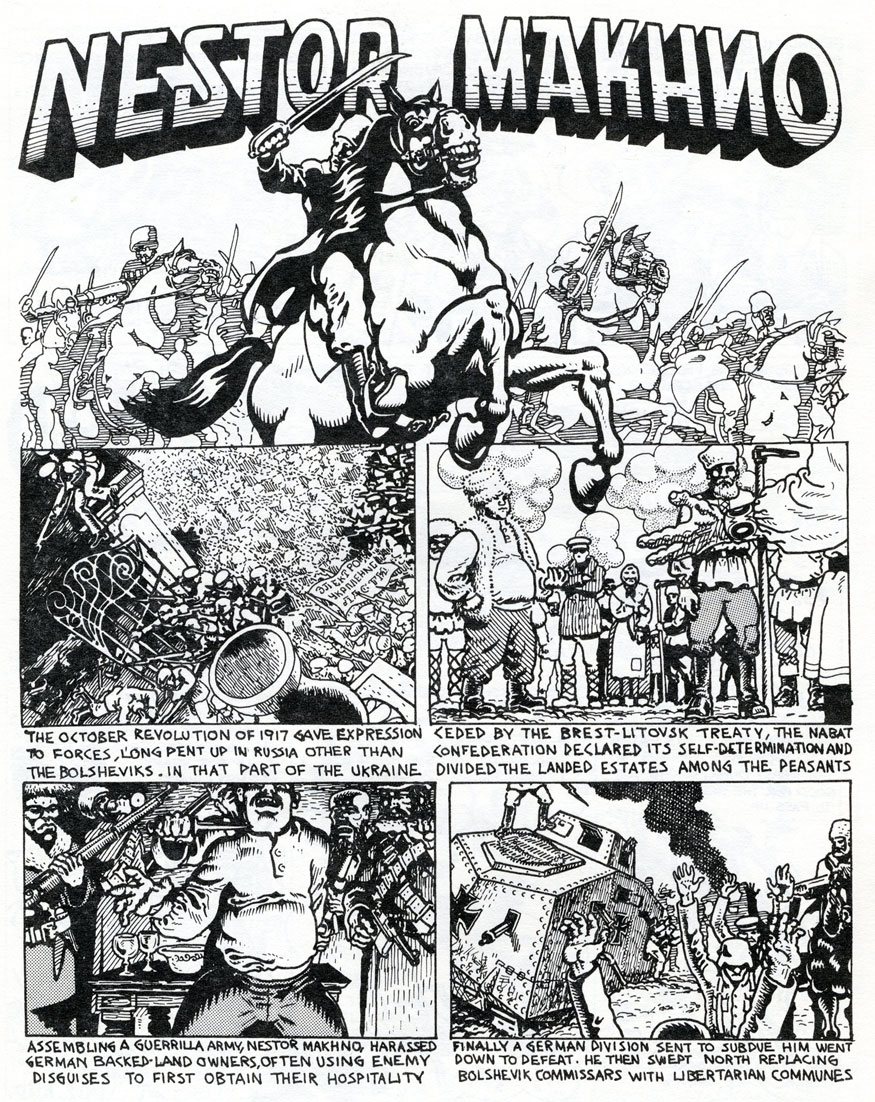
tumblr_m0vpq38z071qzhoqfo1_1280Spain went on with his occasional comics journalism, and much to my liking, even delved into historical comics. The book “Devil Dog” illustrates the life of one of my favourite American military figures, Smedley Butler. My friend Nick also told me of a piece he did on the Chaco War fought by mercenary pilots in Bolivia in the 1930s that I’ve yet to see, but I can’t wait to inspect. Untold American history is the bloodstream of my own comic series, so, needless to say, this interests me. His most notable political work is probably Che: A Graphic Biography, published in 2009, which he wrote with the editorial assistance of Paul Buhle, a radical history and comic book expert (best combination–ever).

Young comic lovers should appreciate the fact that, in addition to all his other work that had given him a legendary status in indie comics, Spain never stopped paying attention to political causes around him. The exhibit even included some work depicting the Occupy Movement, that he drew mere months ago.

On November 29, comix artist Def Backderf tweeted, “On the day he died, Spain Rodriguez was inking a poster. Died with a pen in his hand. Hell yeah, amigo! You’re a legend.

Everything else that he so wonderfully was–all aside, this fact alone commands my respect.

spain portrait

Good night, Spain. Your work will forever have a place in my heart.

NMG


Review of Penney Art exhibit:
http://artvoice.com/issues/...

Good informative video about Spain and his political work:
http://www.revelinnewyork.com/videos/spain-rodriguez

Great article from his good friends over at Salon.com:
http://www.salon.com/2012/12/01/death_of...

Pulp History trailer (Devil Dog part of this series)
http://pages.simonandschuster.com/pulp...

Joe Sacco’s Palestine and Footnotes in Gaza

Titles: Palestine and Footnotes in Gaza
Author: Joe Sacco
Published: Palestine was originally published in comic book form in 1993, before being released as a full volume by Fantagraphics in 2001. Footnotes in Gaza was released in 2009 by Metropolitan Books

The downside of attempting to read timely political comics in order to write timely reviews is that you’re often pushing yourself to digest a lot of heavy material in a short period of time. I’ll be honest; it’s really difficult to be going back and forth from Gaza in my newsfeed to Footnotes in Gaza–which largely focuses on events from half a century ago. The idea that this reality is not only constant in that part of the world, but has more or less continued this way for five decades, is mind-boggling.

The first time I read Palestine was back in 2003, and I spent a good 2 months wading through the pages, studying the history and references, appreciating the attention to detail in the art (I had time to admire Joe’s artistic rendition of fabric the most–all of the middle-eastern apparel, I thought, from kufiyehs to shawls, seemed destined to be drawn).

This time around, after going through Palestine again, in addition to Sacco’s relatively new release, Footnotes in Gaza, I feel like I’ve been punched in the gut. Obviously, this isn’t the best thing you want to read in a review… I assure you, there’s a lesson to take in from this. Maybe it’s the combination of the books the real-time video I’m seeing of Gaza on Aljazeera and Russia Today. Maybe it’s the incinerating atmosphere on social media, where people dangle baited commentary like matches over their hot-headed opponents.

I’ll keep what I have to say relatively short. Frankly, this post is more about showing folks looking for political titles that there are comic resources out there for those looking for more information on Israel and Palestine –and as a veteran comics journalist, Joe Sacco is an excellent place to start. From there, I’d just assume that you’d rather spend your time reading those titles than reviews of them, right?

I will say this, with a special focus on those of you reading this who think  a “comic interpretation” of Israel and Palestine is tantamount to insulting… quite the contrary. The irony is that Joe does not cynically summarize the arguments of those on the front lines of this conflict, as anyone with more than a mild opinion on the matter is guilty of doing at least once. In the times when the conflict heats up, our detailed portraits whittle away just when readers and viewers need them the most in our media… the Israeli who hates his government but can’t reconcile the ingrained notion that Jews constantly face an impending doom… the Palestinian who, in the words of author Norman Finklestein, must face the challenge of being both “principled and reasonable”, when that is essentially an impossible thing to do. More than anywhere else in the world, and with any other conflict, complexity here dissolves into a simplified belligerence. Israelis become crusaders for the ideals of the western world, or madmen screaming about terrorists. Palestinians become the front-line fighters in a global struggle against the forces of imperialism–or madmen screaming about Zionist snakes.

Of course, I have my opinions… but the irony is that Joe Sacco, a professional cartoonist, does not indulge our cynicism with these caricatures. In fact, as a comic journalist (a profession whose total validity gets challenged on the regular for him 2 decades into his work), he is perhaps more diligent than any other dispatcher in Palestine to portray an unedited picture. You won’t find anything like it in the political cartoons of your newspaper’s opinion section… nor on CNN or BBC, or Aljazeera.

As I finish writing this, the Telegraph reports that Israeli Deputy Defense Minister, Matan Vilnai, has vowed a Palestinian “Holocaust” as a result of the rockets fired by Hamas in Gaza. Yea, he just went there. I imagine that Joe Sacco began this project of documenting the lives of Palestinians because he felt we weren’t getting their story in the West. My response to that now, in 2012, is that we easily hear more about the situation of the Palestinians… and yet it doesn’t matter. Israel acts like a monster that no longer cares to hide it (see, I just KNEW I couldn’t get through this review without making a generalization), and the West supports them while pretending that their hands are tied.

Lastly, I come back to my own mental state right now, after reading these volumes. My lesson is, naturally, to not do what I just did. Take time to digest what you’re reading and looking at… and come to your conclusions in time. No cause is properly furthered by uneducated followers. The last thing the conflict needs are more caricatures.

Eric Drooker’s FLOOD!

It’s been argued into a cliché that one is the product of their surroundings—and to say as much about Eric Drooker would be an acknowledgement that his artwork is as much about New York City as himself. Maybe more.


Title: FLOOD! A Novel in Pictures
Author: Eric Drooker
Published: 2001, by Dark Horse Comics, Inc.
Bought this Copy: @ Hairy Tarantula Comics
For More Info: Check out Eric Drooker’s Website


The images he depicts in such stark contrast—whether it’s the linocut, scratchboard, or stencil art, all of which he’s known for—all present the same city, seemingly, at war with itself, constantly and eternally.

Eric Drooker was probably one of the first political artists that I discovered. I was 13-ish when Rage Against the Machine put out their single, The Ghost of Tom Joad, and the artwork of that album is Eric Drooker – from the graphic novel, FLOOD!, to be precise.

After that single came out, I looked for more of his stuff. Something in the pictures had a real distinct emotion and humanity behind it–I would say everything in his work had soul. I bought a book of posters and other “street art” by him (this was the late 90’s, back in the days before “guerrilla art/marketing” was a household term, and work by Bank$y wasn’t being bought for $1 million by the world’s rich and famous). Eric Drooker’s art centered around the issues that the people of the city—the city itself—struggled with: police brutality, poverty, affordable housing and tenants’ rights, the freedom to assemble, etc.

In this story, Drooker depicts the epic story of a man struggling for a modest existence with only a handful of text. On most of his journey, he finds little more than bad options after he is laid off. From there, life in the city becomes a downward spiral; he seemingly bounces off of its edges as he falls, the rain pouring harder and harder in the streets. He wants work but can’t find anything that pays enough or is within his skill-set. He wants to feel comfort and love from another human being, but in the night only finds human beings more emotionally starved than himself.


The panel sequence that I find most powerful is when he finds his troubles compounding—bad news over and over and over again. The panels get smaller and smaller, the graphics more and more crude. It’s the perfect depiction of when a bad day just keeps piling up with unfortunate events, until you sit down and try to vent to a friend or in writing… and by then, so much garbage has piled up that it all feels petty.

FLOOD! sharpens the over-arching message that Drooker presents to us in all of his work depicting New York City:  It’s not just about one or another character and his or her stories–morality–or soul, as I mentioned earlier. Fundamentally, the “soul” in question appears to be the city itself. By the end of this story, you feel convinced of this idea that New York (and maybe all of our hometowns) have souls, and somewhere in the Heavens of the ether is a grand scale, precariously balancing all of the good (community, humanity, love, compassion, potlucks, free concerts in the park, dogs and cats, children playing in their neighborhood) with the bad (muggings, eviction notices, police violence, drug rings, gangs & crime syndicates, alienation, selfishness, and all that noise, noise, NOISE!). We wait in hoping that, should it ever be finally and resolutely judged, the number of good deeds will outweigh the bad.

… One can’t help but think about these things, especially when the streets of New York City really are a-flood. Even atheists and agnostics can’t avoid the mental exercise of imagining a natural disaster as an ethical and artistic expression of causality–from divine intervention, to karma, to some other simple form of poetic justice.

-NMG

Political Comics – A Rain Day Reading List

I’ve had a couple of people recently ask me for a list good political comics to delve into as the days get shorter.

Here in Toronto, we were fortunate enough to have warm weather all the way til the end of October – but that seems to be over and done with as we approach Halloween. It’s cold and soggy out- perfect comic book weather (inside…and with soup, of course.)

I’ve found that folks certainly find the genre of political comics interesting, but I will be the first to admit that it can be intimidating at entry level. Comic book stores are difficult places to start, with their tens of thousands of titles that range from action  heroes to historical biographies. Intriguing and artfully-crafted stories hide amid piles of highly-produced junk with polished covers, like so many needles in a hay barn. Unfortunately some of the best artists in the world are then hired to hide these shit-for-plots further with the endless depictions of semi-pornographic female bodies (Alan Moore, on the related subject of writing decent pornography, commented that there is a delicate brain-to-penis blood ratio that makes physical and mental stimulation often mutually exclusive… a side note).

It’s safe to say that I think of the world of comic books in a very similar way as the worlds of music–or art in general. There’s a lot of crap. Hence, a short list below of some of my favourite comics and graphic novels. And while I don’t exclusively read political comics in my spare time, I’ve decided to keep this list within that framework (since that is the scope of this little corner of the World Wide Web).

For a little more detail on a shorter list of comics, I recommend folks check out my Crash Course post on political comics.

Two-Fisted Tales – Early war comic book series that truly endeavoured to tell the whole truth about war – the bravery and courage alongside the fear and ignorance, the death and destruction, the impact of war on soldier and civilian alike.

V for Vandetta – An epic story of a futuristic dystopian England, this story is now not only a classic of the medium but for 20th Century literature in general. Alan Moore (mentioned above) keenly has you observe and then slowly dismantle every major institution of oppression: the state, the mainstream media, the religious establishment, the military, patriarchal marriage, and so on. I read this story when I was 13 over the course of 2 days, and it changed my life. A must-read.

Palestine – Joe Sacco is an incredible comic artist and writer, but he is also a pioneer in realm of comics journalism. Palestine and other books like Safe Area Gorazde, about the Bosnian War, told news stories that the mainstream news wouldn’t touch, from a perspective that they never even thought possible. It’s now because of those books that millions of people were able to know the reality for these victims of military aggression. Total game-changers. His most recent works include Journalism and Days of Destruction, Days of Revolt – co-created with award-winning journalist Chris Hedges.

MAUS – A Survivor’s Tale – Perhaps the most significant comic book in terms of its impact on an anti-comic book literary establishment, Art Spiegelman really confused people when this book came out in the 1980s. Not only was is a comic book about the Holocaust, but its main characters were depicted as mice… what to make of it? A lot has already been written about Maus and its impact on comic books and literature. To quote Wikipedia (which is itself quoting numerous academic sources):

It became one of the “Big Three” book-form comics from around 1986–1987, along with Watchmen and The Dark Knight Returns, that are said to have brought the term “graphic novel” and the idea of comics for adults into mainstream consciousness. It was credited with changing the public’s perception of what comics could be, at a time when, in the English-speaking world, they were considered to be for children, and strongly associated with superheroes. (Full entry can be read here.)

I don’t think I have much more to add after that.

The Confessions of Nat Turner – This is surely one of my favorite graphic novels of all time; I can’t believe I haven’t taken the time to review it here yet. Kyle Baker did an incredible thing with this comic, and remained true to the primary source of Nat Turner, the leader of a 19th Century slave revolt, in his last interview before he was executed. As a passionate history buff, nothing speaks with more respect to the people of our past than having them speak for themselves. Editorialized, history slowly but surely erodes the reality that once was.

If you’re looking for other great political comic books, check out the Political Comics menu option on this page – where I’ve reviewed some others in the past few months.

Thanks for reading – and read on!

NMG

Interview from the makers of MAYDAY: A Graphic History

“The work we do defines how we live, and how we fit into society.” That’s the first sentence in MAYDAY:  A Graphic History, recently re-published by Between The Lines Press for the group known as the Graphic History Collective. To me, the depth in that simple statement speaks volumes. It’s on the first page of the book, but it’s probably my favourite panel.

MAYDAY is an entry-level look at labour history, and as such is more P.S.A than prose. I’m pleased to be able to share this interview with Sean and Robin of The GHC about this project. In it I feel they’ve offered some important insight on how politics and history can be simplified without being dumbed down… the trials of indie comic book publishing, and the ongoing importance of a political holiday that began with blood more than a century ago.

NMG) I like the way that Graphic History highlights the importance that Mayday has had for working people through the ages, and its transformation from a seasonal/cultural holiday to a socio-political holiday. From your research, when were the earliest expressions of Mayday in relation to labour contracts?

“May Day as a day of celebration for honouring the seasonal transition from Winter to Spring has roots in pre-capitalist traditions. May Pole dancing is perhaps the most familiar expression, but celebrations of this seasonal change also appear in many Indigenous cultures around this date, although “May” was not used to as a term to define time. However, as capitalism began to emerge as a mode of production, the first of May also became the day for renewing contracts in some areas. This possibly could be identified as the real emergence of a relationship between May Day and labour contracts, but the more recognized starting point for May Day as a day of worker resistance, renewal, and protest is generally talked about later, in relation to the fight for the 8-hour working day and the 1886 Haymarket Affair. Out of that grew the 1889 declaration for May 1st to be recognized as an international day for workers (Blogger’s note: This was made by the Second International, a pre-union federation of workers from some 20 countries). Since then, celebrations continue, in different forms and in different contexts, but consciously linked to identities as workers.” 

NMG) How long did this take, from beginning to end?

“The project happened in stages, sometimes with long lapses in time going by without too much progress. It was a side project for all of us, and we worked on it when we could. Research began in 2006, but things really started to come together in 2008-09. We self-published for May 1, 2009, did another print-run in 2010, and then worked with Between the Lines Press for the most recent release in 2012.”

NMG) How are you drawn to history, and what makes the graphic experience of history interesting to you? (This is sort of that essential “Why history? Why comics? Why politics?” type question.)

(Sean) “I have always followed and enjoyed comics; however, when I first read Maus: A Survivor’s Tale in the early 2000s I realized that the genre was capable of so much more. I started following the graphic novel phenomenon more closely and found that there were many politically minded projects out there (Persepolis and A People’s History of American Empire were two very influential ones.) For me, political graphic novels are appealing because they are visually appealing and yet are very accessible and quick to read. Not everyone can sit down on a rainy afternoon and finish Marx’s Capital, but they can get through May Day: A Graphic History of Protest and a few other novels and get that itch to do something personally about the injustice in the world.” 

(Robin) “The history I usually find most inspiring wasn’t part of what I learned when I was younger. Once I began to study history seriously–and moved to a larger area where there were bookstores and bigger libraries–I had the opportunity to more critically engage with ideas. I realized a lot of what I had thought true was actually limited in scope and that the stories were always much more complex.

“This myth-busting component of history really appeals to me, and carries over into my interest in politics. The two are very much linked, and the past is frequently referenced to make political points in the present. History is used as a means to define or shape identity, which in turn influences decision-making processes in many ways.

“All of the Collective members engage in our own separate projects that explore history, politics, and education, and enjoy experimenting with new ways to translate big ideas into smaller chunks of information. Reading detailed, in-depth studies and essays do serve a purpose. Songs, posters, poetry, plays, films, and of course, comics, also serve a purpose and can be used to share information and spark interest in a topic. Comics are also great because of the flexibility and wide range of options that are available for the visual side. I love comics that layer narratives through the text and visuals, particularly when there are story details hidden in the images. These hidden gems compel me to read and re-read comics, historically-focused or otherwise.”

NMG) The larger audience outside of comix culture has been pretty slow in realizing that comics aren’t “just for kids”. Most comics written and published today are for the 20 – 35yr old crowd. Who is MAYDAY’s intended audience? Were you picturing a particular readership when you were writing/drawing?

“Over the past few years an increasing number of scholars, librarians, educators, and youth have started to make the case that comics can be used as teaching tools, and this idea is something that speaks to all of us. We wrote and illustrated the comic influenced and inspired by the growing numbers of really great comics out there. In our own project, we are hoping to appeal to a number of different communities. The comic will likely appeal more to those who know little about the history of this day; it is more of a general overview than a deeply detailed analysis.”

NMG) How did you create this comic as a collective? What was the division of labour? Did one person research while another wrote – or did everyone research? How did the writers contribute to the graphics? etc….

“Creating the graphic history unfolded in many stages and the boundaries of labour were fairly blurry. Robin, Mark, and another researcher, Jeremey Milloy, originally spearheaded the research and drafting. Robin continued on with the drafting of scripts and coordination and then Sean came on to help with writing and editing. From there the three of us, with Sam and Trevor’s suggestions and guidance, wrote and finalized the “script.” At different times, we each took on some of the other work–tracking down graphic designers, making choices about printing and costs, coordinating our launch party, for example–depending on our paid work load and familiarity with the task at hand. We’ve all learned a bit more about that “behind the scenes” work and it has been useful elsewhere in our lives.”

NMG) I’ve recently seen postings by the Collective to collaborate with readers and followers on other historical events. Can you say a little about the ideas and aspirations of any future projects right now?

“We are currently embarking on a new project with Professor Paul Buhle, who has an impressive level of involvement in documenting political graphic histories. Our intention is to create a new “Graphic History Project” which would bring together all those people interested in radical graphic histories and help promote them and the medium at the same time. We are still calling for submissions to the project and the deadline is 21 November 2012.”

“Full details as well as an example of what we are looking for is up on our website.”

For more information about MAYDAY: A Graphic History, the GH Collective, or their call-out, please visit their blog:

graphichistorycollective.wordpress.com/

(And one final Blogger’s Note: There is, in fact, a comic book version of Marx’s Capital that I’ve yet to read–but if you’re interested, you can find more information about it here. I hope there are speed lines used to depict workers’ alienation towards capitalist production, in true Manga fashion…)

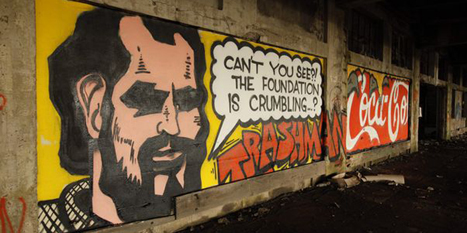
the panel is political.