Tag Archives: comics

19 Comic Characters Who Embody Women’s Liberation

There are many ways we can envision women’s liberation if we try. Since we total more than half of the world’s population, our experiences as women intersect with almost every other struggle against systemic oppression. The lessons learned are personal and political. Tapping into this well can sometimes seem like an infinite journey: where does one start? Well, with comics, of course! Here are 19 female comic book characters that you need to know about, whether you prefer your heroines fist-swinging, biographical, or of whimsical fantasy. All have earned our respect and adoration!

Contributions by Kate Barton, Kelly Rose Pflug-Back, and Nicole Marie Burton
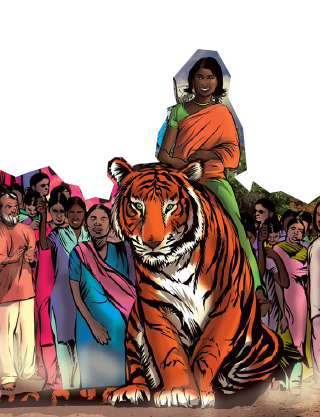
priya1. Priya, from Priya’s Shakti

Somewhere in rural India, a young girl named Priya turns to the goddess Parvati for help after her life is torn apart by gender-based discrimination and violence. Hiding in the jungle after being rejected by her family, Priya is approached by Parvati, who tells her that she has the power to follow in the footsteps of India’s history of revolutionary women, showing her images of the Gulabi Gang and women who protested for India’s independence. The people in Priya’s village aren’t so quick to mock her when she returns, riding on an enormous tiger and preaching the virtues of gender equality. With the guidance of Parvati and other prominent figures in the Hindu pantheon, Priya sets out on a journey to spread her message to all of humanity.
Priya’s Shakti is currently fundraising to reach a broader audience. You can check out their crowdfunding page for more information!

Red_Tornado_Ma_Hunkel2. Ma Hunkel, from The Red Tornado

Although her place as the world’s first female superhero is in dispute, The Red Tornado (or Ma Hunkel, as she is also known) broke other barriers in 1939, and would aptly be hailed as a progressive comic book character to this day. Like many women of her time in the 1930s, she was a working mother: her first costume consisted of some altered long-johns, a mask, and a frying pan. But like many women who devote their lives to their families and communities, she  carried selflessness and a disdain for injustice in her core. And WHAT a core! Drawn as a muscular, fuller-figured woman, she disrupted gender norms by celebrating her size as a weapon of strength against evil-doers, and by dressing up as men for disguises. So if she doesn’t quite hit the mark for first super heroine, the award for first cross-dressing superhero still sits on her mantel. Hats off to Ma Hunkel: she’s earned it.
RED TORNADO

scout montana shadow eyes3. Scout Montana, from Shadoweyes

Shadoweyes, AKA Scout Montana, is a gothed-out, perpetually grumpy queer black teenager with bad asthma and a pressing social conscience. A shelter worker by day and shape-shifting superhero by night, Scout roams the dystopian streets of a fictional city called Dranac with her best friend Kyisha. Scout may be a powerful, ass-kicking supernatural being, but she’s also very human- she doesn’t have the rippling muscles or Barbie-doll build of traditional superheroines, and the first time she actually tries to fight injustice she gets smoked in the forehead with a brick. Like Campbell’s other works, Shadoweyes is centred around the lives of young queer women and features a beautifully rendered array of different body types, hues, and abilities.

Kamala-Khan-Ms-Marvel-Comics

4. Kamala Khan, from ‘Ms. Marvel

Ms. Marvel’s latest incarnation is Kamala Khan, a Pakistani-­American Muslim teenager from Jersey City, and thanks to a strong readership that has once again proven that the mainstream comics industry has a lot of catching up to do in terms of diversification, the entire universe is now aware of her awesomeness. Kamala engages in conflicts with super­-villains as well as more personal struggles. In many ways, Kamala is a realistic teen: she enjoys superhero culture and writes Avenger fan fiction; she is conflicted by what her parents expect from her, and feels the impact of coming from a Muslim family in a majority non­-Muslim community. When given polymorphic powers, she grapples with whether she truly wants them, offering dialogue on rejecting the prospect of losing one’s true ‘self’. The narrative also echoes of a common theme for children from immigrant families, where one struggles in accepting the privileges that weren’t available to generations before them. Marvel’s first headlining Muslim character relays religion as a positive, helpful guide, creating space for religion within the superhero comic genre, as well as representing Islam in a manner that challenges oppressive media depictions found elsewhere. The power of this kind of imagery in popular culture was exemplified masterfully in a recent guerrilla posting of Kahn over top of anti-Islam bus ads in San Fransisco, much to the delight of the internet.

batgirl and yeoh5. Alysia Yeoh, from Batgirl

Although Alysia is only a supporting character in Batgirl, her mere existence as a transgender person is an anomaly in the world of mainstream comics, and that in and of itself deserves a mention. The artsy young bartender and self-described activist is Barbara Gordon’s roommate after the heroine moves out of her dad’s house, and ends up dating her brother, James Gordon Jr. Unlike other trans characters who have appeared in mainstream comics in the past, Alysia’s persona isn’t laden with stereotypes. With her choppy black hair and downplayed style, she doesn’t conform to the image of hyper-femininity which is often expected of trans women. The fact that she’s trans isn’t tied to a superpower or other supernatural intervention, which has been the case with past comic characters who have switched genders, such as Sir Tristan from Camelot 3000 or Shvaughn Erin from Legion of Superheroes. Other characters are not constantly questioning her gender, as is the case with Wanda from Neil Gaiman’s Sandman Chronicles, and unlike Wanda she also does not need to die a tragic death to serve the plot. In a world where the media is crowded with stereotypical and dehumanizing portrayals of trans women, the fact that Alysia is just a cool, likeable young woman who likes painting in her free time and dreams of becoming a chef is pretty groundbreaking.

assigned male stephie6. Stephie, from Assigned Male

Stephie, the cute-as-a-button protagonist of the independent webcomic Assigned Male is a grade school-age girl who speaks with the vocabulary of a womens’ studies major, and vehemently refuses to take any flack from parents, peers, or society at large about the fact that she’s transgender. Caught between a well-meaning yet sometimes misguided mother and a clueless, insecure father, Stephie’s everyday woes highlight the diverse issues faced by trans people in general, and trans women and girls in particular. The fact that Stephie speaks with an adult voice yet still has the desires, interests, and naivety of a child highlights how aggressive and unnecessary enforced gender expectations are. Her perspective challenges the reader to see a world which is not yet coloured by mainstream social mores; when we strip away the assumptions and cynicism of our conditioning, cis-normativity seems just as sad and illogical as many of the other things which adults take for granted without stopping to question why.

qahera

7. Qahera, from ‘Qahera

“I can hear it–the sound of misogynistic TRASH!” That first statement in the first installment of Qahera pretty much sums up what Qahera is all about. On one end of the comic book industry, there is a struggle for the female characters who already exist within largely male-constructed narrative universes to be more complex and less a mere portrayal of sexy body parts. And yet, on another side of this is the push for more content–whatever it may be–from female comics creators, whatever their stories or experiences. One thing I love so much about Quahera is that she actually is a pretty one-dimensional character, but that dimension of kicking patriarchy’s ass is pretty, well, ass-kicking! Qahera also challenges Western/white notions of what it means to be a feminist, by showing that the hijab, like other clothing, is a cultural and religious choice and should not flag an individual for scrutiny any more than any other article of clothing. Quahera dons her hijab and dark robes, and proceeds to prowl the streets of Egypt, hunting down male privilege, wherever and however is may arise. Qahera reminds us that diversifying comics is about diversifying creators as much as characters. We can learn a lot from her short adventures!

tefe holland8. Tefé Holland, from Swamp Thing

Tefé Holland came into being when her father, the earth Elemental known as Swamp Thing, possessed the body of the occultist John Constantine, so that he and his human wife Abby could conceive a child. Tefé is a supernatural being like her father, but being born into a partially human body gives her the ability to control both plant life and flesh. After a long estrangement, Abby reunites with Tefé to find that she has been using her powers to punish humans for their destruction of the natural world. While Abby herself often has to depend of Swamp Thing for protection, Tefé is more powerful than her father. Among other things, she uses her powers to create gory punishments for those who harm the Earth and at one point comes back from the dead to kill her abusive ex boyfriend, who she later replaces with a female lover.

9. Julie Winters, from The Maxx

J WINTERSA tough yet compassionate do-gooder by nature, Julie Winters is a freelance social worker who sticks up for the vagrant population of the dystopian city which she calls home. Her companion, The Maxx, is a quasi-human street person with a lampshade for a head who she often has to rescue from trouble. Julie has a curvaceous yet realistic physique, and often expresses anxiety over her body image. Usually drawn in a tiny crop-top and some ripped up bluejeans, the fact that she has some stomach chub but still dresses revealingly is seldom seen in comics, or mainstream media in general. Julie is also a rape survivor, and one of the main villains in the series is a serial rapist named Mr. Gone, who is capable of telepathically invading the alternate reality which Julie escapes into to deal with her trauma. Julie’s character is groundbreaking in the sense that it humanizes survivors of gender violence, and offers a portrayal which goes beyond the stereotype of victimhood.

equinox10. Equinox, from Justice League United

When DC Comics artist Jeff Lemire learned about the untimely death of Shannen Koostachin, a teenage Cree activist from the Attawapiskat First Nation of Northern Ontario, he felt inspired to create a superhero based on her legacy. Equinox, whose real name is Miiyahbin Marten, is drawn in a blue, black, and white outfit reminiscent of the regalia which Koostachin is wearing in a popular picture of her. Equinox’s powers are based on the seasons, and she has the ability to defeat powerful evil beings by shouting “Keewahtin”, which can be loosely translated as meaning “Northern blizzard”, and creating a blast of blue energy. While Equinox seeks the help of the Justice League in order to learn about and control her powers, she also depends on the traditional knowledge and guidance of her beloved grandparents. Justice League is attempting to avoid the “cookbook” style of creating diversity in comics (“Diversity: Just add people of colour!”) and is actually working to make Equinox’s character the sum of her experience and cultural heritage. We just hope that her character doesn’t fall down the well-worn rabbit hole of indigenous comic book characters designed by settlers.

11. Erika Moen of Oh Joy! Sex Toy!
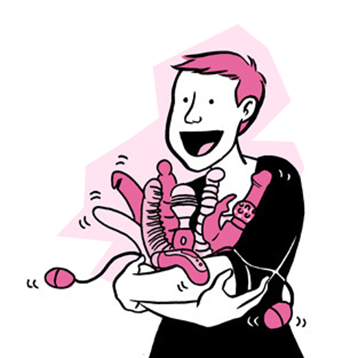
ErikaMoenOkay, so, Erika Moen is both a character in comics and IRL! But let’s not forget that her illustrated identity, appearing every Tuesday at Oh Joy Sex Toy! does so much to teach us about feminist approaches to relationships and sexual health. Something that makes this web series so important for the genre is that the comic industry has traditionally suffered from sporadic yet pervasive plagues of overt sexualization of female characters. With sex underpinning so much of the female form, how is it that these comics rarely (if ever) touch on any meaningful conversations about healthy sexuality? This problem has created something of a stereotype in feminism that women, and feminists in particular, don’t like sex (WTF, right?) when in fact, we may love sex but question its depiction as simply a mechanical or male-driven act. As feminists, we want our sexual identities to be on our terms, as something that empowers us. With her work in this field, Erika Moen takes on a subject that resists rudimentary generalizations (we’re all different when it comes to our preferences and discomforts), Moen has carefully balanced education with inclusiveness, which means there’s plenty of room for humor and fun! Understanding our bodies and our emotional needs is essential for having healthy sexuality, and healthy sexuality is a big step toward having healthy, fulfilling lives.

12. Alison Bechdel, from ‘Fun Home’, and ‘Are You My Mother?’

alison bechdelAlison Bechdel is a lesbian American cartoonist, with her primary work being the syndicated feminist comic strip Dykes to Watch Out For that ran from 1987 to 2008. Her graphic memoirs Fun Home (2006) and Are You My Mother? (2012) represent the intersections of her personal and familial narratives — the first focusing on her father, and the second, her mother. While dissecting the tangles of her relationships with her parents, the memoirs reveal Bechdel as a deeply reflexive, intellectual character. Bechdel’s self-representation depicts a woman who has a rich inner life, remaining a relatable character thanks to her humble wit peppering serious subject matter. In an increasingly anti-intellectual climate, Bechdel offers a refreshingly expansive analysis of how families affect our identities and how we engage with the world.

13. She Hulk

It can be frustrating as all Hell to revisit some classic comic book characters that you considered revolutionary, only to be… slightly disapointed. I recently looked into the background of Big Barda (who I love for her size and strength) only to discover that she was modeled after a photograph in Playboy magazine. A lot of female comic book characters have similarly disappointing origins, filling X-chromosome quotas in a universe’s character board. But of all of them, I wanted to take a moment to talk about She-Hulk. The name would have you easily dismiss this character as yet another “girl version” of an already established Marvel or DC character. As the cousin of Bruce Banner, Jennifer Walters certainly was an echo of another character when her story began. But unlike most superheroes who hide their true identities during their meh day jobs, She-Hulk embraces both identities. In addition to her super-strength, She-Hulk battles crime with her ideas in New York City’s district attorney office. Her cases form the backdrop of many issues, as she takes on criminal activity in the city.

Like most mainstream comic superheroines, She-Hulk was the creation of male industry writers. Big Barda, Storm, and so many others fall in to this category. But their legacy is not so much their sensational back stories or one-dimensional dialogue as the memories we have of them from our childhoods: these strong, intelligent and assertive women were nonetheless an improvement against the backdrop of other characters we learned about as children: damsels in distress and princesses who waited for a prince to marry them.

Satrapi-Persepolis14. Marjane Satrapi, from ‘Persepolis‘ (Books 1 and 2)

As you’ve probably noticed by now, we feel like some of the strongest female characters in comics are as strong and multidimensional as they are because they’re largely autobiographical in nature! In Persepolis, Marjane Satrapi (referred to as Marji in the comic) articulates a complex identity beautifully–of growing up as a girl who speaks her mind in Iran after the Islamic Revolution, and later seeking asylum in Europe where she not only has to confront patriarchal norms, but also people’s xenophobia and Orientalist views towards her. Marji’s family raised her to be critical of the state, but nonetheless fear for her safety as she resists the Guardians of the Revolution’s policing of decadence and modesty. The comic’s high­-contrast ink style lends itself to the rigidity of public atmosphere under regime, but also Marji’s perceptive clarity as a narrator. Though she often does not have all the answers to what is occurring around her, her convictions to be herself and resist assimilation persevere in nearly every event that unfolds.
halfrocentric_2

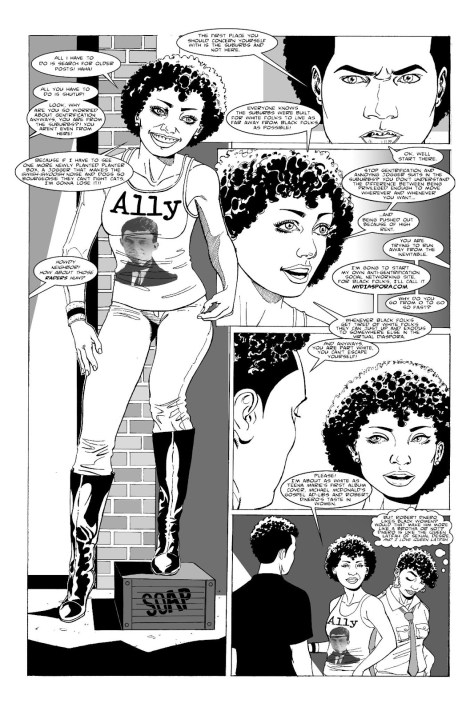
15. Naima Pepper, from ‘(H)Afrocentric’

Naima Pepper is one of the main characters of (H)Afrocentric, a comic that follows a group of undergrads of colour through their time at Ronald Reagan University. The comic describes its characters as each representing political archetypes, navigating issues of identity and gentrification. Naima Pepper self­-identifies as a radical black feminist, and works through the various contradictions in her own life while actively ranting to her friends about racism, apathy, and gentrification. Naima is a strong representation of the critical, politicized undergrad that seeks to resist and overcome the oppressions brought about by white supremacist power structures, not frequently seen elsewhere in the comics medium

16. Kimberly “Skim” Keiko Cameron, from ‘Skim’

skimlittleCousins Mariko and Jilian Tamaki’s ‘Skim follows Japanese ­Canadian, Wiccan teen Kim, as she lets the reader in on her struggle of being different, unrequited love, and depression. The nickname “Skim” is thrusted upon her by schoolmates, a play on her name and also a reference to her, comparatively, not being as slim as the others. Kim shows strength in her introversion, by quietly maintaining independence in her opinions and desires, as well as perseverance through feelings of isolation. This is relevant to anyone who has ever felt overwhelmed by their emotional situation, Kim’s commentary on high school life adds another clear voice to the “coming­-of­-age tale” genre.

17. Suzie, from Sex Criminals
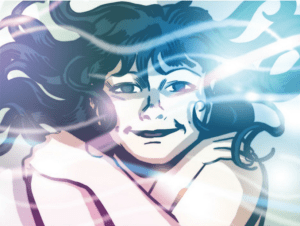
susie sex criminalsSuzie is a cute, nerdy, indie-rock-looking librarian who has the strange ability to freeze time whenever she has an orgasm. When she hooks up with a guy named John who has the same mysterious ability, they naturally conspire to use their powers to wreak havoc upon the world, starting with a bank heist to save her under-funded library. Although her superpower is sexual in nature, Suzie doesn’t come off as a hyper-sexualized character, and her appearance and behaviour don’t cater to mainstream standards of feminine attractiveness. She rocks her nerd-girl style with pride, and has no problem telling John to fuck off if he’s being annoying. Combined with her brash sense of humour and general lack of inhibitions, Suzie is a female figure who’s capable of being brazenly sexual on her own terms, without it detracting from the other facets of her complex and well-rendered character.

michelle rent girl

18. Michelle, from Rent Girl

‘Rent Girl’ is an autobiographical graphic novel by Michelle Tea about her experiences as a young, counter-cultural lesbian woman working as an escort in San Francisco. Beautifully illustrated by Laurenn McCubbin, ‘Rent Girl’ challenges stereotypes of sex workers on a number of levels. Michelle neither loves nor hates her job; she doesn’t consider it to be an empowering or necessarily feminist act, but she also isn’t a victim. Sex work serves as the colourful backdrop to her day-to-day trials and tribulations, including ex-girlfriend drama, social alienation, and searching for meaning as a young queer woman in an urban environment. Because sex work is neither her burden nor her embodiment, Michelle helps folks outside of the field break through the stigmas and even the more positive stereotypes to see that sex workers, like all workers, are so much more than their services or labour.

sandman death19. Death, from the Sandman Chronicles

Finally, in Neil Gaiman’s Sandman series, the personification of Death is drawn as a moon-faced, eyeliner-laden goth chick with voluminously teased black hair, a classic 80’s death-rock style reminiscent of Siouxie Sioux, and a nearly constant cheerful disposition. The second child in a family of immortal beings who personify various archetypes, Death is often portrayed as being more powerful than her siblings, Destiny, Dream, Destruction, Desire, Despair, and Delirium. Her character departs from the classic Western image of death as a fearsome, skeletal male figure with a dark robe and a scythe. Death is always genial and funny, and shows compassion for the souls who she guides from this world into the next. She is present when people pass away, but also when they are born. Her almost maternal-seeming nature can be interpreted as a nod to age-old archetypes, from Kali to Mab, of female deities who personify not only the destructive force of death, but also its regenerative power and necessity in the balance of the universe.

To Hell, and Black: The Harlem Hellfighters’ race to the Rhine

A historian, the old joke goes, is someone who chases after you calling out “that’s not how it happened!” Good history sees the devil in the details. It looks past the obvious events to understand the human relationships that lie underneath. But beyond good history, there is great history. Great history links these human experiences to the systems of power and domination that shaped the past and continue to shape the present. In exploring the experience of black men serving in the American army during WWI, ‘The Harlem Hellfighters’ achieves both.

HarlemHellfighters

Title: The Harlem Hellfighters
Author: Max Brooks
Illustrator: Caanan White
Published: Broadway Books (2014)
Pages: 272 pages
Other Specs: Colour cover with B&W interior
Purchase: In the Ad Astra Online Store


The Harlem Hellfighters is not about WWII, a fashionable war regardless of your politics. It is about the Great War for Civilization, now often described as World War One, though the first global war was the Seven Years War. There was nothing particularly civilized about it, and ‘The Harlem Hellfighters’ does a great job of tracking this from the United States to the artillery-chewed meadows of an exhausted Europe. It follows the eponymous Hellfighters, an all-black combat regiment, at a time when there was a great deal of anxiety that if people of colour were allowed to shoot white people, they might get a taste for it. This racism ran so deep that the army was sending their rifles out to private gun clubs and issuing broomsticks to the Hellfighters. Nonetheless, they made it to the front, and the comic takes us along for a flame-throwing, bomb-dropping, trench digging slaughter of a tour through humanity’s most wretched moments. We see through mud and clouds of poison gas- the death of the romance of war.

harlem_hellfighters1The obvious way to write this story was to showcase the heroic determination of black Americans who enlisted in the US army. Military service and citizenship are tied in a very tight knot in American culture. For black Americans, who were persecuted and marginalized throughout the United States, participating in this ultimate expression of citizenship is easy to hold up as a virtue. There are certainly times when the narrative takes this route. In one instance, a black recruit is walking through a southern American town during training and is attacked by a gang of white racists. Following orders to keep his cool, he endures their violence silently. On another occasion, a black soldier is rescued from a gang of his white ‘comrades’ by a military policeman. When the MP encourages him to drop it rather than press charges for assault, he ends up beaten and imprisoned, but he doesn’t leave the army. All of this is an accurate depiction of the determination that it was necessary for black soldiers to show in the openly white supremacist American army. It highlights the courage, patience and endurance necessary for these men to stay their course.

This kind of easy liberal narrative is a popular one for general histories. Liberal history has no trouble acknowledging that things were bad in the past. But it stops there, often tying up the narrative strings in a neat little package of self-congratulatory nationalism. ‘The Harlem Hellfighters’ could have stopped here. But it didn’t, thank fuck. Instead, it calls out the ugly facts of history. It opens by explaining how bloody, how pointless and how ultimately futile the First World War was. It has a character cheekily explain that the cause of the war is that having made a hell for peoples of every colour all around the world, there was nothing left for the white man to do but turn on himself. And it shows, at every opportunity, the shabby treatment of black soldiers in the Army. This goes beyond blacks being second class citizens and actively shows that the Army made policies specifically to keep black people from getting the idea they were equal to whites.

The problem with liberal history is that it stops with the personal. It situates discrimination in the past and leaves it implicit that of course our great, open-spirited democracies have long since overcome the kind of chauvinism that marred the dignity of our otherwise distinguished forebears. It is comfortable with showing the ills of the past, precisely because it needs those ills to tell a story that things are continuously getting better. While ‘The Harlem Hellfighters’ does not come out and name colonialism, white supremacy or capitalism as the root cause of the suffering endured by black Americans, that level of explicit political consciousness would seem out of place in the mouths of many of its characters. But they understand these things intuitively from experience, and they offer their own understanding to each other and to the reader. This is a more valuable thing.

There is some worrying sentimentalism towards the end of the comic, with the usual lines about America being founded as the first nation of ideals. But the founding myth of American exceptionalism was often used by black Americans resisting white supremacy, and if it is not politically appetizing, neither is it out of place. The comic tells a story, not only of individual suffering and solidarity, but of the systems of violence that run underneath. It makes it perfectly clear that it is not bad people here or there responsible for incidents of discrimination; it is a system supported by the American government and maintained by the American military for the benefit of white people.

harlem_hellfighters8We talk about visual styles being striking, but in Caanan White’s case it doesn’t strike so much as barrage the reader. The detailed, expressive style can be a bit busy at times and one gets the sense that this is a comic that deserves to be printed in colour. But the faces and postures of the men convey their emotions expertly, and the trenches come to death in gory detail from peeling flesh to rotting corpses. If the style were a little cleaner, it might explode more exactly on target, but I suppose war is a busy, confused business too. This is not to say that it is unworthy of the narrative; far from it. But the devil’s in the detail and I can’t help feeling there’s a bit too much of it.

harlem_hellfighters_panels1

There is something a little bit disturbing about the blood-lust of the soldiers in ‘The Harlem Hellfighters’. The comic does not quite express their motivations for being there, unless we are meant to believe that they share the sentiments of the man who says he couldn’t down an opportunity to be paid by white people to shoot white people. But the eagerness to fight instead of rot in the trenches waiting for a shrapnel squall to shred your flesh was a real enough part of the First World War. Trench warfare traumatized a generation of men who coped in whatever way they could. Displaying the grim brutality of that conflict underscores the moral ambiguity of the story as a whole. For all that ‘The Harlem Hellfighters’ is about racism, it is the story of a group of men determined to cross the ocean and kill strangers who have never harmed them. If it is uncomfortable at points, it should be. ★

110 Comics Workers Sign Petition, Saying “No Business As Usual” with Israel

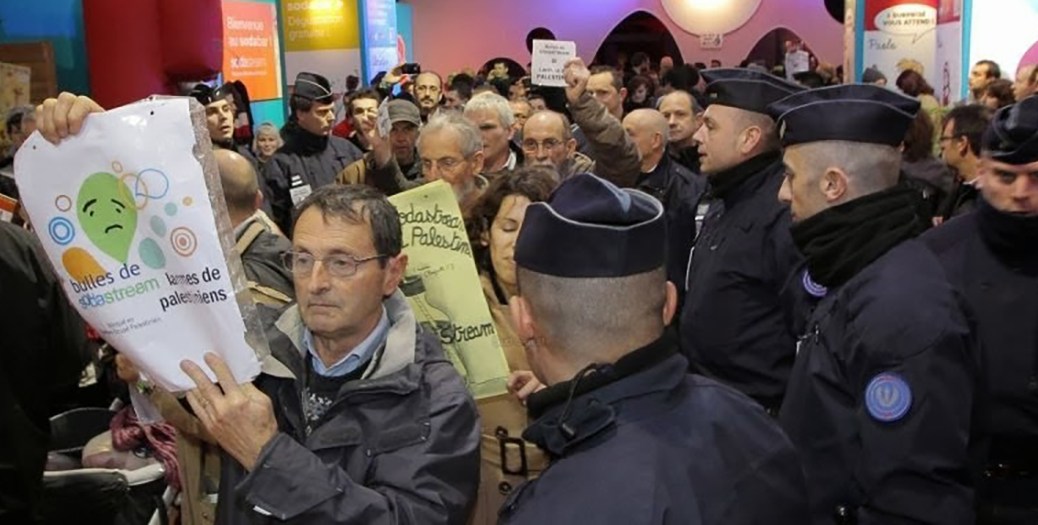
110 Comics Workers Sign Petition / Bondoux Refuses / Op-Ed by Organizers In French Newsweekly

An open letter addressed to the head of the of the Angouleme International Comics Festival and the broader comics industry demanding an end to “business as usual” with Israel has reached 110 signers as the Festival opened on January 29th, including Alison Bechdel, Jaime Hernandez, Ben Katchor, 2013 Grand Prix winner and Charlie Hebdo contributor Willem, 2012 Grand Prix winner François Schuiten, 2010 Grand Prix winner Baru, 1984 Grand Prix winner Mézières, Canadian cartoonist Guy Delisle (author of Jerusalem and special guest at the 2014 Palestine Comics festival), and Lucille Gomez, the cartoonist hired to draw comics by Sodastream at the 2014 Festival.

The full letter and updated list of signatories can be found here.

The letter specifically calls out the Angouleme Festival’s relationship with the Israeli company Sodastream, which operates manufacturing plants in the Palestinian Occupied Territories and in the Naqab desert region of Israel. Franck Bondoux, the director of the Festival, who in 2014 denied that Sodastream operated in the Occupied Palestinian Territories, this week shifted his defense and claimed it was inappropriate to talk about Palestinian rights due to recent events in France. He was quoted in the French newspaper Sud Ouest on January 23:

“We are no longer in the same situation as last year,” remarked Bondoux, whom we reached last night. “SodaStream announced in 2014 that the factory under discussion will be moved. This means that the problem is in process of being resolved and has been understood.” The executive director of the festival further believes that the letter “moves into a broader proposal with terminology that goes much farther in its call for a boycott.” “We have moved from a discussion where one speaks of a specific problem to a total generality.” “This is an incitement to a stronger, more militant form of resistance.” Bondoux refuses to “judge” or “comment” if only to say “that in the current situation [reference to Charlie Hebdo and Kosher supermarket attacks], I’m not certain whether this is a time to welcome such proposals.”

Organizers of the open letter, Ethan Heitner (NYC) and Dror Warschawski (Paris) published a response to Bondoux in the French newsweekly Le Nouvel Observateur.

Open letter and signatories: lettertoangouleme.tumblr.com

To add your name: lettertoangouleme@gmail.com

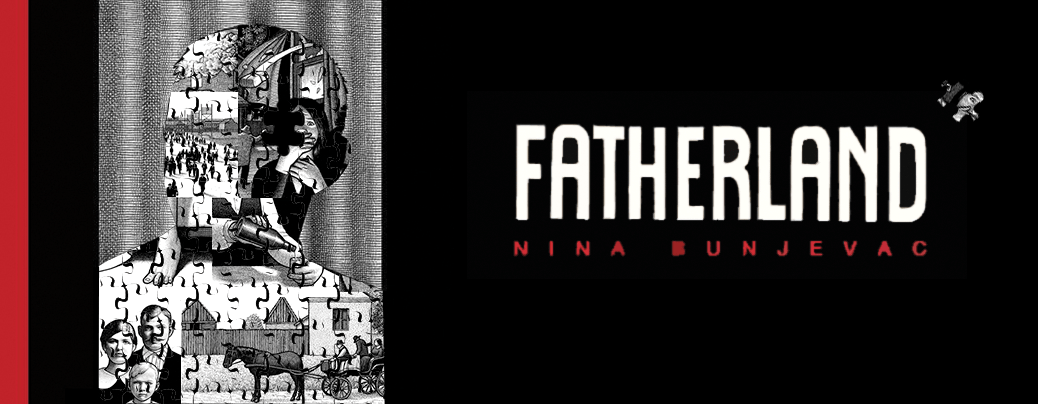
Of Family and Terror: A Review of Nina Bunjevac’s “Fatherland”

When we are told, “Everything changed on September 11th,” it is easy for the cynic to note that the only true change has been the object of our cultural hysteria. By 2001 our old enemy, communism, was 10 years into the dustbin of history. There had been some effort to make the global justice movement into a new foe, but beating unarmed protestors made “us” look like the bad guys. …Then al-Qaeda more or less literally fell from the sky to rescue us from the anomie of life without an enemy. The pedestal, left by all those toppled statues of Lenin, now hosted dictators of so-called rogue states, each to be torn down in their turn. All the while, the idea that we had done something to create these enemies, much as we had failed to consider where previous enemies came from, went unexamined. But enemies do not simply rise from the shadows…

FATHERLAND


Title
: Fatherland
Author: Nina Bunjevac
Illustrator: Nina Bunjevac
Published: Jonathan Cape (Sept, 2014)
Dimensions: 8.7″ x 11.1″
Purchase: Hardcover in our online store

This is a review of Fatherland and how it negotiates the tension between terrorism, a cultural obsession and mental health, a cultural aversion. It is also an exploration of the resemblance we can find between the story in Fatherland and more current events. Here, the terrorists do not look like the ones we know today, but in a way, they have a similar story. They did not climb out of a smoldering cleft in the earth, clutching a detonator in one hand and a home-made bomb in the other. They are the products of their circumstances, circumstances we have more control over than we usually care to admit.

Peter Bunjevac Sr. was a terrorist. The comic is only half-finished when it is revealed that he has died. Nina Bunjevac goes to pains to describe her father’s upbringing and to illustrate the sociopathic tendencies he manifested at a young age. She describes the brutal beatings her grandfather gave her grandmother in front of her father. She explores the kindness his aunt showed him, the sole kind figure in a troubled life, who was herself an outcast when she got pregnant out of wedlock. She shows how her father was jailed for supporting a popular communist critical of party excess, and how he fled the country and came to Canada as a refugee. In short, she spares no detail in demonstrating all the little cruelties of life that might have helped to make him what he was: a terrorist.

Peter Bunjevac on left.

There is something very old fashioned about the art style that leads us through nearly a century of Bunjevac family history. Combined with the black and white palette, the traditional use of panels and the drawings of family photos, one gets the feeling of leafing through a family album. But normally such keepsakes hide the truths we do not want to see; the drunk father, the scolding grandmother, and other dark secrets of the family. In Fatherland, we are presented with all of this. The scene changes very neatly from Nina and her sister bickering in the present day to her grandfather striking her grandmother as though it were all one story.

fatherland_edit1Which, of course, it is. In contemporary media we usually confront either the banal or the horrific, but rarely both at once. It is a mixture of the everyday and the extraordinary that works very well for historical dramas and was used to great effect in Art Spiegelman’s Maus. It gives the reader a sense that the narrator is very reliable, and that they are enjoying a special relationship with the author. Indeed, Bunjevac occasionally interjects with her own feelings and deepens this sense of intimacy. ‘Here is my family’s story,’ she says. ‘Parts of it are boring. Parts of it are awful. Parts of it are cute, funny, even tender. Above all it is human.’

Which returns us to the present day. Humanity is the thing that society denies to terrorists when it makes them out to be senseless fanatics. We take them out of context, defining them entirely by the actions we wish to condemn, stripping them not only of humanity but their history. They do not need a reason to be evil in this narrative; they simply are evil. The truth is not so simple.

Terrorists are always hurt people and they are often sick as well. The two recent “terror” attacks in Canada speak to this point. Both Michael Zehaf-Bibeau and Martin Rouleau were identified by people close to them as mentally ill. Their lives had fallen apart – Rouleau’s business had failed and he had lost his partner and child. Zehaf-Bibeau was staying in a homeless shelter. He had a history of run-ins with the law. Rouleau was being monitored by government agencies. They did not drop out of the sky. This is also the reminder we get from Peter Bunjevac, Nina’s father. Although he was a terrorist he was not an inexplicable monster who no one could have anticipated. He was very plainly a man to whom the world had been unkind.

Of Zehaf-Bibeau, “’His behaviour was not normal,’ said David Ali, vice-president of Masjid Al-Salaam mosque in Burnaby. He said: “We try to be open to everyone. But people on drugs don’t behave normally.” This is not an unusual attitude with regard to people who are unwell. We ourselves are busy or anxious or shy. We do not want to concern ourselves with people who struggle to stay sane. We are especially wary of those who look like they are losing that struggle. But it is the harm and neglect our society causes that creates alienated, desperate, miserable people. We cannot pretend to be surprised when these people resort to desperate acts or when they become desensitized to suffering. They have suffered too long themselves.

Fatherland4

Nina Bunjevac reminds us of this. She tells a very intimate story that many would not want to share. She shows the humanity of people who do cruel things and she shows the weaknesses of people struggling to do right. Her mother grapples with leaving her father in spite of his involvement with a terrorist group. People long to speak up about problems in Yugoslavia but fear state reprisal.

Only the panels are black and white in Fatherland; the narrative is all shades of gray. We would do well to remember that life is very much like that.

Fluid Prejudice Re-inks Australian History

“The very ink with which all history is written is merely fluid prejudice.” – Mark Twain

Review by Sky Croeser

Unlike most histories from above or below, Fluid Prejudice stands out as one that doesn’t provide a coherent narrative. Instead, it’s a dream-like journey through Australian history, haunted by the violence of colonization. Single-image cartoons jostle with longer stories, and well-known figures sit side-by-side with personal stories. Some characters recur in different forms across stories, shifting from the foreground to the background. This jumble creates a more radical approach to history which leaves questions and contradictions unanswered, rather than offering the reader an easy vantage-point.

TCAF_FP

Title: Fluid Prejudice
Creators: Sam Wallman, Aaron Manhattan, Safdar Ahmed, Katie Parrish, and others (50 contributors in total)
Editor: Sam Wallman
Published: Self-published in 2014
Page Count: 175 pages
Other Specs: Softcover, black and white interior with colour cover
Purchase: In the Ad Astra Comix online store

While it may be tempting for many white activists to dissociate themselves from Australian racism, the collection doesn’t allow the reader to imagine that they can be outside processes of colonization. In one comic, two environmentalists engaging in direct action query whether this is part of the continuing white colonization of the forest. In another, white Occupy protesters pause to consider the irony of following the chant “Always was, always will be, Aboriginal land” with “Whose streets? Our streets!”

memory-from-occupy
“Memory from Occupy”. Contribution by Sam Wallman.

Similarly, we never get to wholly lose identification with the middle-class Australians who are so often the target of activist derision. For example, a comic about the destruction of old growth forests is followed by another in which a man looks at a newly-opened suburb, daydreaming about a home there. While the image hints at typical narratives of suburbia as a site of ecological destruction and bland whiteness, there’s also an element of sympathetic identification.

fluid_prejudice_singlesAustralia’s history as a penal colony, too, is treated through a overlapping stories which never quite settle into a single perspective. Fluid Prejudice focuses on stories of escape, with convict William Buckley reappearing several times throughout the collection. Mary Bryant, a transported thief, escapes and is later pardoned. However, the optimism of these stories is balanced by the stark list of different convict occupations in 1847 Tasmania, and the subtle reminders that convicts also played a role in the violence of colonization.

Both cities and the landscape become haunted sites. The Tasmania tiger, hunted to extinction as a part of the effort to impose a European approach to agriculture, reappears throughout the book stalking the supposedly-tamed undergrowth. Within the city, state and social control is undermined by a lesbian beat, working-class resistance to restrictions on free speech, and an underground city of train station platforms and graveyards which remain below the streets. No place is more authentically a site of struggle than others.

Contribution by Karina Castan

Fluid Prejudice rejects the erasure of the violence Australia was built on, but it also highlights moments of solidarity and hope. One comic reminds us that the only known protest against Germany’s persecution of Jewish people following Kristallnacht came from the Australian Aborigines’ league in 1938. In another, people run over rooftops and onto the top of trams as part of attempts to escape police crackdowns on public speech. We’re reminded of a period when unions were more radical, and prepared to down tools to save public space and support other struggles.

As well as these more overtly political stories, many of the notes of optimism and humour in this collection touch on the politics of gender and sexuality: Percy Haynes is followed by a policeman and charged for wearing women’s clothes, only to have the magistrate decide that since women can wear pants, there’s no reason men can’t wear dresses if they choose. Zeki Müren, a Turkish singer, performed in drag in Sydney in 1974 to an enthusiastic crowd of homesick Turkish immigrants.

fluid_prejudice_lesbianbeatPart of the beauty of this collection is the inclusion of mundane scenes and lives that would not usually reach the history books. There are fragmentary scenes of an Aboriginal embassy, passengers on a tram, a trip to Healesville sanctuary, even a dumpster. We learn about Rosaleen Norten, the witch of King’s Cross, and then about cartoonist Ruby Knight’s mother. Arlene Textaqueen replaces the front cover of conservative newspaper The Australian with responses to the question, ‘Where are you really from?’

Through the combination of explicitly political and more personal stories, resistance is written through many different forms and spaces. This is a helpful alternative to the ‘one true way’ approach to activism, in which a single set of tactics and strategies is the only way to be radical enough (or, conversely, polite enough).

Fluid Prejudice, as we might expect from an alternative history, undermines the myths Australia is built on, from heroic stories of settlers eking out a living in the bush to the ongoing erasure of the violence against Aboriginal people and other marginalized groups. However, it also encourages more critical reflection on our positions as activists and the ways in which we do—or don’t—identify with others within Australian society.

Poster Series Challenges Readers to Reconsider the Kind of Hero They Can Find in a Comic

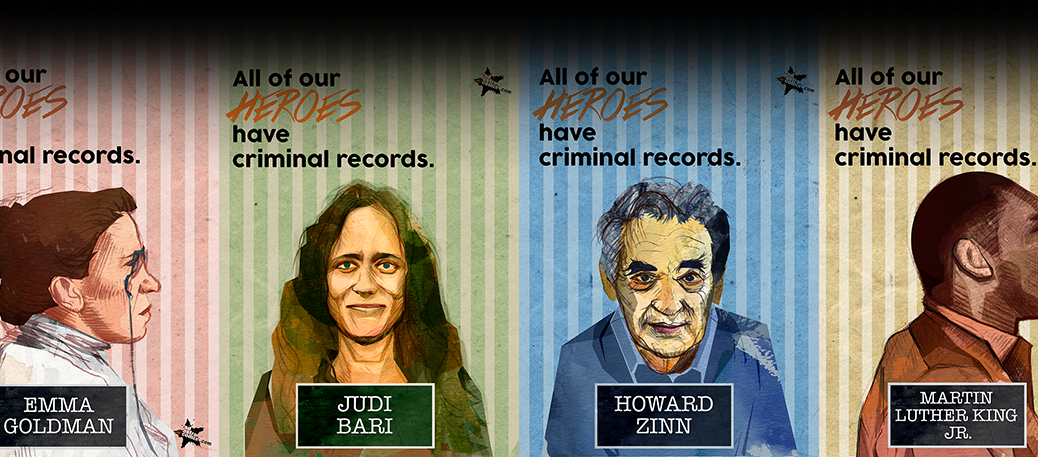
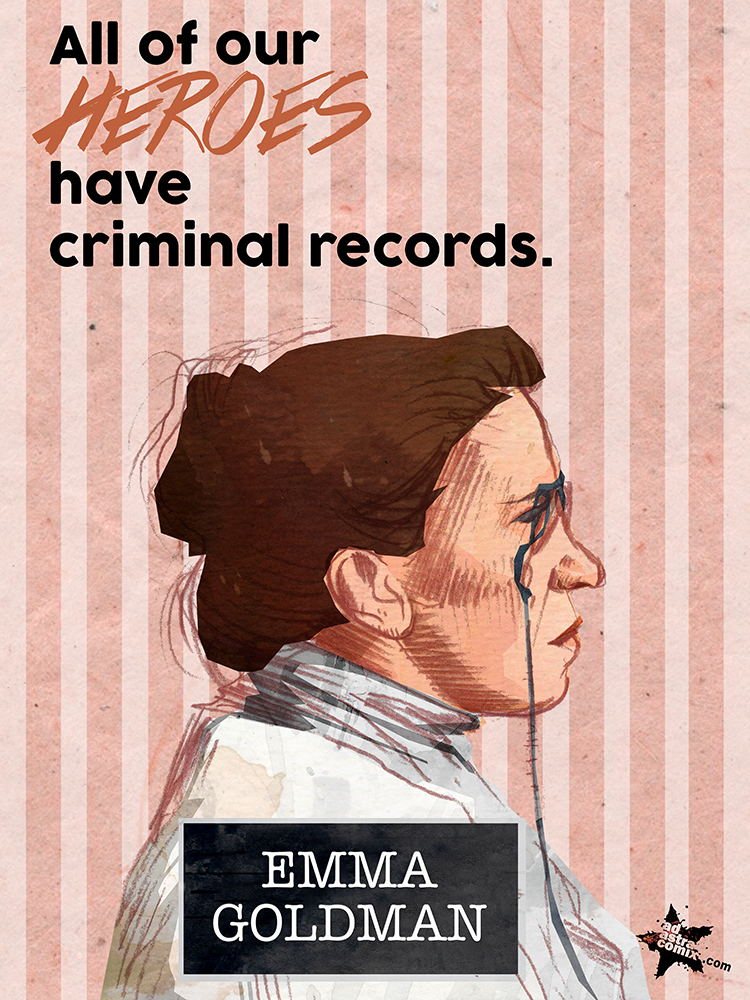
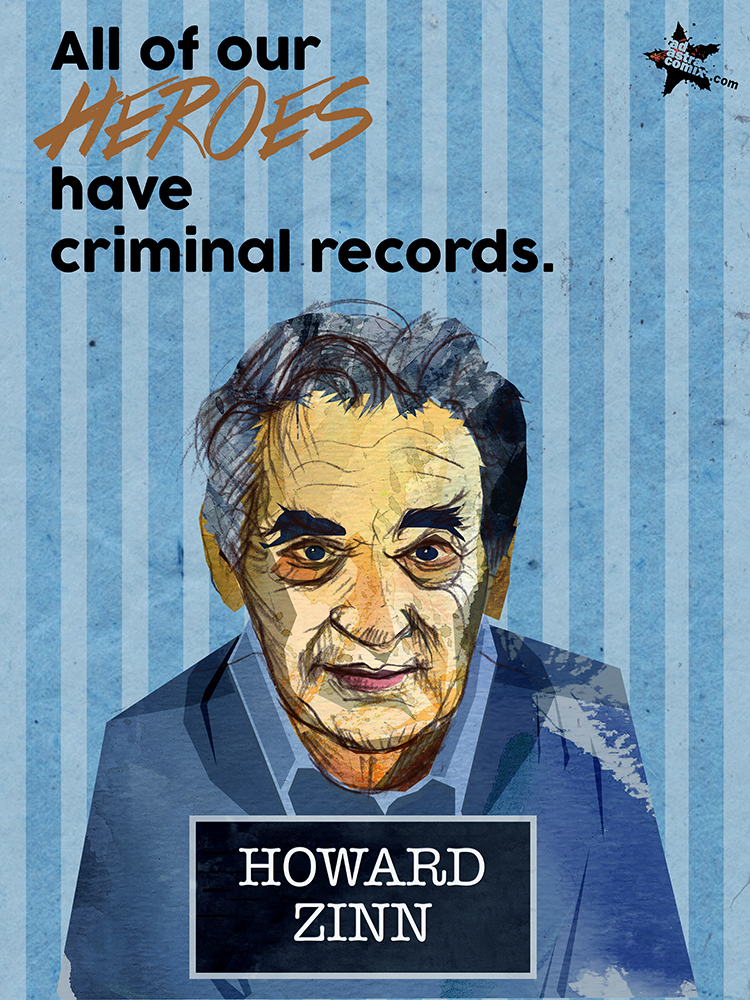
We are very pleased to be re-releasing our poster series, encouraging readers young and old to consider a different kind of hero than we normally think of when reading comics. These four posters boldly claim, “All Our HEROES Have Criminal Records“.

This visual campaign is inspired by the lives of four people who have been arrested for their grassroots organizing and/or activities of civil disobedience: Martin Luther King, Jr., Howard Zinn, Emma Goldman, and Judi Bari. They reflect a healthy variety of political backgrounds (civil rights, environmentalism, anti-war, people’s history, feminism, and anarchism) – and each has appeared, at least once, in comic form.  All artwork by Sean Richman.

We’re excited to be making these posters available for sale! Visit the Ad Astra Online Shop to get your favorite, or collect all four. Numbers are limited for this printing, so if you don’t get one – stay tuned!

EMMA GOLDMAN (Booking #23178) Goldman was an anarchist and feminist known for her political activism, writing, and speeches. She played a pivotal role in the development of anarchist political philosophy in North America and Europe in the first half of the 20th century. Arrested in 1917 with Alexander Berkman for conspiring to
EMMA GOLDMAN (Booking #23178)
Goldman was an anarchist and feminist known for her political activism, writing, and speeches. She played a pivotal role in the development of anarchist political philosophy in North America and Europe in the first half of the 20th century. Arrested in 1917 with Alexander Berkman for conspiring to “induce persons not to register” for the newly instated WWI military draft.

Emma Goldman appears in A Dangerous Woman : The Graphic Biography of Emma Goldman, Sharon Rudahl; edited by Paul Buhle. Published by New Press in 2007 (ISBN 3: 9781595580641)

HOWARDZINN_webpreview
HOWARD ZINN was an historian, author, activist, WWII veteran, and commentator on American politics and history. By the end of the 1960s, as a result of Zinn’s campaigning against the Vietnam War and his influence on Martin Luther King, Jr., the FBI designated Zinn a high security risk to the country, a category that allowed them to summarily arrest him if a state of emergency were to be declared. The FBI memos also show that they were concerned with Zinn’s repeated criticism of the FBI for failing to protect blacks against white mob violence. Zinn’s daughter said she was not surprised by the files; “He always knew they had a file on him”. — with Howard Zinn.

Howard Zinn appears in A People’s History of American Empire: The Graphic Adaptation, by Howard Zinn, Mike Konopacki and Paul Buhle. It was published by Metropolitan Books in 2008 (ISBN#: 978-0805087444).

JUDI BARI was an American environmentalist and labor leader, a feminist, and the principal organizer of Earth First! campaigns against logging in the ancient redwood forests of Northern California in the 1980s and '90s. She also organized efforts through Earth First! - Industrial Workers of the World Local 1 to bring timber workers and environmentalists together in common cause. On 24 May 1990, in Oakland, California, the vehicle used by Bari and Darryl Cherney was blown up by a pipe bomb planted in it. Bari was severely injured by the blast, as the bomb had been placed under her seat; Cherney suffered minor injuries. Bari was falsely arrested for transporting explosives while she was still in critical condition with a smashed pelvis and other major injuries. The FBI took jurisdiction of the case away from the Bureau of Alcohol, Tobacco, Firearms and Explosives, saying it was a terrorism case.
JUDI BARI was an American environmentalist and labor leader, a feminist, and the principal organizer of Earth First! campaigns against logging in the ancient redwood forests of Northern California in the 1980s and ’90s. She also organized efforts through Earth First! – Industrial Workers of the World Local 1 to bring timber workers and environmentalists together in common cause.
On 24 May 1990, in Oakland, California, the vehicle used by Bari and Darryl Cherney was blown up by a pipe bomb planted in it. Bari was severely injured by the blast, as the bomb had been placed under her seat; Cherney suffered minor injuries. Bari was falsely arrested for transporting explosives while she was still in critical condition with a smashed pelvis and other major injuries. The FBI took jurisdiction of the case away from the Bureau of Alcohol, Tobacco, Firearms and Explosives, saying it was a terrorism case.

Judi Bari’s story appears in WOBBLIES! : A Graphic History of the Industrial Workers of the World by Mike Alewitz, Sue Coe, Sabrina Jones, Paul Buhle and Nicole Schulman. It was published by Verso Books in 2005.

Martin Luther King, Jr. (Booking #:7089) MLK was an American pastor, activist, humanitarian, and leader in the African-American Civil Rights Movement. He is best known for his role in the advancement of civil rights using nonviolent civil disobedience based on his Christian beliefs. Arrested in 1962, 1963, and 1965 while demonstrating for civil rights in the American South.
Martin Luther King, Jr. (Booking #:7089)
MLK was an American pastor, activist, humanitarian, and leader in the African-American Civil Rights Movement. He is best known for his role in the advancement of civil rights using nonviolent civil disobedience based on his Christian beliefs.
Arrested in 1962, 1963, and 1965 while demonstrating for civil rights in the American South.

The story of Martin Luther King Jr. can be found in many titles at this time. The first appeared in 1958, called Martin Luther King and the Montgomery Story (written by Alfred Hassler and Benton Resnik, produced by the Fellowship of Reconciliation) , and has been re-released by Top Shelf Productions.

Another is KING, a three-part biography by Ho Che Anderson, published by Fantagraphics between 2003-2005.

‘Bad for You’ Uses Comics to Promote Youth Empowerment

“Youth is wasted on the young.” – Oscar Wilde

Who doesn’t read that quote and not feel some bitter kernel of truth in the words? Such energy, and no direction! Such curiosity, burned on idleness and errant adventure alike! DANGEROUS adventures, at that. One can’t help but think of their own  moments of hilarity and embarrassment  when considering the folly of youth (I myself was almost blown up by a gasoline explosion when I was 12).  Whether we look at child’s play from previous eras or to distinctly modern activities like social media and cell phones, the grievances of the old to the frivolities of youth reveal a full spectrum of conflicting impulses. On one hand, parents and adult community members wish to lovingly guide and protect. On the other, there exists a perennial fear of and intolerance to the unfamiliar hobbies and technologies ushered into social acceptance by the youth of the day.  These manifestations of adult anxiety are the basis for the content of this landmark comic book.

cover_BadForYou

Title: Bad For You: Exposing the War on Fun!
Authors: Scott Cunningham & Kevin C. Pyle
Illustrator: Kevin C. Pyle
Published: 2014 by Henry Holt
Length: 180 pages
Other Specs: Includes a glossary of terms, and a resource listing of kids’ rights organizations. Written with young readers in mind (10+ yrs.)

‘Bad For You: Exposing the War on Fun’ is an impressive collection of information with a unique intersection of all that is bad for baby adults. In doing so, it invites the reader to ask interesting questions: What is bad for kids, and why? 

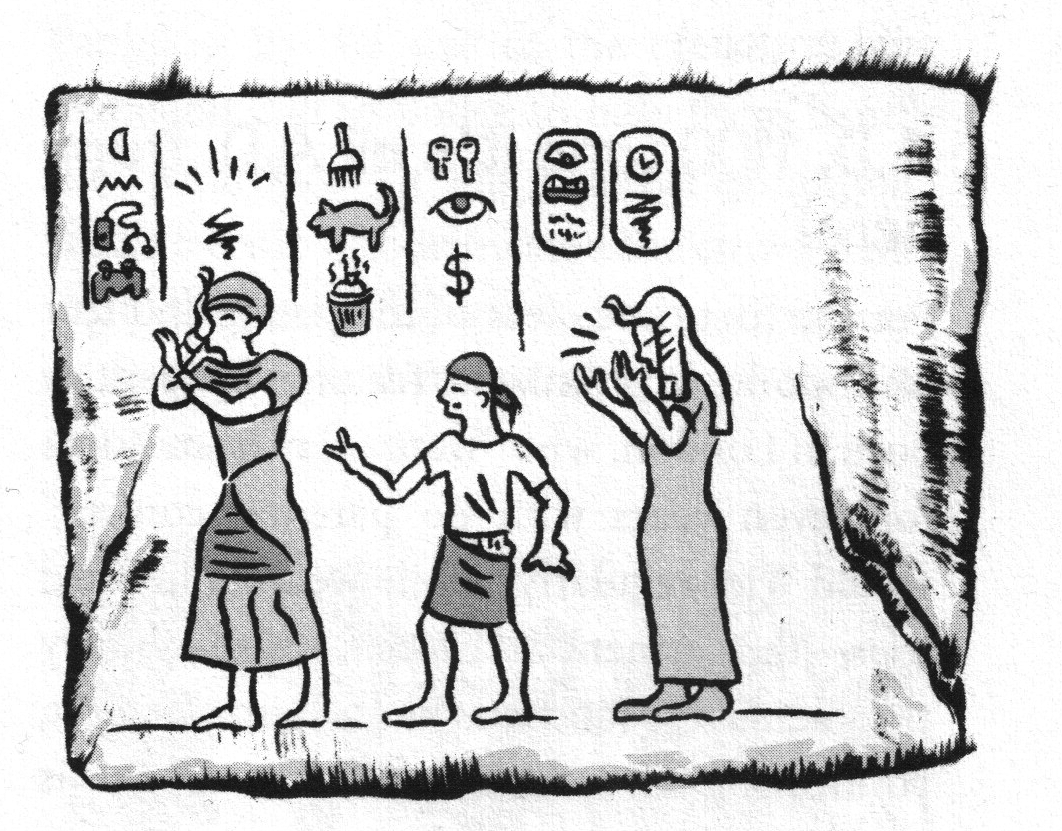
This panel depicts a quote from an Egyptian tomb dated to be nearly 6000 years old: “We live in a decaying age. Young people no longer respect their parents. They are rude and impatient. They frequently inhabit taverns and have no self-control.”

flames of fear
The table of contents reads like an index to modern moral panics:  comic books, digital technology, games of all kinds (“idle hands are the devil’s playground”, or so the saying goes), –even playgrounds have an intriguing entry. All of the aforementioned have had a history of being attacked and scapegoated as “bad” or “dangerous” for our youth until an acceptably sterilized pattern can been adhered to, or until enough kids and their allies can fight back.  Noteworthy elements include graphs and narratives that help to distinguish science from pseudo-science, beginning with an introduction to the scientific method in the first chapter.   The book offers a timeline beginning in the ancient world to demonstrate that the mistrust of youth is one of the most predictable social patterns throughout history.  The book points out that there is even a term for this pattern: ephebiphobia, or a “fear and loathing for the young”.
Using statistical data and historical perspective, the book is prepping an entire readership of kids to be a bunch of real smart assess, and an entire crop of adults to rethink their own phobias. For the book’s primary audience, young readers can use the reading to get acquainted with concepts that are highly relevant
to their generation, including the ‘factory model’ school system, ageism, the criminalization of youth, the notion of civil and political rights, and the power of protest. The book is packed with inspiring instances of young people challenging (and making gains at odds with) the cobweb-thick thinking of older generations. Everyone can agree that winning and the all-around sense of achievement it brings is an important experience to have while growing up; naturally, these successful kid-powered push-backs are explored at length in the book’s final Chapter, aptly titled, “Good for You”.

Part of a larger chapter on "Thought" that points to the alarming reduction in time and funding for the arts and social sciences in public schools.
Part of a larger chapter on “Thought” that points to the alarming reduction in time and funding for the arts and social sciences in public schools.

Not surprisingly, we in 2014 have reached a point where fear and loathing of the young now requires its own brand! For the past few years, all challenges under the age of 25 have been invalidated by the fact that they come from a generation known as the Millennials (Did TIME Magazine call them the “ME ME ME Generation” because Tom Wolfe had already distinguished the Baby Boomers as the “Me Generation” and they just ran out of ideas?). Here are we, yet again, being dished the patronizing script of youth as lazy, self-indulgent, and playing hard and fast with their finances and futures. While the modern era has its own particularities, ‘Bad For You’ is good to point out that these are the dysfunctions attributed to every new generation of young’uns.

What this book truly brings to the table is empowerment for young minds. Notably, it critiques the status quo way of life for young people in North America as becoming largely devoid of educational lessons. It notes the ways in which young people are unheard and underrepresented, and offers intellectual and practical solutions for children and young adults alike to overcome obstacles. Overcoming the fractured–and in some ways obsolete–social systems imposed upon youth, in its own right, can and has become an important rite of passage for critical-thinking minds as they enter adulthood.

To be freeAnd to the reader who looks upon youth or childhood as that time in which they were simply a dumber, less reasonable, and more naive version of the person they are today: my condolences–that attitude is your loss. But it may mean that you have the most to gain from ‘Bad for You’. Learning to see our youth as a time in our lives that requires neither fear nor shame is exactly what this book is about.


Evidence As Antidote – “Race to Incarcerate” Fights Prisons with Facts

If all great truths begin as blasphemies, as George Bernard Shaw put it, we in Canada find ourselves living in a theocracy. Certainly even Adam and Eve would wonder at the spectacular efforts to preserve the innocence of ignorance undertaken by our present government. It has taken a valiant stand against sex education so we may uncover our nakedness. In seeking to dismantle the National Archives, they will free us from knowledge of good and evil. Thanks to the government’s destruction of the integrity of census data, we are free from even the prospect of acquiring knowledge.

Stephen Harper Destruction of Public Property

But to be sure we are safe from it, they are throwing whole libraries into the trash, and forbidding the wicked among us from sharing their dangerous truths with the press.

So we are nearly free of blasphemy, and what greater expression of piety than prisons? At a time when American districts are turning away from the tough on crime approach, Canada embraces it enthusiastically. If books are not totally passe at this point, I should recommend to the Justice Minister and any higher powers to which he might answer a thorough reading of ‘Race To Incarcerate.’

cover

Title: Race to Incarcerate: A Graphic Retelling
Created by: Sabrina Jones and Marc Mauer
Forward: Michelle Alexander
Preface: The Sentencing Project
Published: 2013 by The New Press

‘Race To Incarcerate’ practically bursts its bindings with relevant historical, sociological and economic data. It doesn’t shrink from statistics either, as it outlines the growth in prison populations, corrections spending and the prevalence of private prisons. Exploring public attitudes towards morality, the dishonesty of elected representatives and the role played by the War on Drugs, this expressive tome shines light onto critical questions in one area of public policy where high-minded moralizing has long reigned supreme.

ReaganThe comic traces the evolution of America’s obsession with getting ‘tough on crime’ from its beginnings in the 1970s through to the second Bush administration. Along the way it explores the impact of the War on Drugs, changes in social attitudes towards crime and the role of racism in expanding the prison-industrial complex. On the political file, the crass electoral motives of successive legislators are exposed. Clinton and George W. Bush are particularly held up as hypocrites, promising to reform the system while allowing prison spending and populations to grow in tandem.

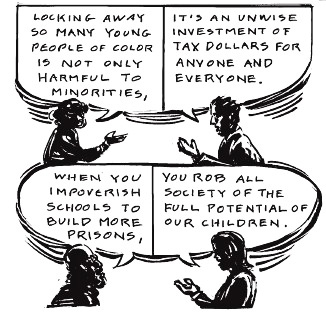
racism and incarcerationThe comic does an excellent job of outlining the role played by racism in incarcerating black and Hispanic Americans at a disproportionate rate. Racism, and underlying white cultural anxieties, are ably exposed as the culprits for rates of black incarceration. The usual apologies for the racial composition of the prison population are handily debunked. The proverbial fig leaf is pulled away, and the naked truth is not a pretty thing to behold.

If there is a flaw in ‘Race To Incarcerate’, it is in the conclusion. After spending the majority of its pages identifying the endemic racism in American society, it proposes a coalition of business, academic leaders, communities of colour and families of addicts to tackle the problem by lobbying the government. The book persuasively argues that the rich and powerful have a vested interest in maintaining the current system. It then proposes the problems be solved through a coalition made up in part by the rich and powerful appealing to the very politicians whose dishonesty it has exposed. Some business leaders may feel compelled to oppose the prison industrial complex, but it is a drop in the bucket to a system that has been constructed–designed–in the interests of corporate profits.

Furthermore, the book is right to suggest the involvement communities of colour, but missed the opportunity to highlight one of the most important groups of all – prisoners and ex-convicts themselves. Prisoners and ex-cons not only deserve the right to tell their stories, their voices should be at the forefront of a prison abolition movement. Regardless of the accuracy of the book’s conclusion, the information in it can help persuade regular people that prisons don’t work.

Canadian prison
Canadian or American prison? Can’t tell? They’re about to get even more similar…

But the truth, we are told, shall set us free. The Conservative government is hot to bring many of the measures described in ‘Race To Incarcerate’ up to Canada, including mandatory minimum sentences and private prisons. The message of ‘Race To Incarcerate’ is clear: prisons don’t work. But more than that, they are dangerous to a degree that should alarm us. Indigenous people make up about 4% of Canada’s population, but 23% of its prison population – and the rates are climbing. In Canada, prisons are looking more and more like another form of genocide.

conclusionThe facts in ‘Race To Incarcerate’ won’t liberate those prisoners, but they can free the rest of us from the moralizing naiveté that justifies mass imprisonment. Liberated from our ignorance, we can turn our attention to prying open the bars of the prison industrial complex.

An Interview with ONE TRIBE Anthology Editor James Waley

‘One Tribe Anthology’ editor James Waley sat down to answer some questions about the upcoming release.  We posted questions about the aesthetic, political and practical implications of the undertaking.  His thoughtful reply is below!

ONE TRIBE --- MARK A. NELSON - HARDCOVER - FINAL with logo, border & text #1


What is the One Tribe Anthology? What is the origin of the name, “One Tribe”, and how was that chosen to represent the work? 
The ONE TRIBE anthology is a non-profit book published by Jack Lake Productions in association with James Waley of Pique Productions as a fundraiser in support of the SHANNEN’S DREAM campaign which carries on the outstanding and courageous work done by the late Shannen Koostachin of Attawapiskat to improve the learning environment of First Nations schools in Canada.

Continue reading An Interview with ONE TRIBE Anthology Editor James Waley