Tag Archives: comics

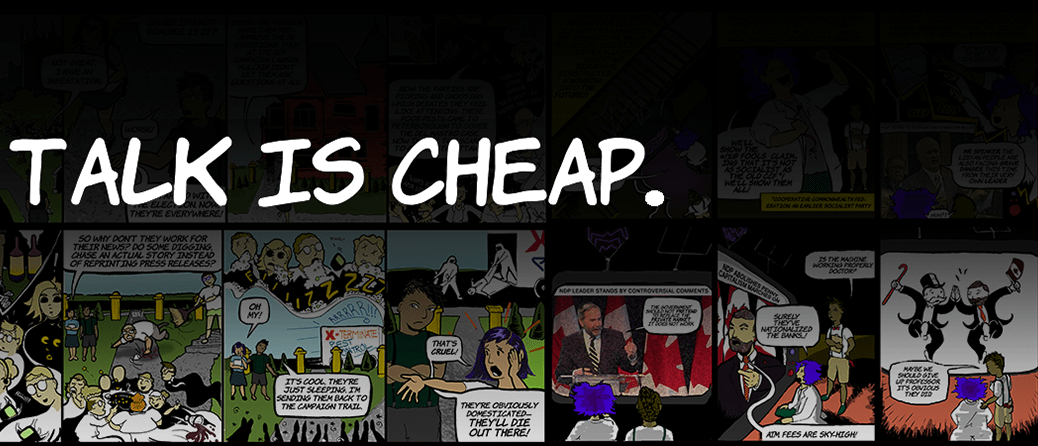
Episode 1 of “Talk is Cheap”

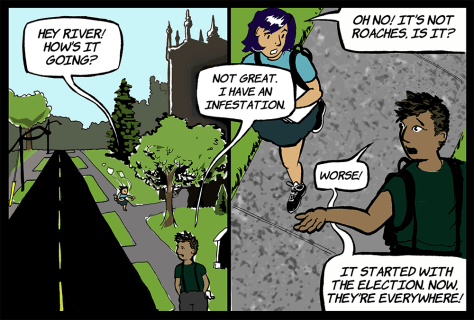
Welcome to ‘Talk is Cheap’, our new newspaper-style comic covering the Canadian political scene – such as it is. Following in the tradition of Doonesbury, Bloom County and Weltschmerz, TiC aims to measure the space between rhetoric and reality with a mixture of surrealism, snark and snappy visuals.

Currently running in Trent University’s Arthur Newspaper, with art by Ad Astra Comix founder Nicole Burton and text by lead staff editor Hugh Goldring,

‘Talk is Cheap’ is available for syndication, so send us an e-mail for details if you’re interested!

Episode 1 (Week of Sept 7)

1_1

1_2

1_3

1_4

Next: Episode 2

Social Media Contradictions: Sharing Knowledges of Life and Death in Story of Helen Betty Osborne

Pamela Jayne Holopainen.
Amanda Sophia Bartlett.
Tina Fontaine.
Delores “Lolly” Whitman.
Maisy Odjick.
Jennifer Catcheway.
Elizabeth Mary Dorion.
Bea Kwaronihawi Barnes.
Lisa Marie Young. Leah Anderson.
Helen Betty Osborne.
Danita Faith Big Eagle.
Shannon Alexander.
Brittany Sinclair.
Danielle Creek.
Amber Marie Buiboche.

These are a few of the too many indigenous women missing and murdered across North America.

Projects like Walking with Our Sisters commemorate and raise awareness of missing and murdered First Nations women and girls. This project began through social media as an attempt to value to the lives of missing and murdered indigenous women as well as raise awareness for the posthumous ‘violence of silence’. Here, social media has proven a powerful tool for amassing histories and sharing stories, like that of Cree woman Helen Betty Osborne, who had hoped to become a teacher, but was kidnapped and murdered while walking down the street in La Pas, Manitoba.

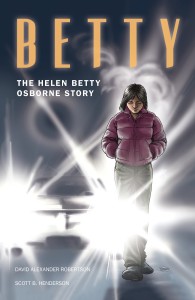
Betty

Title: Betty: The Helen Betty Osborne Story
Author: David Alexander Robertson
Artist: Scott Henderson
Published: Highwater Press, 2015
Specs: 30 pages, B&W, softcover
Age Group: For grades 9+
ISBN: 978-1-55379-544-5
Price: $16.00

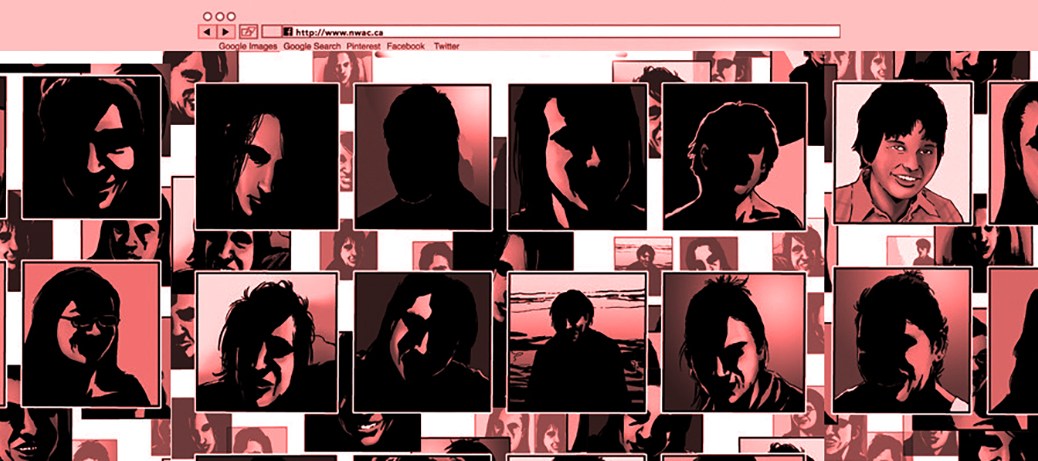
In the age of hashtag revolutions, social media can be a powerful tool for sharing histories and directing action. But it is a double-edged sword. At the same time that it is a vehicle for sharing love and honour, digital media also helps to spread hate.

Continue reading Social Media Contradictions: Sharing Knowledges of Life and Death in Story of Helen Betty Osborne

Drawing the Line: An Exclusive Sneak Preview!

Drawing the Line preview coverAd Astra Comix, in cooperation with Zubaan Books has officially opened pre-orders for “Drawing the Line: Indian Women Fight Back!” here in North America. If you have already ordered your copy off our Kickstarter but can’t wait to see what’s in store, here’s a little teaser to keep you going! Below you’ll find an exclusive sneak preview of the beauty and power of ‘Drawing the Line’, which connects issues of gender, sexuality, shade/race, class, and inter-generational dialogue in one exciting volume. In short, we feel that this book includes a little of everything that North American feminism needs: international and intersectional perspectives on the ‘every day’ of womanhood.

Continue reading Drawing the Line: An Exclusive Sneak Preview!

Ad Astra Comix to Release the North American Edition of “Drawing the Line: Indian Women Fight Back!”

FOR IMMEDIATE RELEASE
August 6th, 2015

     Ad Astra Comix and Zubaan Books are pleased to announce a North American edition of the groundbreaking comic title ‘Drawing The Line’. The book is a 162-page anthology of 14 accounts by Indian women of their day-to-day experiences in India, illustrated by the authors. After a successful debut in India, ‘Drawing the Line’ is coming to North America where a whole new audience can glean insight from the diverse perspectives of its contributors.4
Drawing the Line preview cover
    Released as part of an ongoing national conversation in India around sexual violence and the experience of women in public spaces, ‘Drawing the Line’ is an anthology of comics that range from comics journalism to autobiography. Though some of the comics address sexual violence, other themes include beauty standards, patriarchal attitudes in the workplace, experiences of sisterhood on public transit and other experiences of womanhood in India.
    Although the sexual assault case that sparked this national conversation around gender in India was covered in the western press, that coverage has been heavily skewed. Sexual violence has been portrayed as an Indian problem as though it was not also common in North American society. Rather than allowing western media to speak for Indian women, this title presents the individual, on-the-ground experiences of women in their own words and pictures.
teaser _ male gaze
   At a time when white feminism is struggling to embrace intersectionality in a meaningful way, titles like ‘Drawing the Line’ offer western feminists an opportunity to engage with the lived experiences of Indian women in other parts of the world. For South Asian women living in the diaspora, ‘Drawing the Line’ represents an opportunity to compare similarities and differences between diasporic life and the experience of women still in India.
teaser_ woman drinking tea
     Zubaan Books, the title’s Indian publisher, are an independent feminist publishing house based out of New Delhi that has been operating since 2003.
Ad Astra Comix is a Toronto-based comics press specializing in the production and publication of comics and graphic novels that amplify marginalized voices. Founded in 2012, Ad Astra is working on several publishing projects in addition to ‘Drawing the Line’.
Press Contact: Nicole Marie Burton
E-mail: adastracomix@gmail.com
Phone: 1-647-863-4994

If You Could See a Comic About Any Social Issue, What Would it Be?

This past May, at the Toronto Comic Arts Festival (or TCAF), we joined 20,000 other comic and art fans at the Toronto Public Library. Dozens of publishers traded, hundreds of artists talked, and literally thousands of books changed hands… but how many of them were about social issues? Very few. And if that was the case, why? Do people not care about social issues? If they do, which ones to they care about?

What people told us, and how they responded revealed some interesting answers…

Continue reading If You Could See a Comic About Any Social Issue, What Would it Be?

Blue Collar, Black Ink: NYC’s Strand Bookstore as a Site of Class Struggle

It probably doesn’t need saying that I love comics. I would not have committed myself to a life of reading, writing, researching and reviewing comics if they were not very dear to me, masochistic tendencies aside. But while I adore them, political comics put me in a jam so thick I consider spreading it on my mid-morning toast. Maybe my partner’s thinking has infected me; when she started Ad Astra Comix close to two years ago as a review site, she said it was in part because the quality of political comics was generally so low.

Continue reading Blue Collar, Black Ink: NYC’s Strand Bookstore as a Site of Class Struggle

The Mazinbiige Indigenous Graphic Novel Collection & The Politics of Public Knowledge

sir arthur            Outside of the Library and Archives of Canada, there is a statue of Sir Arthur Doughty, the country’s first National Archivist. In a city of thousands, he is one only of two civil servants who has been honoured with his own statue – the other died a hero while saving a drowning woman. While Sir Arthur never dove into a frozen river, he is a hero of a very different kind to Canada. There is a plaque at the base of his statue inscribed with the following quotation:

“Of all national assets, archives are the most precious: they are the gift of one generation to another, and the extent of our care of them marks the extent of our civilization.”

Our idea of nation and civilization are very different from Sir Arthur’s, and I don’t mind saying better. I grew up taking the idea of a national archives for granted – my mother worked for it, and my father worked in it. The archives is the glacial melt from which so much of the river of history flows. But in recent years it has been under attack.

Who would attack such an apparently non-partisan body? The Conservatives, we are not surprised to discover. But why? Surely nothing could be more stale, more status quo, than the National Archives, one might think. You’d be wrong.
The National Archives are a knife held to the throat of the government. Records held there were instrumental to building the case against the protracted cultural genocide waged by the Canadian state against indigenous peoples. There is information enough in the archives to lay bare proof of crimes past and present. Archives are a vital resource in the fight against colonialism. They are a weapon in many struggles for justice.

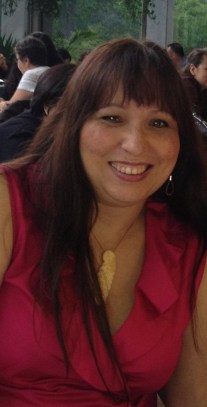
camille_callisonAll of which may seem like a strange way to introduce our feature on Camille Callison, the Indigenous Services Librarian at the University of Manitoba. But doing so sets the stage to help understand just how important – and potentially threatening to colonialism – her work at U of M is. Camille has recently coordinated the assembly of Mazinbiige Indigenous Graphic Novel Collection (‘Mazinbiige’ is an Anishinaabe word meaning “beautiful images and writing”), of more than 200 titles written by and about indigenous people.

The collection not only captures the best of the genre but also the worst. It includes the most racist, stereotypical depictions of indigenous people as well as the most authentic ones. The reasoning for doing so is that these racist depictions are often far more visible and it is important to understand how settler culture portrays indigenous people.

It’s one of the very first such collections available at a Canadian university. Callison describes the increasing literary credibility of comics and graphic novels in society as well as the increased recognition of the medium as an educational tool. She sees comics as a way to engage youth with topics that they might find too try if they were presented with conventional writing on the subject.   Based on the buzz around the collection, it looks like she’s right. Not only the university but the student paper and even CTV have taken notice of the launch of the collection. Given the ongoing interest in innovative teaching methods, this is hardly surprising. Callison’s work will create a resource for critical discussion on the depictions of indigenous people, as well as greatly simplifying research for comics scholars interested in the subject. Accessibility is a major consideration for librarians and archivists, and indigenous peoples often find that their efforts to access residential school records at the Library and Archives of Canada was obstructed by bureaucratic obstacles.

mazinbiige presentation2

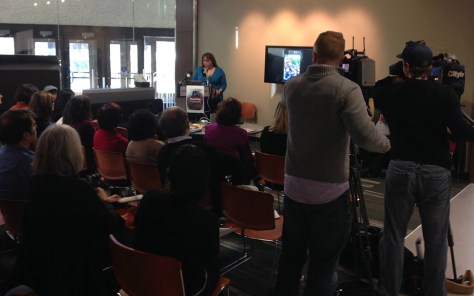
Photos from the launch of the Mazinbiige Indigenous Graphic Novel Collection, November 2013

Callison notes the role of her son in interesting her in graphic novels as a medium; they were one of the first kinds of reading he became interested in doing. She says that they read them together and had critical discussions of the way women were depicted in the media so that he could enjoy them without absorbing sexist stereotypes. This is very much in line with her emphasis on critical reading as a way of understanding depictions of indigenous people in mainstream comics.

She also acknowledges the importance of working with Blue Corn Comics and discussions with Professor Niigaanwewidam James Sinclair, an Assistant Professor in Department of Native Studies who teaches a course on graphic novels. In an article for the Manitoban, Niigaan Sinclair is quoted as describing graphic novels as a vehicle for self-determination.

There are a lot of great discussions going on about how mainstream comics reinforce sexism, racism and other toxic ideologies. Alas, these discussions seldom get beyond the politics of representation in terms of what comics can do. It’s great to see indigenous authors producing comics about indigenous superheroes. But The Mazinbiige Indigenous Graphic Novel Collection includes more than good and bad portrayals of indigenous heroes – it includes diverse narratives of indigenous experience that can help to communicate trauma, share traditional knowledge, and help us decolonize ourselves.

“Three Feathers”: Speaking in complete sentences

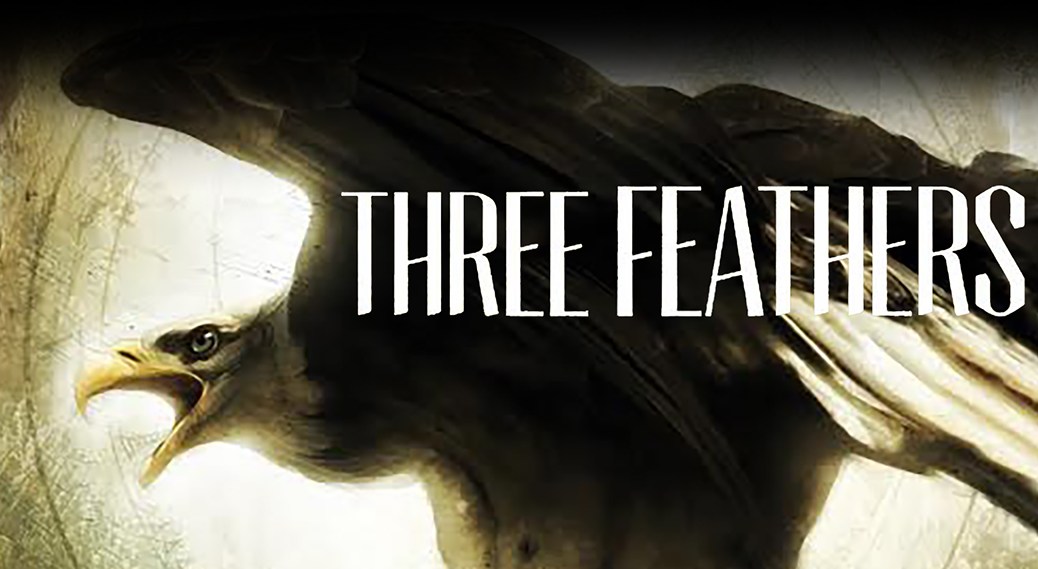
Richard Van Camp, a Tłı̨chǫ writer from Fort Smith, Northwest Territories, based ‘Three Feathers’ off an incident in his town. There were three young men who robbed a number of residents of the town, including him. When they were caught, they were sent south to serve two years in prison. In ‘Three Feathers’, a Sentencing Circle sends the boys to spend nine months living on the land with some of the community’s elders. The difference in their experience is profound.

Three-Feathers

Title: Three Feathers|
Author: Richard Van Camp
Illustrator: Krystal Mateus
Published: Highwater Press (March 2015)
Pages: 48 pages

The comic opens with the boys returning from their time on the land. This beginning sets the tone for a non-linear narrative structure that challenges the reader to piece the story together while also making sense of what is, to most settlers, an alien approach to justice. This echoes our experience of learning about criminal incidents where we are often too quick to make assumptions based on a few snippets of information. The comic charts the events leading to the sentence, the experience of the boys on the land, and its ultimate effect on them. In doing so, it helps us piece together the story of how the boys came to be at odds with their community.

three feathers_eagle has three shadows

‘Three Feathers’ paints a familiar portrait of the challenges faced by indigenous communities: children without parents, families struggling with addiction, and youth alienated from their traditional culture. But Van Camp, unsurprisingly, never stoops to caricature. His characters are emotionally complex, possessed of agency and sympathetically rendered. He provides a good answer to the question ‘Why does it matter that indigenous people write indigenous characters’? His portrayal of a deaf character, one of the boys sent to the land, is also nuanced. He isn’t reduced to his disability or played for laughs but is allowed to suffer from the same anger, frustration and imperfection as his peers.

The comic is not without its faults. It is not as long as it might be, and as a result we are not given much time to learn about the young men or their community. Similarly, though there are some aesthetic styles that benefit from the use of black and white, this is a comic that would have benefited from colour. Still, the sparse use of text accents the art and puts the environment in the foreground, particularly when the young men are out on the land. Given the moral and spiritual importance of their environment this is a good aesthetic choice.

three feathers greatest teacher

I don’t want to give away the ending. I will say, however, that I was surprised by it, though it reflected the moral arc of the story as a whole. The tale is one of restorative justice, of the capacity of a community to heal its wounds together instead of discarding people who behave unacceptably. It is understood from the outset that the boys have caused harm partially as a result of the harm they themselves have experienced. Their rehabilitation is not rooted in high-minded moralizing about human nature but in the very personal compassion and willingness to forgive shown by their community.

How radically this differs from our colonial conception of justice! For many Canadians, justice is inseparable from retribution. There is even still a surprising enthusiasm in Canada for capital punishment. The idea that ‘criminals’ could be sent out onto the land to fish and camp with the elderly probably sounds like a vacation to your average settler. Even successful experiments with rehabilitation, like the Kingston prison farm, end up up in the scopes of politicians looking for a soft target.

three feathers jail

Activists on the left sometimes like to imagine that they are above this kind of justice. They champion prison abolition and talk gravely about police corruption. But, in practice, I think most radical communities end up practicing a kind of ostracism, seeking to exclude people who transgress against the values of the community past a certain point. I’m not saying we can’t protect our communities from toxic people, privileged jerks who never shut up, or occurrences of sexual violence. But what I do think is that restorative justice looks a lot more ‘protecting our community’ than the ostracism that contributes heavily to activist turnover. That is not a comfortable truth for people whose social circle is a line drawn in the chalk of moral certainty. But uncomfortable truths are a powerful thing in the right hands. All I could think in reading this comic was ‘if only it worked that way for us’, …whoever ‘us’ is.

Talking with Educator, Writer & Comics Creator, David Robertson

There is a story dating back in time and region to the Roman Empire, in which a raven is observed dropping stones into a pitcher to raise the height of the water inside. From this, the raven drinks, and from this tale comes the notable phrase, “Necessity is the mother of invention.”

There is a terrible need in North America today for education about the history of colonization. As settlers advanced notions of Euro-centric “progress” for centuries, the catastrophic effects upon the first peoples of the land–from outright war to enduring forms of cultural genocide–were hardly noted, even by those claiming to possess a conscience. Now, like the raven, indigenous people and settlers alike are thirsting for this knowledge, and creative minds are coming up with new, innovative ways to bring generations of stories from the margins to the mainstream.

A strong indicator of the demand has been the public’s reception to the work of David Robertson, a Cree writer, comics creator, and educator in Winnipeg, Manitoba. In just a few short years, Robertson has developed his storytelling abilities to produce a number of works to great acclaim. This year alone, he has been nominated in three categories of the Manitoba Book Awards, including ‘Aboriginal Writer of the Year’, and ‘Most Promising Manitoba Writer’. Justice Murray Sinclair, Chair of the Truth and Reconciliation Commission, noted that his graphic novels “take advantage of an important means of communicating that history to Canada’s youth, especially Aboriginal youth, who have gravitated toward this genre.”

We were honoured to chat with David about his vision, his work, and his plans for the future. All illustrations are courtesy of artist Scott Henderson and Highwater Press.

books

Ad Astra: Looking over the stack of comics in front of me, first and foremost, I see the work of a storyteller. What brought you to this line of work? And secondly, what brought you to comics to tell many of those stories?
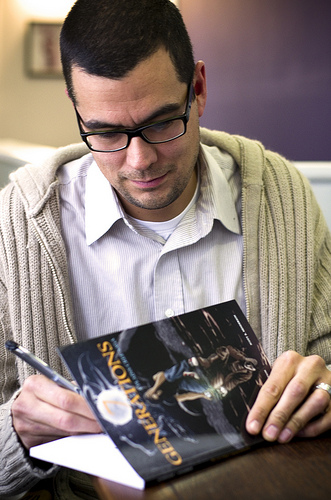
RobertsonSigning a bookDave Robertson: I suppose it’s a combination of three things: education, personal history, and writing. I grew up disconnected from the side of my heritage that is Cree. My parents were separated when I was very young, and I was raised by my mom in an upper-middle class neighbourhood. She raised me and my brothers well, but because my dad wasn’t around a lot, I wasn’t exposed to First Nations culture or history. So, I grew up exposed to the kind of ignorance we still see today. A lot of racism, either experienced directly or indirectly. I ended up having a low sense of self-worth. I saw myself how others saw indigenous people.

Then, when my parents reconciled, and my dad moved back in with us (this was over a decade later), I finally began to learn more about who I was as a First Nations person. So, it’s been a long journey, learning about myself in that way, and growing a strong sense of pride through knowledge.

Now, nine years ago, I wanted to do something so that other kids could be exposed to real history and real culture. I felt like, if I could bring something into schools that would engage kids with truth, it would help in some way to fight back against the difficulties we still see in our country. Education is knowledge. My parents are both educators, that’s probably where that came from. Now, I’d written since I was in grade three, so I knew I wanted to write something. And because all I ever read when I was growing up was comic books, I thought it would be an amazing way to get kids engaged and excited with history and culture. That’s how I got into writing graphic novels.

My thought was: if you gave a kid a comic book and gave a kid a text book, which one would they choose to learn from? Always the comic book. The thing is, after they read the comic book, they want to read more about the subject. So they read the text book afterwards.

AA: That’s an excellent point. There is an accessibility with comics that I find is really unrivaled. And unlike film or TV, it can move at the reader’s pace…

DR: They call that “Visual Permanence”. See, at first it was: ‘Comics are cool; let’s do this.’ After that, I realized all the technical ways they are so effective.

For example: reading comics connects with us in an almost primal way. And that’s because we used to communicate through pictures, not words. It’s the most ancient way to story tell.

AA: I feel like your first answer really knocks out several of my introductory questions, and you’re now moving into some of the deeper questions…

DR: I’m efficient. (LOL)

dave_presenting on TBS

AA: Regarding oral traditions and visual narratives… Dr Sheena Howard makes an interesting note in her new book “Black Comics: Politics of Race and Representation,” connecting the comic medium to traditional African storytelling. Griots would memorize a lifetime of stories about the community or nation, heroes, gods and tricksters, and for many former slaves in the United States, there was no black-controlled medium of storytelling between these two (a bit mind-boggling to contemplate). I feel as though your comics are bridging the gap for indigenous narratives, in a similar way…

DR: I don’t disagree with that. At the launch of my first graphic novel, ‘The Life of Helen Betty Osborne’, Murray Sinclair said that while we have an oral tradition, we now are finding new ways to pass down our stories to future generations. One of those ways is through the sequential art medium. It’s also through art, dance, music, and other forms of writing. But I think graphic novels and comics are the most effective. And I think that’s due to the format itself, and the visual nature of the medium. And it goes back, again, to how ancient this form of communication is. It’s taking it all the way back to wall paintings, the first way we communicated with each other and passed down stories. The old always becomes new again.

AA: You mentioned presentations in the classroom. What age groups do you work with?
856824_10100541740070561_174392339_o

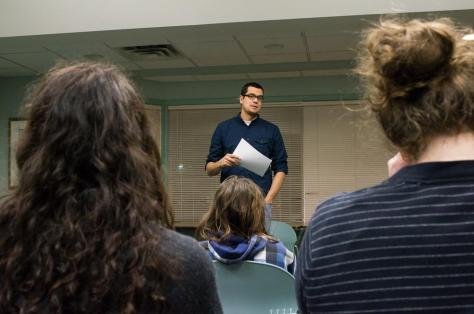
DR: That’s the other thing with comics. For the same book, I’ve been to visit a grade four classroom, a junior high classroom, a high school classroom, and I’ve guest-lectured in university classrooms. They are the universal medium. There are reasons for this, too. Because of their visual nature, they connect with struggling readers or readers at lower skill levels. But because [the good ones] often have complex narrative structures and character development and so on, they connect with sophisticated readers as well. What novel can do that?
7generations3

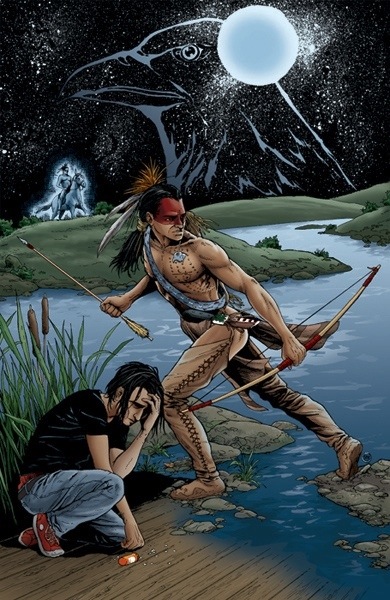
AA: There is, understandably, a real sense of loss and despair in a lot of the characters you depict in your work. A few colleagues, indigenous and settler, have noted that the work is a difficult read emotionally, sometimes almost paralysing. What do you see as the goal of bringing these uncomfortable, even triggering histories to comics? Do they present any difficulties in groups, or working with people who have experience similar forms of trauma?

DR: Sure, they are hard to read. I remember passing by two teachers who were shocked by the scenes in Ends/Begins, for example. But they were shocked in a good way, because they recognized the value in bringing history to students in such a real way. But, I should add, in a way that is sensitive and respectful. But these stories need to be told. People need to know the history, and the uncensored history. That is the only way there will be an understanding of the historical impacts on First Nations people in this country. In terms of how to deal with that pain, some of that is in the hands of the educators who are sharing the work. If you are sharing it with kids who are second generation survivors, or survivors themselves, you need to ensure you have supports in place to deal with trauma. If you are showing this to non-indigenous people, you need to prepare to continue the dialogue the book begins, bring in a speaker, bring in supplementary texts, etc. Teachers often say: how can I bring this into the classroom? The content is too difficult. I say to them, consider what your students are inundated with today through media. The violence we see on television. The Walking Dead, for example (which I love, by the way). Yet what you are bringing them in these works is reality, history, and things we all, as Canadians, need to know. There is just too much ignorance out there not to find the best ways possible to educate.

sugar falls

AA: Can comics and cartoons be problematic or trivializing when exploring violent and traumatic histories? How do you feel about settlers attempting to tackle these subjects? Is this part of a larger legacy of settlers dismissing the need for consultation in their “indigenous solidarity” activism?

DR: Well, settlers need to ensure they are doing things right if they are addressing histories of First Nations people. They need to consult with elders, indigenous peoples, and do the research, and research from the right resources. You know, Scott Henderson is white. But he has done the work to ensure that he is depicting things accurately, and we run our work through the proper channels to ensure we are being accurate and respectful. I think comics can trivialize violence, or show gratuitous violence. But they can also explore violence properly when it’s within the context of reality. The violence in my work is purposeful because it has its place within the story and within true history. Nothing is gratuitous. So, again, educators and readers need to choose properly.

Do I like settlers telling our stories? Not really. I think there is a growing movement of reclamation that needs to stay within the hands of the indigenous peoples. We just need to encourage youth to continue to get involved in telling stories. Our stories need to be reclaimed by our people, as long as those stories can be held to the right standards of excellence.

AA: You mentioned you were a comics fan growing up… comics is a strange medium, where indigenous people have been very *present* in comic representations, but almost exclusively created by white settlers for a white audiences, and very much from the white imagination of ‘manifest destiny’ and other white supremacist outlooks. Did you have any native comic role models? Which characters did you like growing up, and why?

DR: Honestly, I didn’t have any First Nations comic role models growing up and I still don’t. Part of the reason is that it’s still a growing medium within the First Nations community. There just aren’t a lot of First Nations comic book writers out there. But, that’s changing too. You know, Richard Van Camp just did one through my publisher. The Healthy Aboriginal Network does some amazing work. There’s Red, too, which you mentioned. So, I feel encouraged by all of this. In terms of characters. I’m not sure, really. There weren’t and aren’t a lot of great indigenous comic characters either. It’s so hard to create characters without perpetuating stereotypes or appropriating culture, I guess. But I think it’s doable. I loved Elfquest growing up, that’s as indigenous as I got when I was young! Other than that, I was typically into Spider-Man and Batman. I’d like to see work done for our culture that has been done so effectively for others, like King or Maus. Riel is a great one, too. I’d put it up there.
ma10-helen-betty-osborne

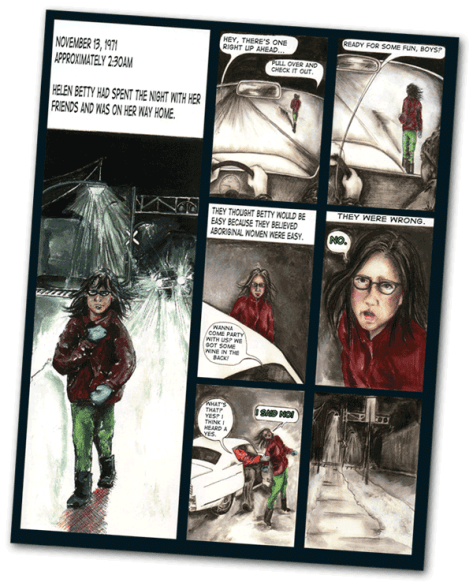
AA: Helen Betty Osborne: What compelled you to choose Helen’s story as one to tell?

DR: Well, it was the first one I did. I suppose I saw in her story the opportunity to tackle several issues that were important to me, and that I felt should be important to many. Through her story, you learn about the residential school system, segregation, racism, sexism, indifference, the justice system’s treatment of indigenous people, and missing and murdered indigenous women. So, it was really a story that embodied so much of what I love about graphic novels: it’s this incredible foundation in education that allows teachers to jump off into a variety of important subjects. And, today, her story is more relevant than ever. Sharing her story allows us to talk about the epidemic of missing and murdered indigenous women in ways that effect people powerfully. When it’s real, it’s effective. Her story becomes so real through the graphic novel medium. And we suffer with her and learn from her.

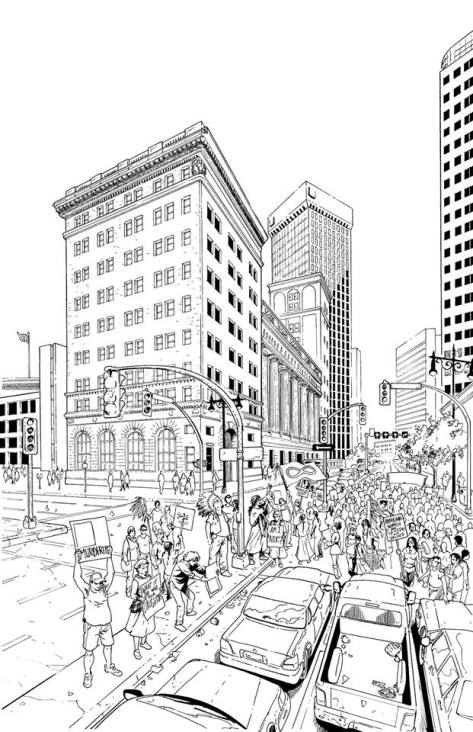
AA: I love the way the story is framed around grassroots activism as well. I find myself noting the misfortune of many of your characters, but they’re almost always complimented with characters that represent empowerment and agency–characteristics that are difficult to portray within the victim or survivor identity.

DR: Thanks! I think, too, empowerment so often comes from knowledge.
HBO story _ protest

AA: What’s next for you? a) upcoming projects? b) more broadly, where do you see your work going?

DR: I always have projects on the go. As you know, Betty: The Helen Betty Osborne Story is coming out in May 2015. I think it’s my best graphic novel yet, and I am excited to see what it can do to raise awareness for Betty and Missing and Murdered Indigenous Women across Canada. I have another graphic novel coming out in my Tales From Big Spirit series called The Runner: Joseph B. Keeper. That’ll be out in the Fall, hopefully. We have a bunch of names on the docket for future graphic novels but no firm plans yet on who/what they’ll be about. The Tales From Big Spirit series is envisioned as an ongoing series, so we’ll keep it going forever if we can. I’m also working away at my follow-up to The Evolution of Alice (a book with no pictures!!!). I’m about 1/4 of the way through that novel. It’s about a man who plans to commit suicide but how his life changes as he gets to know his father for the first time, and how his father’s experience at residential school affected his life, and his decision to end it.

In terms of where I see my work going… First of all, I want to constantly improve. I want to learn and get better and become the best storyteller I can become. That comes through writing and reading and learning from the best. I want to continue to do graphic novels, but I want to do more with them in the future. Tell stories that concentrate not just on history but on the amazing legends and myths in indigenous culture, and maybe tell some contemporary stories, create a super-hero we can be proud of and look up to. I’d love to do some mainstream work on my own terms, too. I’d love to, for example, take a crack at Spider-Man. He was my comic hero growing up.

That’s in the “out there” realm, but I don’t think any dream is too big. I’d like to continue to write novels, as well. And all of that work, graphic novels and novels, all, will try to educate in some way, shape, or form. That’s important to me.

Aside from that, I’d like to get into doing more work in television. I had a taste of it with my show called The Reckoner, that is currently in limbo but might see the light of day. I worked with some great writers for that show as well, like Jordan Wheeler and Sara Snow. I’d also like to write movies one day, when I have time. So, that’s what I hope for my work going forward. I just want to continue to evolve, continue to get better, and continue to challenge myself.

We do all of that by taking risks. For me, those risks involve stepping outside what I might be known for, and trying new things.

raven sketch

Many thanks to Dave Robertson for making himself available for this interview! Questions and comments to David are welcome below, through the WordPress commenting form.

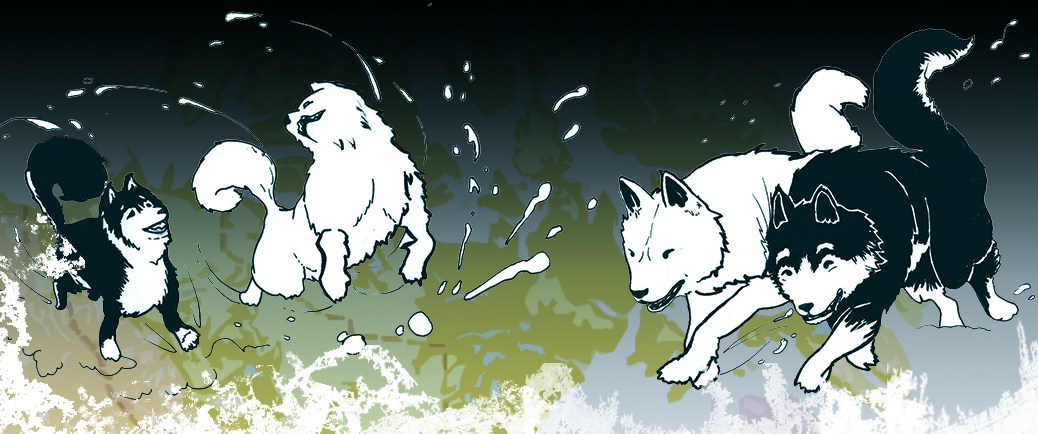
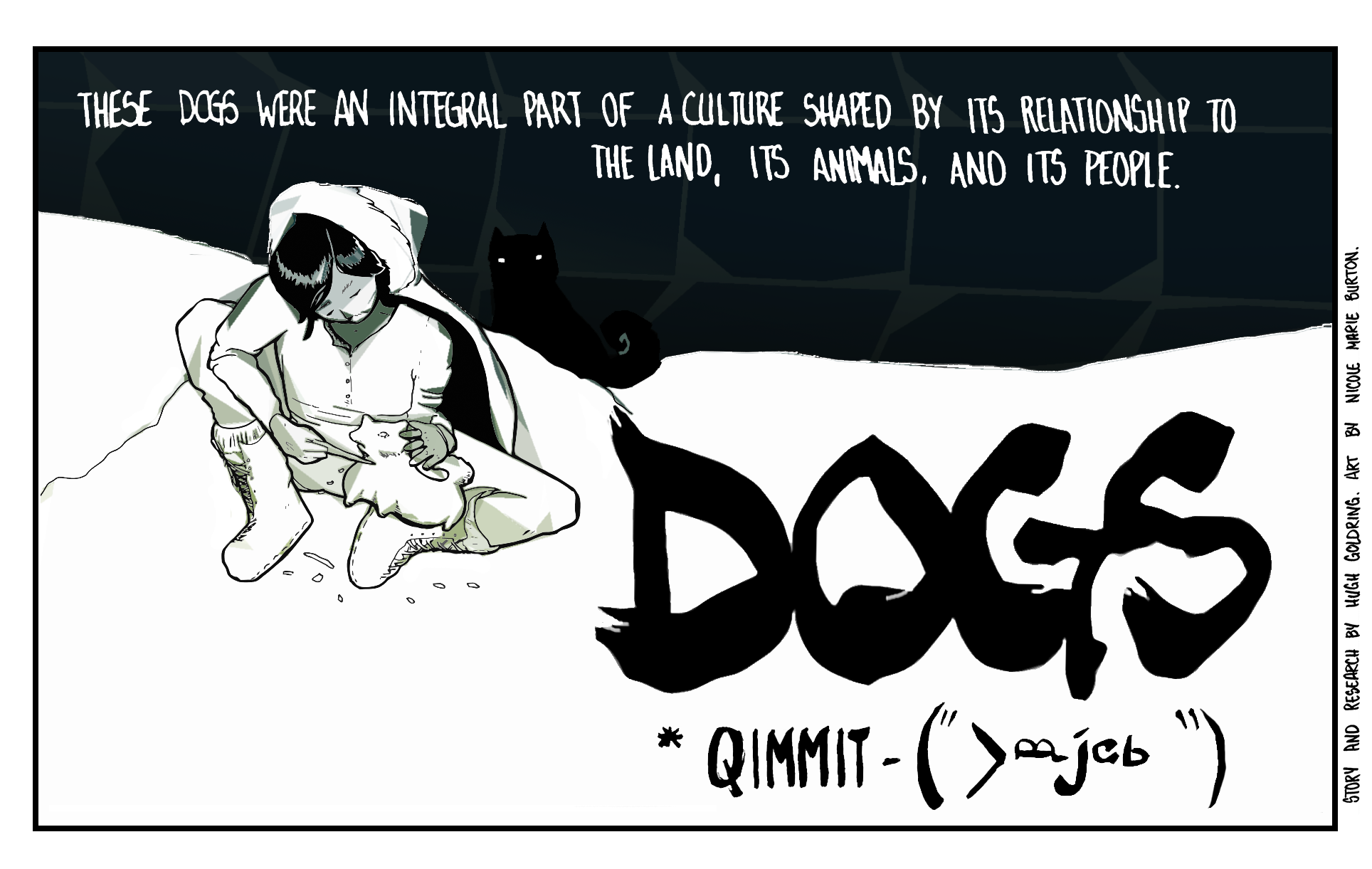
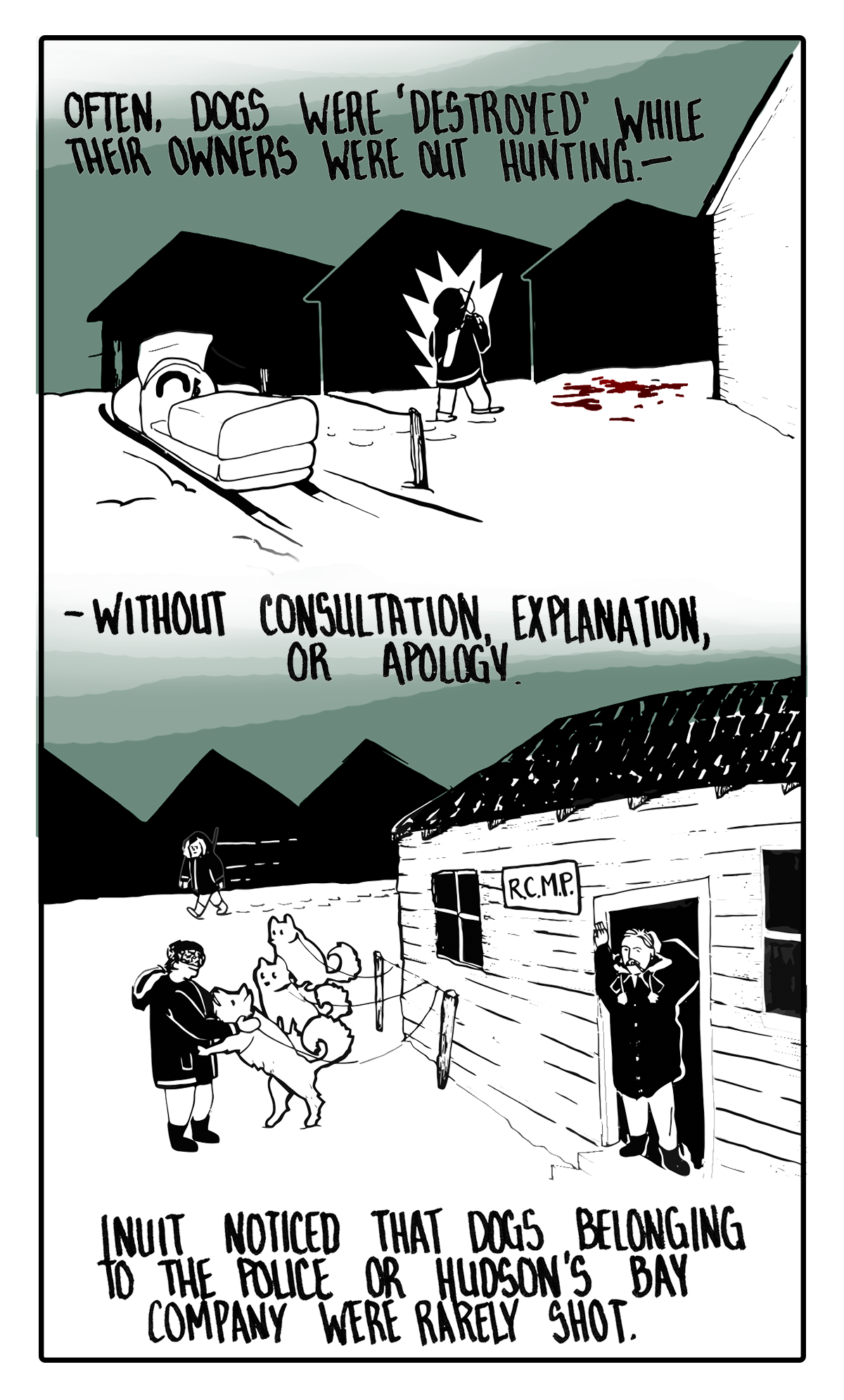
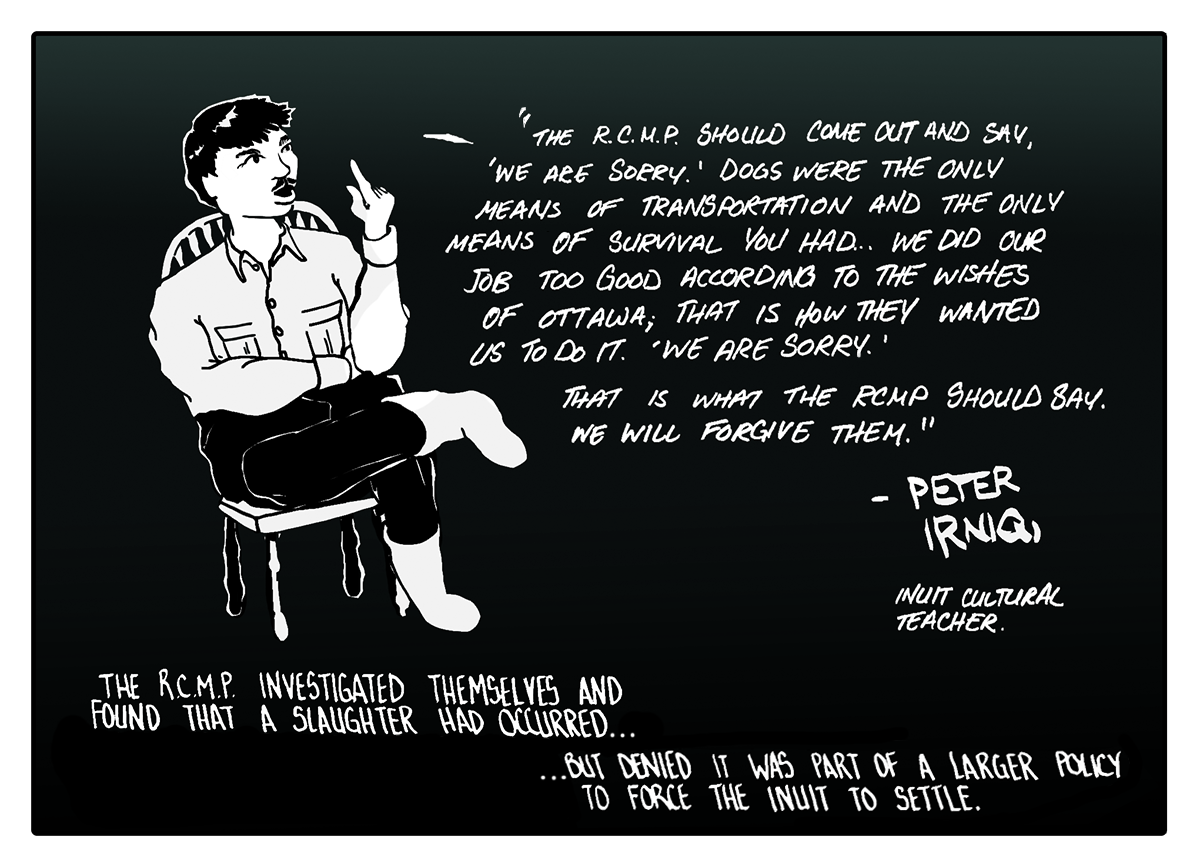
DOGS: A webcomic history of the North

Click on panels to enlarge files.

This comic is shareable, but please cite Ad Astra Comix as the source, and provide a link to the Qikiqtani Truth Commission with any re-postings. Interested in buying a glossy, high-resolution poster of ‘Dogs’? E-mail us for details

1
23_2nd edition456789 and 10111213

14

150

About this comic:

Handling indigenous subject matter is always a challenge for settlers, and to be clear, we are white settlers. We have done our best to avoid speaking on behalf of the Inuit who are more than capable of making themselves heard when qallunaat take the time to listen. But it is a narrow beam to balance on.

Even before Franz Boas wandered into the Arctic and began scribbling, white people have been misrepresenting the Inuit. They were not trapped in the Stone Age until the 1950s; they had already been adapting European technologies to their purposes for more than a hundred years at that point. Southerners love to depict the Inuit as ‘noble savages’ who were ‘ruined’ by civilization. Needless to say, that is not only incredibly racist, it’s frankly wrong.

There’s a great NFB mockumentary called ‘Qallunaat: Why White People are Funny” we recommend if you are interested in seeing the colonial gaze reversed. There’s also a film where the descendants of Nanook of the North (obviously not his real name) laugh at the many inaccuracies of that early documentary.

We have done our best to faithfully render the period and the people. This is a comic and we are working for free so in some places, we have gotten the details wrong. This comic is not a substitute to listening to the stories of the Inuit themselves, or visiting Nunavut to learn from them in person (assuming they’ll have you, which you shouldn’t take for granted). We both had mixed feelings about telling such a sensitive story – both because we are white, and because it is difficult to depict it in all its painful complexity.

Ultimately, the reasons we did it are close to the reasons for our concern. This story badly needs amplifying. It is part of the larger story of the genocide of indigenous peoples carried out by the Canadian state, but it is not so well known as the violence of the residential schools system. We hope this comic can be a starting point to help settlers find more substantial lines of inquiry and in doing so, reach a broader audience than the Qikiqtani Truth Commission has yet done.

Which brings a final disclaimer: Ad Astra Comix is not affiliated with the QTC and this work has been undertaken without their permission. Peter Irniq was contacted to give his consent for the quote we have used, but has not seen the comic as of its release. This is a labour of love and hope, and we only wish it calls attention to this period in Inuit history so that settlers can understand that people live up there, god damn it, not just inukshuks to appropriate when we need a symbol for some imaginary shared nationhood.

Peace,
Hugh Goldring & Nicole Marie Burton

Creative Commons License
This work is licensed under a Creative Commons Attribution-NonCommercial-NoDerivatives 4.0 International License.